Reverse-Seared Pork Tenderloin, Mostly Done Before Guests Arrive
Cook it low, sear it last. You get a juicy, blush-pink pork tenderloin and a host who's actually sitting at his own table when the doorbell rings.
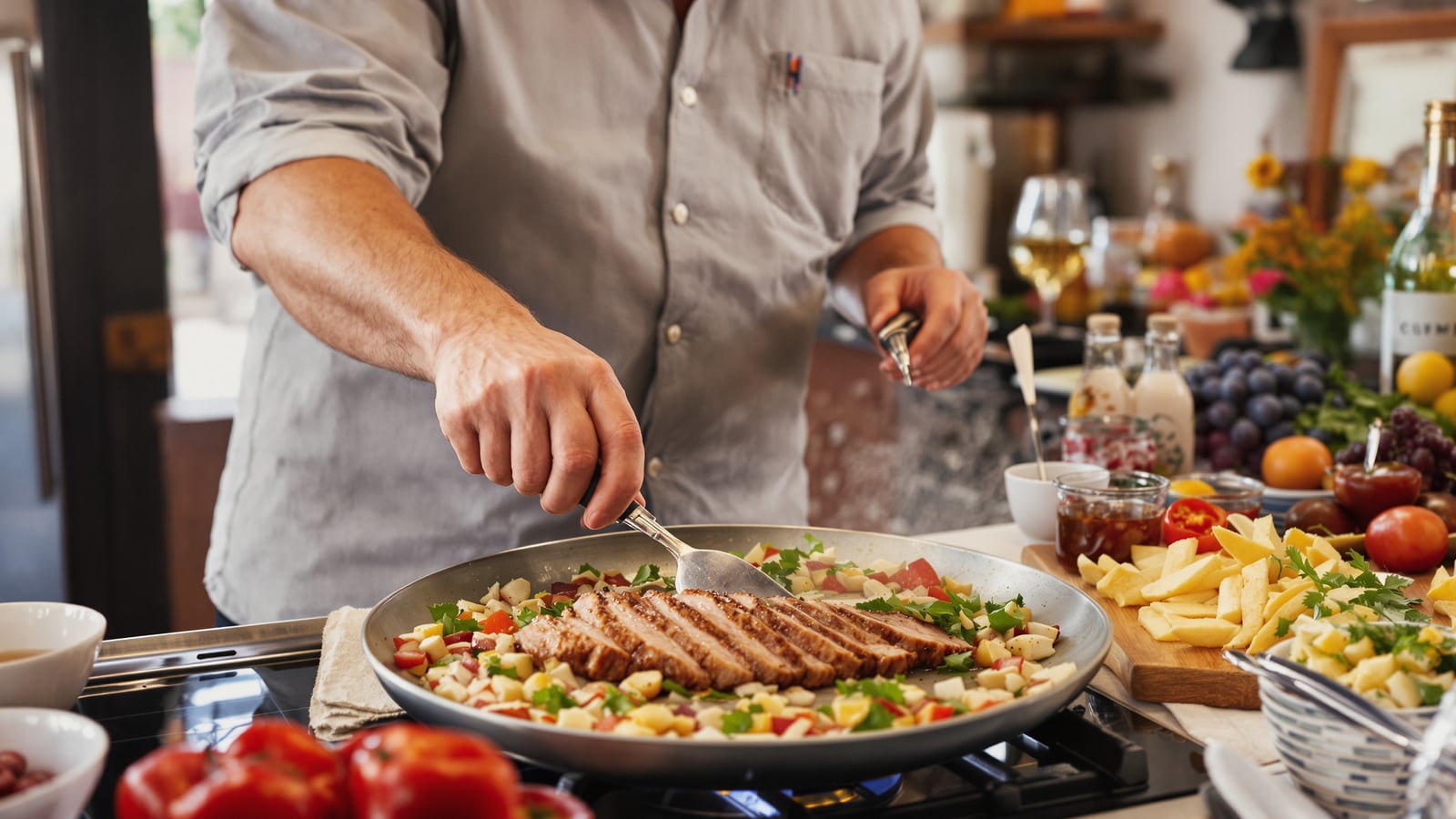
Quick answer: Cook two tenderloins on the cool side of the grill until the center hits 130°F, hold them on a plate, then sear over high heat until they reach 145°F. Rest five minutes, slice, and spoon the mustard-herb sauce over the top. Nearly all of the work happens before anyone sits down.
Serves: 6 | Prep: 15 minutes, plus 30 minutes of salting time | Cook: 40 minutes | Rest: 10 minutes | Total: about 1 hour 35 minutes
Why you cook it backward
Tenderloin is lean. It goes from juicy to chalk in about two minutes, and the usual method of searing hard first and then finishing it gives you that gray band around the edge.
Reverse searing flips the order. Low, gentle heat brings the whole thing up evenly, so the center is the same color as the edge. The sear comes last and only has to build crust.
It's also a better plan for company. The slow part can be done 20 minutes before you eat, and the loud, smoky part takes about seven minutes. You can do that with a drink of iced tea in your other hand while people crowd around the grill and pretend they aren't hungry.
What you need
For the pork:
- 2 pork tenderloins (about 1 1/4 pounds each, usually sold as a twin pack)
- 2 1/2 teaspoons Diamond Crystal kosher salt (use 1 1/2 teaspoons if yours is Morton, and less again for table salt)
- 2 teaspoons smoked paprika
- 2 teaspoons light brown sugar
- 1 teaspoon garlic powder
- 1 teaspoon black pepper
- 1/2 teaspoon onion powder
- 1 tablespoon avocado or canola oil
For the mustard-herb sauce:
- 3 tablespoons Dijon mustard
- 2 tablespoons honey
- 1 tablespoon apple cider vinegar
- 2 tablespoons olive oil
- 2 tablespoons chopped fresh parsley
- 1 small garlic clove, grated
- 1/4 teaspoon salt
You'll also need an instant-read thermometer, which isn't optional, and kitchen twine, which is.
Steps
- Trim. Slide a thin knife under the silver skin, the shiny, tough strip along the side, and pull it away with the blade angled up. Fold the thin last two inches of each tail under and tie it in place with twine so the tenderloin is an even thickness end to end.
- Salt. Sprinkle the kosher salt over both tenderloins. Leave them uncovered in the fridge for at least 30 minutes and up to 24 hours. Pat them dry before cooking.
- Make the sauce. Whisk everything in a bowl until it's smooth and a little thick. Taste it. It should be sharp first, sweet second. Set it aside, and don't let it near the raw pork.
- Set up two zones. On gas, light the burners on one side to medium-low and leave the other side off. Aim for 275°F to 300°F on the cool side. On charcoal, bank the lit coals on one side and leave the vents half open. You want a hot side and a cool side, with the pork living on the cool one.
- Rub. Mix the paprika, brown sugar, garlic powder, pepper and onion powder. Rub the oil over the pork, then press the spice mix on all sides.
- Cook indirect. Put the tenderloins on the cool side, lid down. Start probing at 15 minutes, pushing the thermometer into the thickest part from the side, not the end. Pull them at 130°F in the center. Expect somewhere between 20 and 30 minutes, depending on thickness and how steady your grill runs.
- Hold. Move the pork to a plate and tent it loosely with foil. It can sit up to 20 minutes while you carry out the sides and let everybody argue about football.
- Get the grill screaming. Open the vents all the way or turn the lit burners to high, and let the grates heat for five minutes with the lid closed. Clean them with a brush.
- Sear. Lay the tenderloins over the hot side. Turn them every 90 seconds or so, four sides total, until they're deeply browned and the center reads 145°F, about 5 to 7 minutes. If the thermometer hits 145 before the color is perfect, pull it anyway. Temperature wins over looks.
- Rest and slice. Let the pork sit at least 5 minutes, which is also the 3-minute rest USDA calls for at 145°F. Snip off the twine and slice into 1/2-inch medallions. Spoon on the sauce and pass the rest.
What usually goes wrong
The tail overcooks. The thin end races ahead of the middle. Tucking and tying fixes most of it. Take your temperature reading from the fattest part, never the tail.
The sugar scorches. There's only 2 teaspoons in the rub for a reason. It helps the crust, but it blackens fast over high heat. If you see char before the color's right, move the pork to a cooler spot and keep turning. This is the same lesson as the honey chipotle chicken thighs that won't burn on you: sweet and flame need supervision.
The sear looks gray. The grill wasn't hot enough or the pork was wet. Pat it dry again before the sear, and give the grates the full five minutes.
Flare-ups. A little oil is all you need. If a flame jumps, shift the meat over for a few seconds. Don't spray it with water and don't walk away.
You carve too soon. Five minutes feels like forever with six people waiting. It's worth it. Cut early and the juice ends up on the board instead of in the pork.
Nobody trusts the pink. Pork cooked to 145°F can look slightly blush in the center, and that's safe. USDA sets 145°F with a three-minute rest as the standard for whole cuts. Tell your guests so, then watch them take seconds.
Make ahead, store, swap
Ahead: The sauce keeps in the fridge for three days, so make it the day before and let the flavors settle. The rub mix keeps for weeks in a jar. You can salt the pork a full day ahead, and the dry-brine does its best work that way. The only part you shouldn't do early is the sear.
Storing: Get leftovers into the fridge within two hours. They keep three to four days in an airtight container. Slice them cold for sandwiches, or warm them gently in a skillet with a spoonful of sauce. A long microwave blast will turn them to leather. Sliced and wrapped well, the pork freezes for about two months.
Swaps:
- No grill? Roast at 275°F on a rack set in a sheet pan to 130°F, then sear in a very hot cast-iron skillet with a little oil, turning until it reaches 145°F.
- Maple syrup works in place of honey in the sauce. Whole-grain mustard works in place of Dijon.
- Swap the rub for 2 teaspoons of Italian seasoning plus the salt, pepper and garlic powder if that's what's in your cabinet.
- A pork loin roast is a different animal. It's thicker and takes much longer, so don't substitute it without rethinking the timing.
Build the table around it
Keep the sides low-effort so you aren't cooking in three places. Green beans done the way they are in thirty-minute lemon garlic skillet chicken with green beans can be done on the stove while the pork holds. Add buttered potatoes and a bowl of sliced tomatoes with salt and you've fed six people for the price of a decent steakhouse appetizer.
If you want more side dishes, our sister site delicious.com has thousands more recipes to pull from.
Pull the thermometer out one last time before you serve. Then put the sauce on the table, step back and let somebody else carry the platter.
Wes Dunbar
Country & Skills
Grew up on an acreage and never quite left. Covers trucks, trades, land, and how to do the thing yourself.

Watch
Worth an hour of your evening
More from Recipes.
From channels we rate. Plays on YouTube.
Read next