
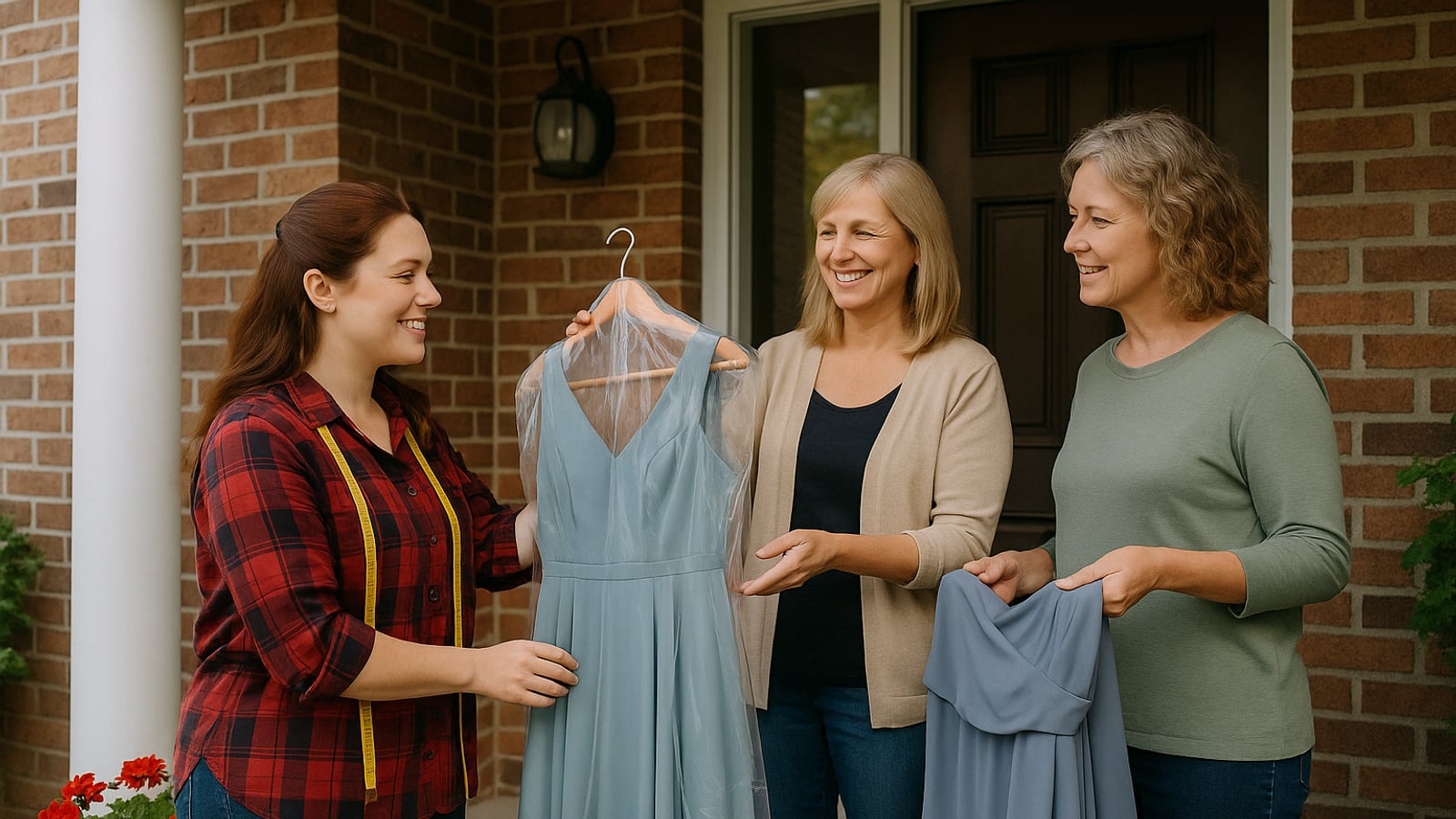
Quick answer: Before you spend money on ads, send forty personal messages to people who already know you, set up a free Google Business Profile, and ask every happy client for a review and a referral. That's most of marketing on a shoestring. The rest is follow-up.
Picture two women who start the same Monday. This is an example, but you've met both of them. Each runs an alterations and custom-sewing business out of a spare bedroom.
The first spends her first month on a logo, a color palette and a posting schedule for Instagram. By week four she has 61 followers, most of them other sewing accounts, and one client. Her sister-in-law.
The second writes down every person who has ever watched her hem a pair of pants. She sends each one a short, personal text. By the end of the month she has nine jobs booked and a bride asking about four bridesmaid dresses.
The first woman wasn't lazy. She was doing the kind of marketing that looks like marketing. The second was doing the kind that works when you have no budget.
Strangers are the expensive customers
Trust is the costly part of any sale. A stranger has to find you, believe you're any good, and then take a chance on you with her money. Someone who already knows you skips two of those three steps.
Big companies pay for ads because they can afford the long road to a stranger's trust. You can't. Not yet. So start where the trust already exists and spend your first months there.
Make the list, then actually send the messages
Sit down with your phone and write forty names. Old coworkers. Your neighbors. The moms from your kids' soccer team. Your hairdresser. The dad who coaches T-ball. Your former boss, if you left on good terms.
Then message them one at a time. Not a group text, not a Facebook announcement. Something like this:
"Hi Karen, I've started taking alterations and custom sewing from home. If you or anyone you know needs a hem, a zipper or a dress taken in, I'd love the work. Can I drop off a card?"
The annoying part: it feels like begging. It isn't. You're telling people something they'd genuinely want to know, the same way you'd want to know a friend had started cutting hair.
Most people will say congratulations and nothing else. That's fine. Two or three will send somebody your way, and that's the return.
Don't blast all forty in one night and then go quiet. Send ten a week. Keep a note of who you told and when, so you can circle back in a couple of months without sounding like a stranger.
If you're still working a job and wondering whether this business can carry you, this list is also how you find out. Your side hustle is ready when it's costing you to keep the job, and a few weeks of honest outreach will tell you a lot about how close you are.
Give people a sentence they can repeat
Referrals die when the person can't explain what you do. "She does some kind of consulting" sends nobody. "She does bookkeeping for contractors who hate paperwork" sends the electrician next door.
Test it. Could your mother-in-law repeat it at a barbecue without checking her notes? If not, cut it down.
Narrow feels risky. Wide is forgettable. Pick the customer you most want and say her name out loud.
Set up the one free listing everybody skips
A Google Business Profile costs nothing. When someone nearby searches "alterations near me" or "bookkeeper," that's the box that shows up with the map, the photos and the stars.
Home-based? You can hide your street address and list a service area instead. Upload real photos of your actual work, not stock images. And list hours you can keep. If you've got little ones at home, don't promise 9 to 5 availability you'll resent by Thursday. Your kids won't respect office hours, so stop scheduling them walks through building a week around the life you've actually got.
Ask for the review while she's still smiling
Most happy clients never leave a review. Not because they don't want to. Because nobody asked, and finding the right page takes four clicks they'll never get around to.
So remove the clicks. Your Business Profile gives you a direct review link. Within two days of finishing a job, send it:
"So glad the dress worked out. If you have thirty seconds, a quick review would help me more than you'd guess. And if you know anyone else who needs a tailor, I'd be grateful for the introduction."
One more thing, and it matters more than the text. Leave every job a little better than the client expected. Press the garment before you hand it back. Tuck a handwritten thank-you card in the bag. Sew a loose button back on that nobody asked you to fix. It costs you a few minutes and a stamp, and it's the part people tell their friends about.
Borrow a neighbor's customers
Some businesses serve your exact client a week before or after you do. The photographer and the florist. The bookkeeper and the tax preparer. The dog groomer and the pet sitter. The seamstress and the bridal shop that doesn't do alterations in-house.
Buy one of them a coffee. Offer to send clients their way. Then do it, before you ever ask for anything back. A partner who's watched you keep your word will send you work for years.
Pick one platform and post the work
One. Not five. Go where your clients already spend time: local mom groups on Facebook, Nextdoor for home services, Instagram if the work is visual.
Post what you actually did. A before-and-after. A finished job with a line about the problem it solved. A quick video of a tricky zipper going in. Skip the motivational quotes. Nobody has ever hired a seamstress because she posted a sunrise.
Where the first hundred dollars goes
What we'd buy:
- A few hundred business cards from any online printer. Hand them out, don't hoard them.
- Your own domain name and an email address to match. It's a small yearly cost, and it quietly tells people you're serious.
- A box of thank-you cards and a roll of stamps.
- Coffee for two or three potential partners.
- A gift certificate donated to the school or ball-team auction. The whole room reads your name, and the winner becomes a client.
What we'd skip:
- Paid ads before you know who buys from you and why. You'll pay to learn what your first twenty clients would've told you for free.
- A branding package. The logo can wait until the business is real.
- Pricey courses promising a six-figure launch.
- Anyone offering "page one of Google" for a monthly fee.
- Discounts as a marketing plan. Cheap marketing and cheap prices aren't the same thing, and your rate isn't your old salary divided by forty hours.
Where this stops working
To be fair, a warm network runs out. Once you've told everybody you know and your new work comes mostly from clients' friends, you're in good shape if you serve your own town. But if you sell something that ships across the country, like candles or printables, you'll eventually need wider reach and some paid spend to get it. Warm first. Paid later, when you know what works.
Referrals also bring the occasional bad fit. The friend of a friend who expects a "friend price." The client who texts at 10 p.m. Be generous with your service and firm with your boundaries. Serving people well doesn't mean letting them rewrite your rates or your evenings. A kind "that's outside what I offer" protects the clients you actually want.
And every bit of this fits in fifteen-minute pockets. Two texts in the school pickup line. A review request while the pasta boils.
The logo can wait. Karen can't. Her niece is getting married in June.
Nina Castellan
BRO for Her
Runs the women-facing desk. Same standard, same tools, written for a different reader — not a softer one.

Watch
Worth an hour of your evening
More from Self-Employed Women.
From channels we rate. Plays on YouTube.
Read next