

Storm Debris Cleanup Pays Well Twice a Year and Badly the Rest
Homeowners will pay to get branches off the roof and out of the yard. Here are the real hours, gear costs, insurance and taxes before you buy a chainsaw.
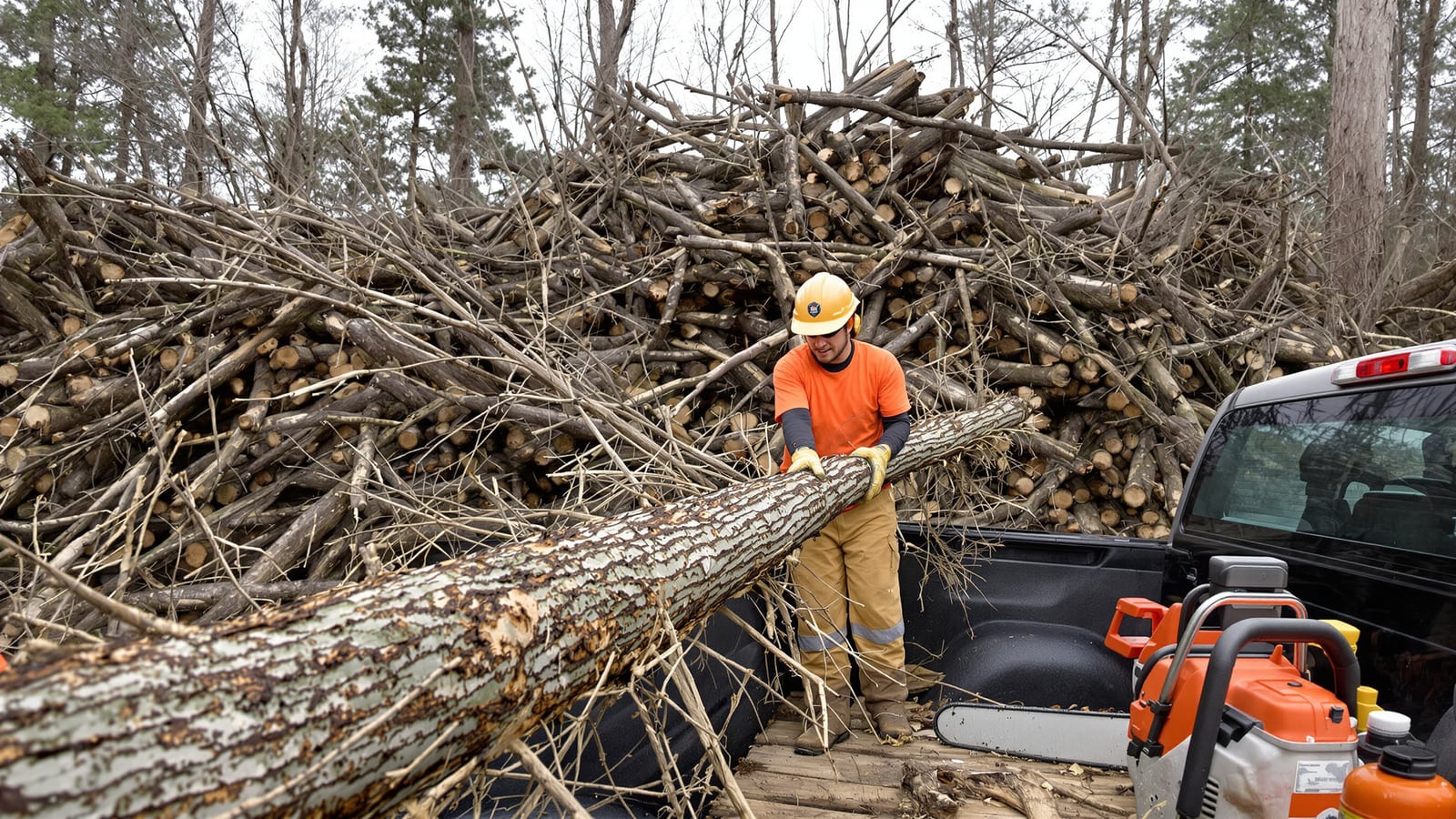
Quick answer: Storm debris removal can pay $40 to $50 an hour for your time, once dump fees and gear wear are counted, but only for a few busy weeks after a storm. Starting costs run roughly $1,000 to $2,500 if you already own a truck. It's worth doing if you're comfortable with a chainsaw and carry the right insurance. It isn't if you're hoping to get on steep roofs with a borrowed ladder. All dollar figures here are ballpark ranges and vary a lot by market, so call a few local outfits before you set your own prices.
The work nobody budgets for
After a bad windstorm, every house on the street has the same problem. Limbs in the yard. A gutter packed with pine needles and shingle grit. A roof valley holding a branch the size of a canoe paddle. The homeowner didn't plan for any of it, and the tree service is booked three weeks out.
That gap is your business. It's not roofing and it's not tree removal. It's cleanup: getting the debris off, out and hauled away so the family can use their yard again.
The pitch is simple. Come look, quote a flat price, finish in a morning, leave the place cleaner than you found it. Rake the lawn, blow the driveway, and don't leave twigs in the flower bed. That last part is what gets you the referral from the next-door neighbor.
Stay off the steep roofs
Falls from roofs and ladders are among the most common ways people get badly hurt doing home work. A wet, debris-covered roof with a 7/12 pitch is no place for a weekend hustler.
Here's the line to draw:
- Do: debris you can reach from the ground, a stable ladder, or a low-slope roof. Gutters. Yard cleanup. Branches on a shed or porch cover.
- Don't: walk steep or wet roofs, cut anything leaning on the house, or work anywhere near a power line. Downed or sagging lines stay the utility's problem. Tell the homeowner to contact them and walk away.
- Don't: tarp, patch or repair roofs. That's roofing. Many states require a contractor license for it, and storm-season rules often get stricter. Check your state's licensing board before you advertise anything beyond cleanup.
If a job needs a harness, an anchor and a crew, refer it to a licensed roofer or tree service. Referring work out costs you nothing and earns you a favor later.
What it costs to start
If you already own a pickup, you're most of the way there. Rough figures:
- Extension ladder, fiberglass, heavy-duty rating: $250 to $400
- Chainsaw, mid-size, plus spare chain and bar oil: $300 to $500
- Pole saw: $150 to $300
- Backpack or handheld blower: $150 to $300
- Rakes, tarps, rope, bow saw, loppers: $100 to $200
- Helmet, eye and ear protection, chaps, gloves, boots: $150 to $300
- Trailer, if you don't have a truck bed big enough: $800 to $2,000 used
Skip the cheapest chainsaw you can find. A saw that won't start at 8 a.m. on a booked day costs you the job. And never cut anything under tension, such as a limb bent under another one, until you understand which way it'll spring.
The part that eats your profit: dumping
Debris is heavy and wet, and most landfills and transfer stations charge by the ton or by the load. Some towns run free brush drop-offs after storms. Others don't. Call before you quote a single job.
Price the dump into every bid. A truckload of green limbs can take two trips, and the second trip costs an hour of your day plus fuel. This is the number that surprises people most.
If your town has a yard-waste site that takes brush free or cheap, you've got a real edge. If the nearest dump is 40 minutes away and charges by weight, think hard.
What to charge and what you'll earn
Quote flat prices after you've seen the job, ideally with a photo. Hourly pricing starts arguments when the homeowner watches the clock.
A reasonable target is $60 to $90 an hour for your labor, then add the haul and dump cost. A typical small job, say a few limbs on a garage roof plus a yard cleanup, might take three to five hours with driving and might land between $200 and $400.
Here's an illustration, not a promise. Say you land eight jobs in a busy month at an average of $275. That's $2,200. Take out $400 for dump fees, fuel, chains and blades. You're at $1,800 for about 40 hours of work, or around $45 an hour. That's decent for a weekend hustle.
Now the annoying part. Storm work is lumpy. You might have six strong weeks in spring, a few more in fall, and a long dry spell between. If you live where big storms are rare, this isn't a steady income. Fill the gaps with gutter cleaning, leaf removal and yard haul-offs, or pair it with pressure washing and junk hauling so the trailer keeps earning.
Insurance, before the first job
Your homeowner's policy almost certainly doesn't cover paid work. Neither does your personal auto policy when you're hauling debris for customers.
Talk to an independent insurance agent about:
- General liability. It covers damage you cause to a customer's property, like a limb through a window. For a small solo operator, premiums often run from several hundred dollars to a couple thousand a year. Get quotes.
- Commercial auto. Ask whether your truck and trailer need it, or whether a rider on your personal policy is enough.
- Workers' compensation. If you hire any help, even a buddy for a Saturday, ask what your state requires. Paying cash under the table is how a good side hustle becomes a lawsuit.
Many homeowners will also ask for proof of insurance, especially after a storm, when scammers go door to door. Having a certificate ready is a selling point. Storm chasers who take a deposit and vanish give honest operators a bad name, so never ask for a big payment up front. Taking payment when the work is done is normal for this kind of job.
Taxes
This is self-employment income. You'll owe income tax plus self-employment tax of 15.3% on net earnings. Set aside a chunk of every payment in a separate account the day you get paid. The piece on what to set aside for taxes on side income walks through the percentages. A tax professional can tell you what gear and mileage you can deduct. Keep every receipt and a simple mileage log from day one.
This article is general education, not tax, legal or financial advice. A CPA and an insurance agent will cost you a few hundred dollars and could save you a lot more.
When it isn't worth it
Skip this hustle if:
- You don't own a truck or trailer and don't want to buy one.
- You're not comfortable with ladders and chainsaws. Fear is useful here. Respect it.
- Your dump fees are high and your market is small.
- You can't get insured at a price that leaves you any profit.
- You expect steady money. A few busy weeks a year is the real shape of it.
If you already have the truck, the tools and a steady hand, start with your own street. Offer to clear the yard of the widow down the block at a fair price after the next blow. Do the job right, rake it clean, and leave nothing behind but the clean lines in the lawn. Within a month, someone will ask who did it.
Once the calendar fills and you're turning work away, read when a side hustle should become a business before you hire anyone.
Ray Okonkwo
Money & Business
Former commercial banker turned small-business owner. Covers salary, credit, margins and the arithmetic nobody does before signing.

Watch
Worth an hour of your evening
More from Side Hustles.
From channels we rate. Plays on YouTube.
Read next