Watch the Safeties First and Football Opens Right Up
Ten seconds before every snap, both coordinators show you their hand. Learn where to look and a Sunday broadcast stops being noise.
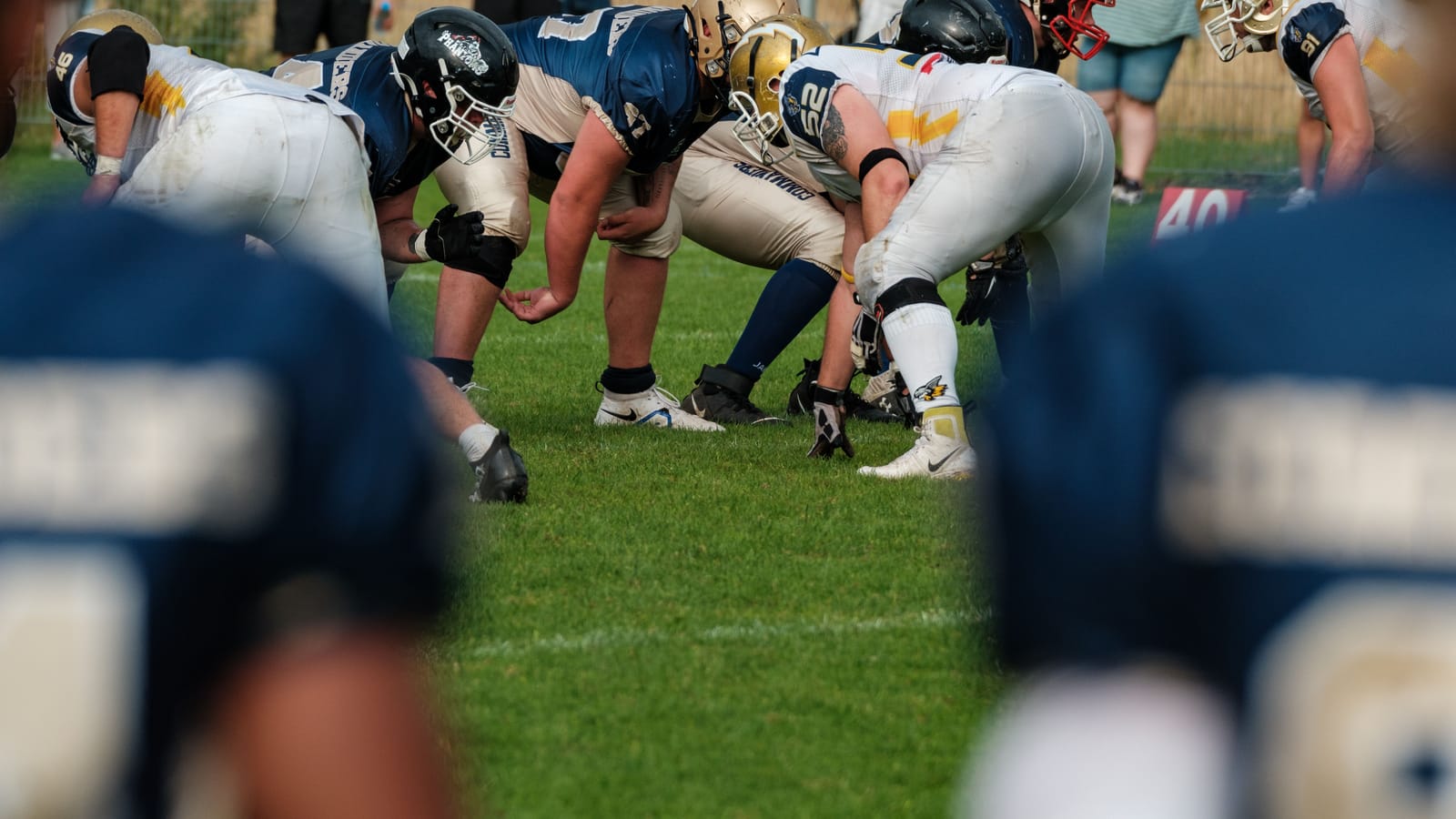
Start here: before every snap, count the deep safeties. One or two. That single number tells you more about what's coming than anything the announcer will say for the next six seconds.
One safety in the middle of the field means the defense has committed a body to the run fit or to man coverage somewhere. Two safeties deep, split wide, means they're playing the pass first and daring you to hand it off. Vic Fangio built a defensive career on two-high shells that rotate late, and half the league copied him, which is why so many modern quarterbacks look confused on third down. The picture at the snap isn't the picture at the throw.
Get that one habit and everything else stacks on top of it.
Count the backs and tight ends, then say the number out loud
Offensive personnel is a two-digit code, and it's the easiest jargon in the sport to learn. First digit is running backs. Second is tight ends. Everybody left over is a receiver, because there are always five eligible.
One back, one tight end is 11 personnel. That's three wideouts, and it's the base offense of most of the NFL. Sean McVay's Rams ran it relentlessly. One back, two tight ends is 12. Two backs, one tight end is 21, which usually means a fullback just jogged out and somebody's about to get hit.
Do this on the broadcast before the ball is snapped. You'll be slow at first. By the second quarter you'll be fast.
Then look at the defense. Did they answer 11 personnel with a nickel corner, or did they stay in base with three linebackers? If a defense keeps its base personnel against three receivers, the offensive coordinator has found something he likes and he's going to run it until they fix it. If the defense goes light, watch the offense hand it off on the very next play. That's the whole negotiation. You're watching two guys argue about body types.
Motion is a question, and the defense answers it
When a receiver goes in motion across the formation, don't watch the receiver. Watch whether a defender goes with him.
Somebody travels step for step, that's man coverage. The defense just told you. If instead the secondary slides over a notch and everybody passes him off, that's zone. Offensive coordinators use motion for exactly this reason, and quarterbacks use the answer to decide where the ball is going.
Jet motion, the full-speed sprint across the formation right before the snap, does something else too. It forces the defense to account for a runner going the other way, which holds linebackers for half a beat. Half a beat is the entire margin in a run game.
Watch how often a team motions at all. Shanahan-tree offenses in San Francisco, Miami, and Green Bay live on it. Some staffs barely bother. Neither is wrong, but the ones who don't motion are asking their linemen to win more often.
Read the offensive line's first step
This is the fun part, and the broadcast makes it hard, which is why you rewind.
If the whole line takes a lateral first step in the same direction and the back aims at the sideline before cutting back, that's outside zone. Kyle Shanahan's version of it is the most copied run scheme of the last decade, and the point isn't the hole. The point is making the defense flow, then cutting behind them.
If a guard pulls, leaves his spot and runs down the line to lead through a hole, you're looking at gap scheme. Power, counter, the stuff that's been in playbooks since Vince Lombardi drew the sweep. Gap schemes create a specific hole on purpose and put a large man in front of the runner.
Zone teams want you to chase. Gap teams want to knock you off the spot. Most good offenses run both, and the giveaway is that first step.
Now connect it: whatever run action they just showed you, the play-action pass off it's coming later, usually on first down, usually after they've run it successfully twice. When the quarterback carries out a bootleg away from the flow, that's the same play the defense already swallowed twice, with the ball hidden.
Pressure has tells, and so does fake pressure
Six defenders walked up to the line doesn't mean six are coming. Simulated pressure, popularized by the Fangio and Brandon Staley school, shows a crowded line, sends four, and drops a defensive lineman into a throwing lane. Dick LeBeau was doing the zone-blitz version in Pittsburgh long before it had a modern name.
So watch what the walked-up defenders do at the snap, not before. Count how many actually rush. Four is normal. Five is a pressure. Six is a coordinator who has decided the quarterback gets one read and no more.
The real tell is the safety. If a safety creeps down inside the numbers late and doesn't retreat, somebody's blitzing or the coverage just rotated. Steve Spagnuolo has made a long career out of the late-moving defensive back, and he does it most often on third down and in the red zone, where the field is short and there's less grass to defend.
Also look at the running back before the snap. If he's scanning the second level instead of watching the quarterback, protection has a problem and the back knows it.
Watch one unit per drive, and stop watching the ball
This is the discipline that actually changes your viewing. The ball is a magnet and it's lying to you.
Pick a drive and watch only the middle linebacker. Next drive, watch only the right tackle and whoever's across from him. Then watch one safety for a full series. You lose the flow of the game for eight minutes and you gain the structure of it for the rest of your life.
On TV you're limited. The broadcast angle is tight and often cuts the deep safeties out of frame entirely, which is why the pre-snap shot matters so much and why a DVR beats live viewing. The All-22 coaches film is the real thing, and the NFL puts it behind Game Pass. College is harder to find. High school is easy: go sit in the top row at the 50, or better, behind the end zone, and you can see every route concept unfold like a diagram. Friday night is the best free film study in America.
Where this gets you wrong
Sometimes there's no scheme at all. A defensive lineman wins a one-on-one in two seconds and the design never gets to happen. Sometimes a coordinator calls something clever and a rookie safety blows the rotation. You'll watch a beautiful concept fail because a guard missed a call, and you'll credit the coaching for a play that was just a receiver being better than a cornerback.
Scheme sets the odds. Players settle the bet.
And be careful about announcing a tendency from four plays. Coordinators self-scout. Andy Reid has been in the league long enough to break any pattern you think you've found, on purpose, on the exact down you found it.
You'll know it's working when you call the run direction before the snap and get it right twice in a row. Then you'll say it out loud in your own living room, and nobody will believe you, and that's fine. Say it again next week.
Marcus Vale
Editor-in-Chief
Twenty years in magazines, most of it deciding what to cut. Writes about work, discipline and the decisions that compound.

Watch
Watch how it's done
Picked for this article.
From channels we rate. Plays on YouTube.
NFL
How to Play Zone Defense & When to Use Cover 2, Cover 3, or Cover 4 | NFL Film Sessions
Kurt Benkert
How to read a defense like an NFL QB! 🤓
Read next