Measure yourself once and stop guessing at the rack
Seven numbers, a soft tape and ten minutes. Write them down once and you'll buy shirts, pants and shoes with a lot less returning.
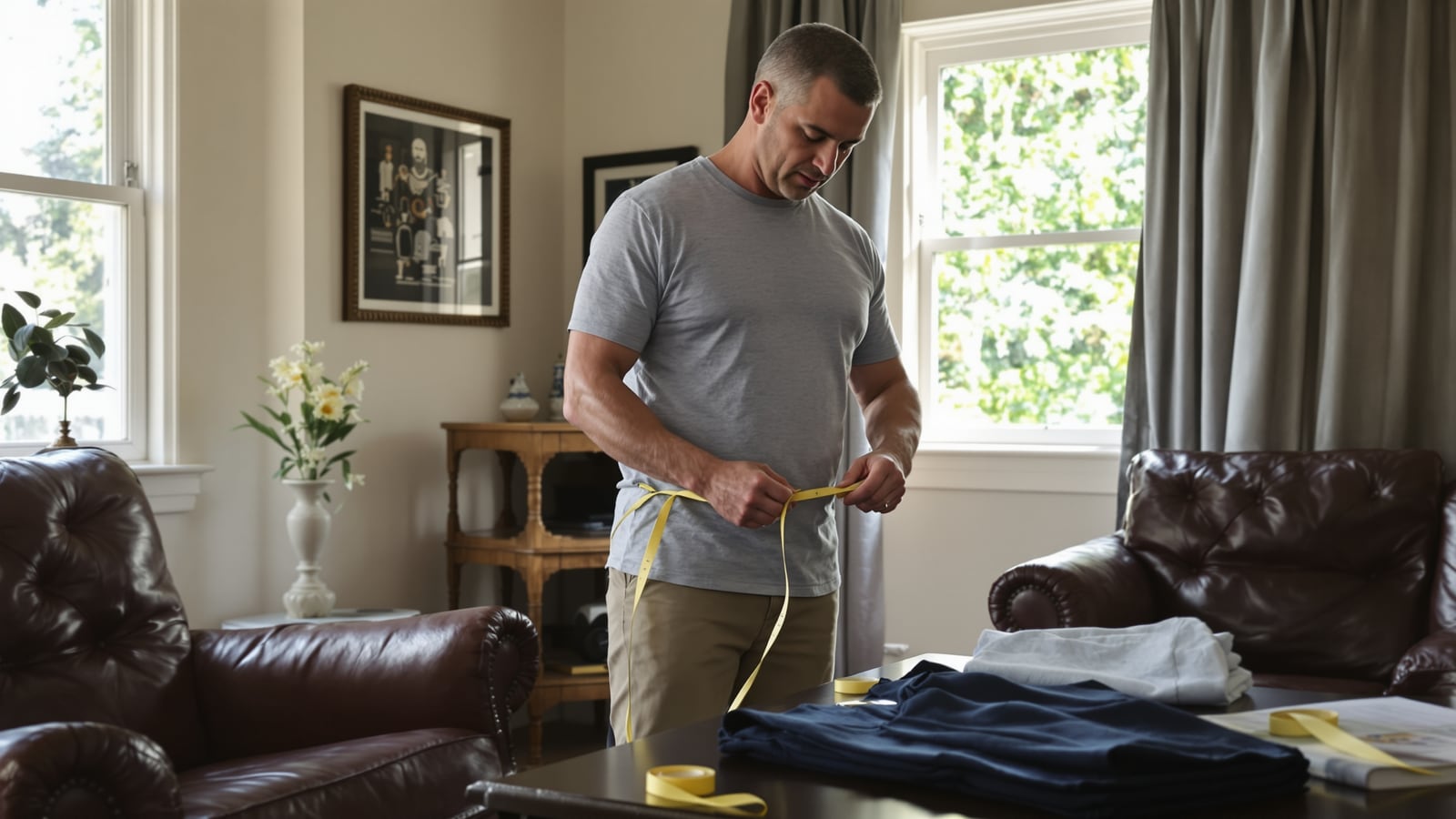
Quick answer: Take seven measurements: neck, chest, shoulder, sleeve, waist, seat and inseam. Add foot length. Then measure one shirt and one pair of pants that already fit you, laid flat. Save everything in your phone. That's your sizing from here on.
A "medium" from one brand is a "large" from another. A 34 waist can measure 36 inches across the actual fabric. The tag is a rumor. The tape isn't.
What you need
A soft tailor's tape, the flexible cloth or fiberglass kind. A few dollars at any fabric store or pharmacy. A metal hardware tape won't bend around you.
Also a second person for two of the measurements. Your wife, your brother, a patient friend. It's ten minutes and you can return the favor.
Wear a thin t-shirt and trousers, or just the t-shirt and shorts. No jacket, no thick sweater, no belt loaded with a phone and a multitool.
The seven numbers
Stand up straight, relax, and breathe normally. Don't suck in your stomach. The tape should lie flat against you, snug but not squeezing. If you can't slide a finger under it, ease off.
Neck. Wrap the tape around the base of your neck, where a collar sits. Leave one finger of room. This is your dress shirt collar size, give or take a half inch depending on the brand.
Chest. Go under your arms, across the shoulder blades, and over the fullest part of your chest. Keep the tape level all the way around. Dropping at the back is the classic mistake, and it makes you look bigger or smaller than you are.
Shoulder. Seam to seam across your upper back, from the bony point at one shoulder to the other. This one is hard solo. If you don't have help, skip ahead to the shirt trick below, which does the job better.
Sleeve. Start at the center of the back of your neck, run the tape across your shoulder and down the arm with the elbow slightly bent, and stop at the wrist bone. Dress shirts are sold by this number. Most men have never checked theirs and are wearing a sleeve that's an inch too long or too short.
Waist. Measure where your pants actually sit, not where you imagine they sit. For most men that's at or just below the navel. This is often a different number from the one you've been buying for ten years. Don't take it personally.
Seat. Around the fullest part of your hips and backside, feet together. This is the number that explains why pants fit at the waist but pull across the back pockets.
Inseam. Easiest on a pair of pants that already hang right. Lay them flat and measure from the seam where the legs meet down to the hem. Measuring your own leg works too, but it's awkward and the pants version is more honest.
The trick that makes the numbers useful
Body measurements tell you who you are. Garment measurements tell you what fits. You need both.
Pull out the best-fitting shirt you own. The one you reach for without thinking. Button it, lay it flat on a bed, and measure:
- Pit to pit. Straight across, armpit seam to armpit seam. Double it and you have the chest the shirt was built for.
- Shoulder seam to seam. Across the back.
- Sleeve. From the shoulder seam down to the cuff.
- Length. From the highest point of the shoulder, down the back, to the hem.
Do the same with your best pair of pants: waist across, doubled, plus seat, thigh, leg opening and inseam.
Now you've got a template. Most decent retailers list garment measurements on the product page, usually under "size guide" or "details." Hold the listed numbers against yours. If the shirt's pit-to-pit is two inches wider than your template, it'll billow. If the shoulder runs half an inch narrow, you'll feel it every time you reach for a coffee cup.
This is how you buy online without the three-sizes-and-send-two-back routine. It also works at the rack. Lay your favorite shirt against the one you're considering, shoulder to shoulder. It takes ten seconds and the salesman will pretend he didn't notice.
Shoes get their own rule
Measure your feet at the end of the day, when they've swollen a little. Stand on a sheet of paper, mark the heel and the longest toe, and measure between. Do both feet, because one is usually bigger, and buy for the bigger one.
A shoe store with a Brannock device, that metal slider with the heel cup, will also give you width. Most guys are wearing the right length in the wrong width and wondering why their feet hurt by two o'clock.
Brands run different. The number is a starting point. Your toes still need about a thumb's width of room at the front.
What goes wrong
Your numbers might not match what you've been buying. That's the point. If your chest says 41 and you've been wearing a 44 because it felt comfortable, you've been wearing a tent. If your waist says 36 and you've been squeezing into a 34, you know why the button pops when you sit.
Admit the real number. Buy the garment that fits it, or have it altered. A tailor can take in a shirt body or shorten a sleeve for a modest fee, and having your measurements in hand makes the conversation quick: "Take it in an inch and a half at the waist." That's a better start than "it just feels off."
Also, bodies change. Re-measure twice a year, and any time you've gained or lost ten pounds or started lifting seriously. If you've got growing boys, measure them before every school-year shopping trip. It saves money, and it keeps a twelve-year-old from wearing last year's pants to the knee.
Fabric matters too. Cotton shrinks, and the dryer is why your clothes wear out early. If you measure a favorite shirt, do it after it's been washed a few times, not fresh off the hanger.
Don't let anybody talk you out of your numbers
Salespeople will tell you "that's fine" on a jacket that pulls across the back. Brothers-in-law will tell you you're a large because they're a large. You've got a tape and a template now.
You can be polite and still say no. "I'll check that against my measurements" ends most arguments, and nobody can argue with a tape.
When you want to confirm a garment works once it's on, run through the checks that tell you a garment actually fits. If you're building a wardrobe from scratch, ten garments that get you through almost any week is the shopping list, and your numbers are what keep every item on it from being a gamble.
Write the numbers in a note on your phone. Label it "Sizes." Next time you're standing in a fitting room, you won't be guessing. You'll be checking.
Dean Shaw
Gear & Garage
Reads the warranty, the parts list and the long-term owner reviews before anything else. Trucks, tools, watches, and the cheap version that costs more.

Watch
Watch how it's done
Picked for this article.
From channels we rate. Plays on YouTube.
Q Clothier
How to Measure for a Custom Suit
Meghan Grace DIY
How To Properly Take Men's Clothing Measurements - Measure a Man for Sewing from a Costume Designer!
Read next