What smart casual actually means, and what to buy
A dress code nobody explains, translated into specific garments, four fit checkpoints and the order to buy them in.
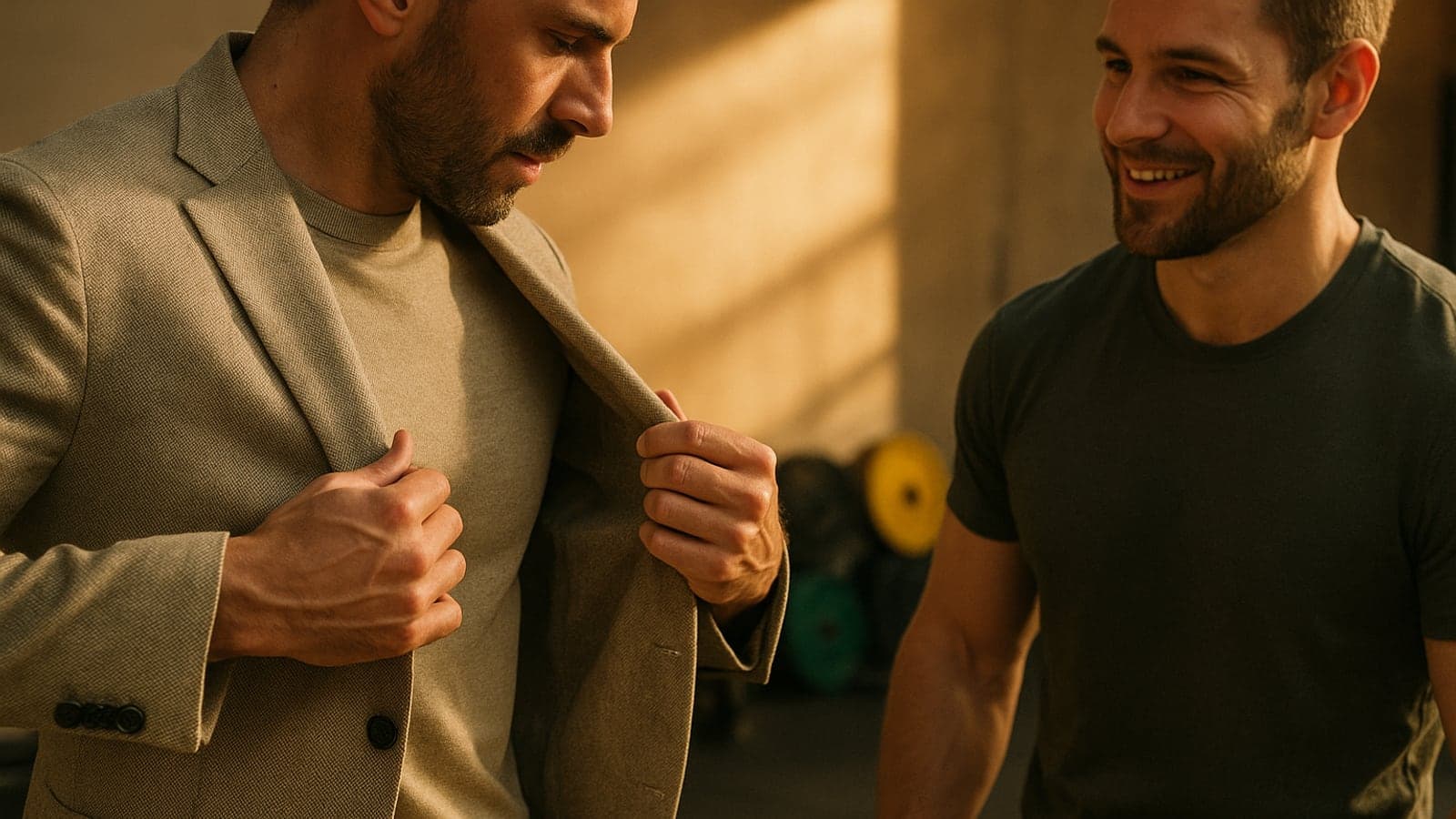
Smart casual means you look like you chose your clothes. That's it. No jacket required, no tie, nothing that reads as a uniform. But also nothing that reads as a weekend: no gym kit, no sports team logos, no shoes you'd mow the lawn in.
The trouble is that "smart casual" is defined by what it isn't, so most people arrive at it by subtraction. They take the interview outfit and remove the tie. Or they take the Saturday outfit and swap the T-shirt for a polo. Both look like compromises, because both are.
Build it forward instead. Start with a small set of garments that work in almost any office, get each one to fit properly, then worry about what it's made of. Brand comes last and matters least.
The spine of it
Five categories cover nearly every smart casual day.
- Trousers that aren't blue jeans. Chinos, flat front, in stone, olive, navy or grey. Or a wool-blend trouser if your office skews dressier.
- A collared shirt. Oxford cloth in white and light blue does the heaviest lifting. A poplin if you want something crisper.
- Knitwear. A merino crewneck or a fine-gauge cardigan. This is the single most useful smart casual item because it makes a plain shirt look deliberate.
- One unstructured jacket. Soft shoulder, patch pockets, no lining or half lining. Not a suit jacket orphaned from its trousers.
- Leather shoes or clean minimal leather sneakers. Loafers, derbies, ankle boots, flats. Low, plain, leather.
Everything else is variation. A shirt dress, a knit polo, dark denim if your workplace allows it. Get the spine right and the variations take care of themselves.
Fit is measured in four places
Forget how a garment feels in the changing room. Check these four points, because they're the ones other people see.
Shoulder seam. On a jacket or a structured shirt, the seam sits where your shoulder ends and your arm begins. Not on the deltoid. Not hanging past it. This is the one measurement you can't buy your way around.
Sleeve length. Shirt sleeve ends at the base of your thumb, where the wrist bone sticks out. Jacket sleeve ends about a centimetre shorter, so a sliver of shirt cuff shows. Knitwear sleeve should not swallow your hand.
Trouser break. One soft crease at the front of the shoe, or none at all. No fabric pooling on top of the laces. If you're between, go shorter. Too long always looks worse than too short.
Shirt width at the waist. Lift your arms. If the shirt balloons out and flaps, it's too wide in the body. If buttons pull into little horizontal X shapes when you sit, it's too narrow. There's a lot of room between those two failures and most people are living at one extreme.
What a tailor can fix, and what they can't
Hemming trousers is the cheapest and most transformative alteration going. If you've never had it done, do it with the trousers you already own before you buy anything new. You'll be surprised how many of them were the problem.
Taking in a shirt or a jacket through the body is straightforward. So is shortening sleeves on a shirt. Tapering trouser legs is easy.
Shortening jacket sleeves is doable but costs more if there are working buttonholes. Shortening a jacket's overall length is awkward and changes the pocket proportions. Adjusting shoulders is expensive, fiddly and rarely worth it on a mid-price garment.
So the rule when you're buying: fit the shoulders and the chest, then let the tailor handle everything below that. A jacket that's slightly big in the waist and right in the shoulders is a good buy. A jacket that fits the waist and droops at the shoulder is a bad one at any price.
Where cheap fabric gives you away
Fabric is the second decision, not the first, but it's where clothes age badly.
Polyester-heavy trousers hold a shine at the seat and the knees after a few months. You can't press it out. If you buy synthetic-blend trousers, buy them knowing they're a two-season item.
Shirts that are mostly polyester don't breathe and they photograph oddly under fluorescent light. Cotton creases, which is fine. Creasing looks human. Shine looks cheap.
Merino wool knitwear is worth paying up for. It holds shape, doesn't smell after a day, and drapes instead of clinging. Acrylic knitwear pills at the underarm and side seams within a month or two of regular wear, and once it pills it's done.
Unstructured jackets in cotton, linen-cotton blends or wool hopsack all work. Avoid anything with a heavy fused interlining at this price point, because the fusing bubbles after dry cleaning and the jacket never looks flat again.
Colour, and why most wardrobes go grey
Most people default to black, charcoal and navy because those feel safe. In a smart casual context they read as a suit that's lost its jacket.
Mid-tones do better. Olive, tan, stone, brown, warm grey. These look intentional in a way that head-to-toe dark doesn't, and they make a plain white shirt look like a choice rather than a leftover.
Brown shoes over black, unless your office is genuinely formal. Brown works with navy, olive, grey and tan. Black really only works with grey and navy, and it drags the whole outfit towards funeral.
Keep patterns to one per outfit. A checked shirt with plain trousers. A plain shirt with a textured jacket. Two patterns is a coin flip and you don't need coin flips before nine in the morning.
Buy it in this order
You don't need thirty items. You need eight or nine that all work with each other, bought over a few months rather than a weekend.
- Two pairs of trousers, hemmed. Different colours. This is where the money goes first because trousers are the item most people get wrong.
- Three shirts. White, light blue, one with some texture or a soft check.
- One pair of shoes, brown leather, resoleable if you can manage it.
- Two knits. One crewneck, one zip or cardigan.
- The jacket. Last, because it's the item you'll want to spend properly on, and by then you'll know what colours you actually reach for.
Wear each thing for a fortnight before buying the next. You'll find out fast which items you want two of and which ones sit in the drawer.
The two ways it goes wrong
Overdressing looks like wearing a business outfit with the formal parts removed. Shiny shoes, a stiff shirt, trousers with a sharp crease and no jacket. It looks like you're between meetings in a different building.
Underdressing looks like your weekend clothes with one upgrade. A hoodie under a blazer. Trainers with a dress shirt. Cargo trousers with a knit.
Both come from the same mistake, which is treating smart casual as a subtraction from something else. It's its own category. Soft fabrics, clean lines, nothing shiny, nothing sporty.
And nobody at work will ever tell you the trousers fit. They'll just stop registering what you're wearing and start registering you, which was the job all along.
Tobias Reed
Style & Grooming
Spent a decade in menswear retail watching men buy the wrong size. Believes fit is ninety per cent of it and says so weekly.

Read next