

Why the Trades Pay More at Fifty-Five Than at Thirty-Five
The big paychecks in the trades go to the people who stopped selling hours and started selling judgment. That shift takes about ten years of planning.
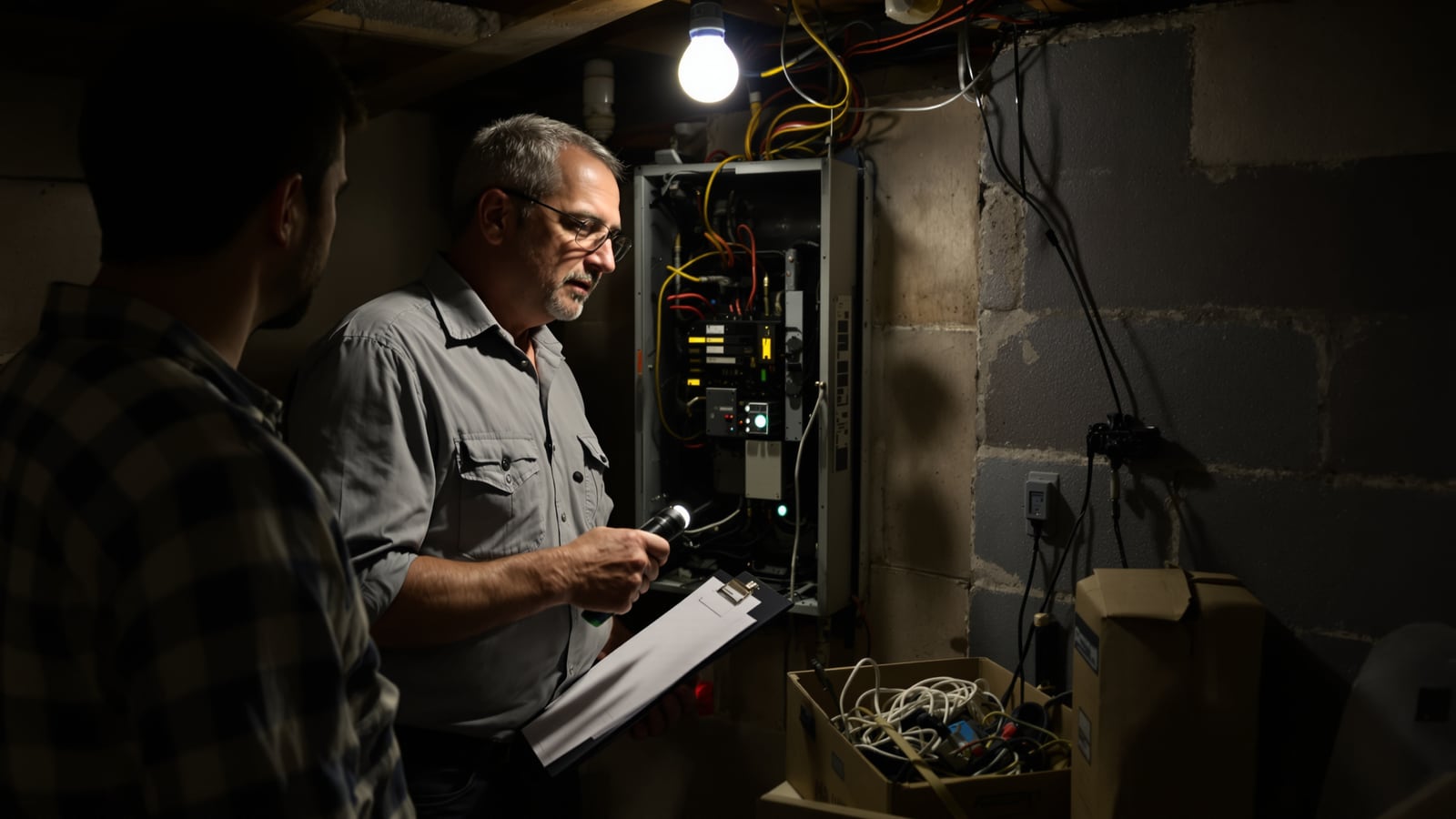
Quick answer: At thirty-five, you're paid for what your hands can do in a day. At fifty-five, you can be paid for what your head knows about a job. The second pays better and lasts longer, but only if you start building toward it around forty-five. Exact numbers vary by state, trade and local market, so check your own before you plan around anyone's.
Two electricians, same age
Picture two journeyman electricians, both fifty-five. This is an illustration, not a case study.
The first never changed anything. He's a fine hand and he still pulls wire ten hours a day. His back talks to him every morning. His pay looks like it did at forty, adjusted for a few raises, and any week he can't work is a week he isn't paid.
The second got his master's license at forty-six. He estimates jobs three days a week and troubleshoots the ugly service calls two. Younger guys do the heavy pulling, and he signs off on their work. His customers ask for him by name, and he can't be replaced by whoever is cheapest this month.
Same trade, same age, same starting point. Twenty years of different decisions.
What a thirty-five-year-old is really selling
Speed and stamina. Nothing wrong with that. It's how you build a career, and the overtime you can work in your thirties is real money.
But it's a rental. Your body is the asset, and it depreciates. Every trade has a version of the guy who was a star at thirty-two and a liability to the schedule at fifty-two. Nobody planned it that way. They just never planned.
What a fifty-five-year-old can sell
Judgment. It's the one thing a twenty-eight-year-old can't buy, borrow or fake. These are the roles where it earns its keep:
- Estimator. You've seen what jobs cost when they go wrong. A bad bid loses the company money for months, so a good estimator is worth a lot to the shop.
- Project manager or superintendent. Somebody has to know which trade follows which, and what the inspector will want to see.
- Service and troubleshooting. Diagnosing the thing nobody else can find pays better than installing the thing everybody can.
- Inspector. Many cities, counties and states hire from the trades. Pay and requirements differ widely, so look up your own jurisdiction.
- Instructor. Apprenticeship programs and technical colleges need people who've done the work. It's usually steadier and gentler on the body than the field.
- Shop owner, or the license behind one. In many states, a contractor needs a licensed master or qualifier on the books. If that's you, you're not easy to replace.
Concede the trade-off. Some of these roles pay less than a peak year of heavy overtime on the tools. If you only compare your best thirty-five-year-old paycheck to a salaried estimating job, the tools can look better. The comparison that matters is your paycheck at fifty-eight, sixty-two and sixty-five, and what happens to it if a shoulder gives out.
Start at forty-five, not fifty-four
The plan is simple. It just takes years, which is why most people skip it.
Get the highest license your state offers. Journeyman, master, contractor, whatever the ladder is where you live. Requirements, hours and exams differ by state, sometimes by county, so call your licensing board and ask what the path is. Some states honor each other's licenses and some don't. Find out before you move.
Add a credential that points off the tools. Estimating courses, a safety certification, an inspector credential, a foreman's or supervisor's program. Your union hall, your local technical college or your state licensing board can tell you what exists locally.
Start doing the work of the next job now. Offer to price a small job. Walk with the project manager. Run the crew when the foreman's out. By the time you want the title, you've already been doing it.
Teach somebody. Take an apprentice seriously. The guy you train at forty-five may be the one who hires you at fifty-five. And if you're picking up tools yourself, what a first-year apprentice should buy is worth knowing so you can point him the right way.
Build a name. Show up on time, finish what you start, and answer your phone. That's the oldest advice in the trades and it still beats any marketing.
The money side that nobody mentions
Your fifties are often your cheapest years to live. The kids are grown or nearly, and the mortgage is much smaller or gone, if you've been paying it down like a man who plans to own his house. That frees you to take a role with fewer hours and a steadier check, or to buy into a business, without the family budget collapsing.
Two things to look at with a professional, not a coworker. First, if you're in a union, find out how your pension vests and how it's calculated, because leaving a plan early can cost you. Second, ask a financial planner how claiming Social Security earlier or later affects your benefit. Waiting generally raises the monthly amount, and a job that's easier on your body makes waiting more realistic. Which choice is right for you is a question for someone who can see your whole picture.
The union question in general deserves its own read. Union or non-union trade work, and how to actually choose lays out the trade-offs.
Where this falls apart
It's not magic, and a few things can wreck it.
If you never get licensed, you're stuck selling your hands. If you wait until the body breaks, you're making the move in a hurry and from a weak position. If your employer would rather hire cheap than keep experience, you may need to take your name and your license somewhere that values both. And going out on your own brings risk: insurance, payroll, slow-paying customers. Plenty of good tradesmen are better off as the senior man in somebody else's shop, and that's no failure.
Your body also sets the clock. Your knees aren't a retirement plan, and working forty years in the trades without wrecking your body covers how to protect the one asset you can't replace while you build the ones you can.
Do this week
Call your state licensing board, or look up its website, and find out what the next rung above yours requires. Write down the hours, the exam and the fees. Then look up your trade in the Bureau of Labor Statistics' Occupational Outlook Handbook, and compare your state's wages for the field roles with the estimating and supervisory ones.
That takes an hour. It's the cheapest raise you'll ever give yourself, and the man you'll be at fifty-five will be glad you made the call.
Ade Fisher
Young Men
Teaches the trades intake at a community college. Writes the manual he wishes his students arrived with.

Watch
Worth an hour of your evening
More from Trades.
From channels we rate. Plays on YouTube.
Read next