

Three phone calls before you rent a boat for the week
The waiver covers the boat, your own policy may cover nobody, and the exclusions are where the money goes. Sort it out before you reach the dock.
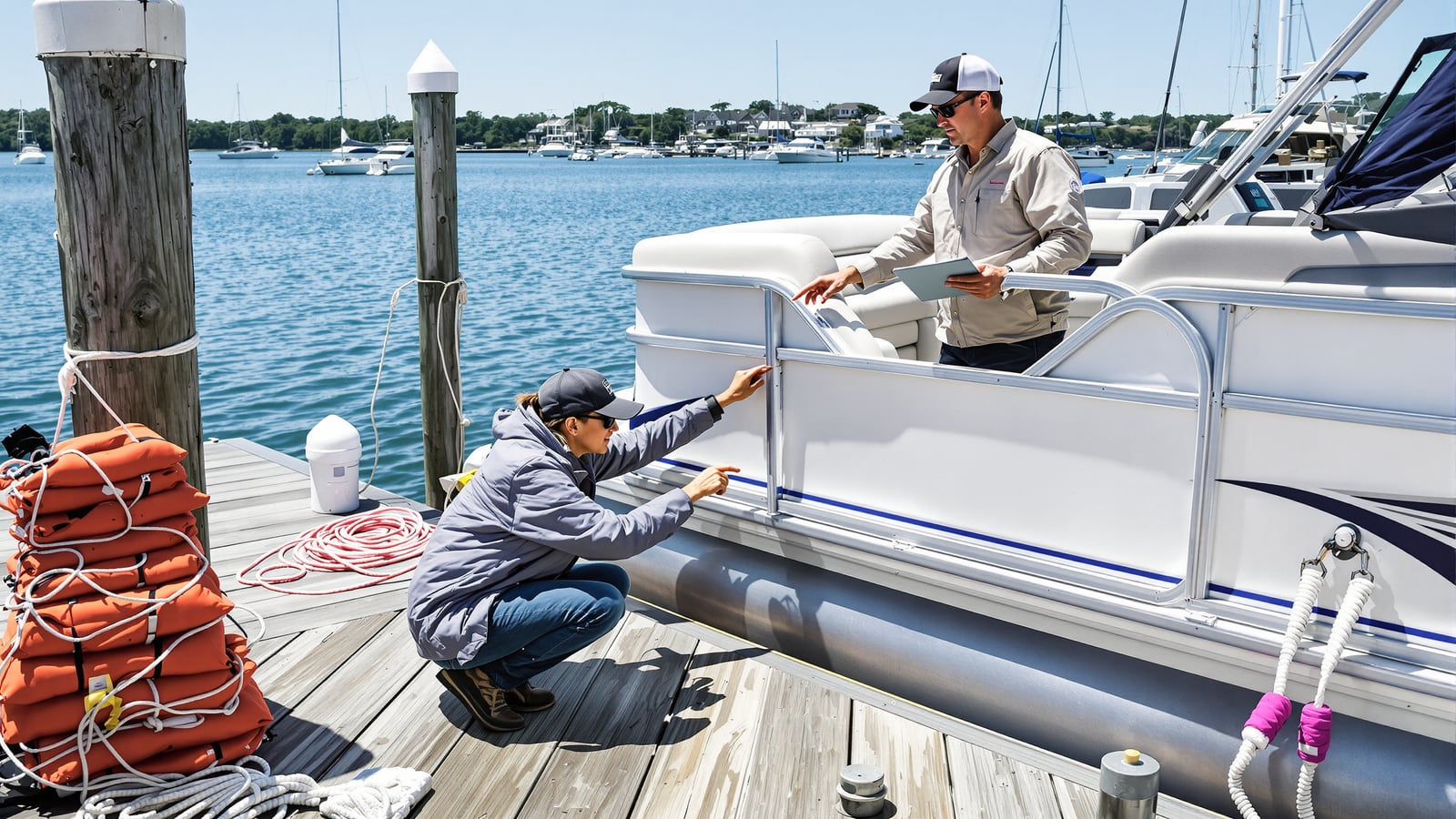
Quick answer: Buy the rental company's damage waiver unless you have written confirmation that another policy covers the hull. Then spend your real effort on the exclusions list and on liability, because that's where a week on the water goes wrong.
Say the marina holds $2,500 on your card and the damage waiver runs $40 a day. Over seven days that's $280, and it's the number most people argue about at the counter. It's the wrong number to argue about.
The question isn't whether the waiver is cheap. It's what the waiver refuses to pay for.
Sort the risk into three buckets
Boat rental coverage gets confusing because people treat it as one thing. It's three.
The boat. If you hit something or the boat gets damaged on your watch, who pays to fix it?
Other people. If you injure a swimmer, a skier, or somebody on the next boat, or damage their property, who pays?
Your people and your stuff. Your family's injuries, and the phones, rods and wallets in the cooler.
The damage waiver speaks to the first bucket, and only partly. The second is often left to you. The third is almost never the rental company's problem. Each bucket gets its own phone call.
Call one: your own insurance agent
Don't assume your homeowners policy follows you onto the water. Many policies limit coverage for watercraft by length or horsepower, and many exclude damage to a boat you don't own. Some umbrella policies pick up liability on the water. Some carve it out.
Ask your agent four things:
- Does my liability coverage apply when I'm operating a rented boat?
- Are there limits on boat length or engine size?
- Does anything I own pay for damage to the rental itself?
- Can you confirm that in an email?
That last one matters. A verbal "I think you're fine" from a call center isn't a policy. I'm not an insurance professional and this isn't advice for your situation. Your agent is the one who can read your actual policy.
Call two: your credit card company
The rental car coverage that comes with many credit cards usually stops at cars. Don't count on it for a boat. Ask whether watercraft is excluded, and ask for the answer in writing.
One more card detail. Put the security deposit on a credit card, not a debit card. A debit hold ties up real cash from your checking account for the whole week, and the release can take days after you return.
Call three: the rental company
This is the call that saves you money, and it has nothing to do with price. Ask for the waiver terms in writing and read the exclusions. Ask these specifically:
- What's my maximum out-of-pocket if the boat's damaged, and what is the deductible?
- Is grounding covered? What about prop and lower unit damage?
- Is damage excluded if the company calls it negligence? How do they define that?
- What if I run outside the permitted area on the map?
- Are lost keys, towing, and salvage covered?
- What happens if somebody puts the wrong fuel in?
- Is liability included, and at what limit?
- If the weather shuts the lake down for three days, do I get a refund, a credit, or nothing?
The likely trouble on a rental is dull. It's bumping a dock, scraping a piling, or touching bottom on a shallow flat. Those are exactly the things some cheap waivers exclude. A waiver with a low sticker price and a long exclusions list isn't a deal. A pricier one that covers grounding and props may be.
When to buy, and when to skip
Here's the honest trade-off.
If nothing you own covers the hull, buy the waiver. A bent prop or a holed hull on a rental can run to thousands, and a week of vacation isn't a reason to roll those dice. Skip the waiver only when you hold written confirmation from your agent or another policy that you're covered.
What you can skip is the stacking. Don't buy a third-party hull policy on top of a waiver that already covers the same thing. If the company offers an accident or medical add-on, ask whether it duplicates the health coverage you already carry. Some of these add-ons earn their keep. Plenty just repeat what you've got.
And if nobody in your group has run a boat this size, pay for a captain on day one. A half day with a pro costs a lot less than learning to dock a 24-footer with your kids on board.
Dock day is where you win or lose
Most disputes over damage come down to one thing: nobody can prove what the boat looked like when you got it.
Before you leave the slip, walk the whole boat with your phone recording. Narrate as you go. Film the hull, the bow, the prop, the upholstery, the canvas, the swim platform. Zoom in on every scratch. Photograph the fuel gauge and the engine hours. Then get the dock hand to mark every flaw on the damage sheet and sign it.
Check the safety gear while you're standing there:
- One life jacket for every person aboard, in the right size for each kid
- A throwable cushion or ring
- A working horn or whistle
- A fire extinguisher with a gauge in the green
- An anchor with enough line
Then ask for a chart briefing. Where are the shallows? Where are the no-go zones? Which stretch gets rough when the afternoon wind kicks up? The people at the dock know. They'll tell you if you ask.
On the way back, follow the old rule: hand it over better than you got it. Fill the tank even if it left half-empty. Rinse the salt or lake scum off. Haul out the trash and the sand. Photograph the boat at return, with a staff member standing there. A clean, full, documented return is the cheapest insurance on this whole list.
Your own stuff
The marina isn't covering your phone when it goes over the side. Your homeowners or renters policy may cover personal property away from home. Ask your agent, and ask what the deductible is, because a $400 phone usually sits below it.
Buy a dry bag. It costs less than the deductible and beats filing a claim.
If you've got a long drive to the marina first, plan it like any road trip so the group arrives rested and nobody's cranky at the check-in desk. And if the week was your idea and your wife's still weighing in, this will help you plan a trip she wants to be on.
Split with friends? Settle who pays the deductible before anyone leaves the driveway. Four friends sharing a car learn the same lesson the hard way.
The three calls take under an hour. The week on the water is the one your kids will tell their own kids about. Make the story about the fish.
Dean Shaw
Gear & Garage
Reads the warranty, the parts list and the long-term owner reviews before anything else. Trucks, tools, watches, and the cheap version that costs more.

Watch
Worth an hour of your evening
More from Travel.
From channels we rate. Plays on YouTube.
Read next