Call home before they have to wonder
Fifteen minutes on a set night does more for your parents, and for you, than a text ever will.
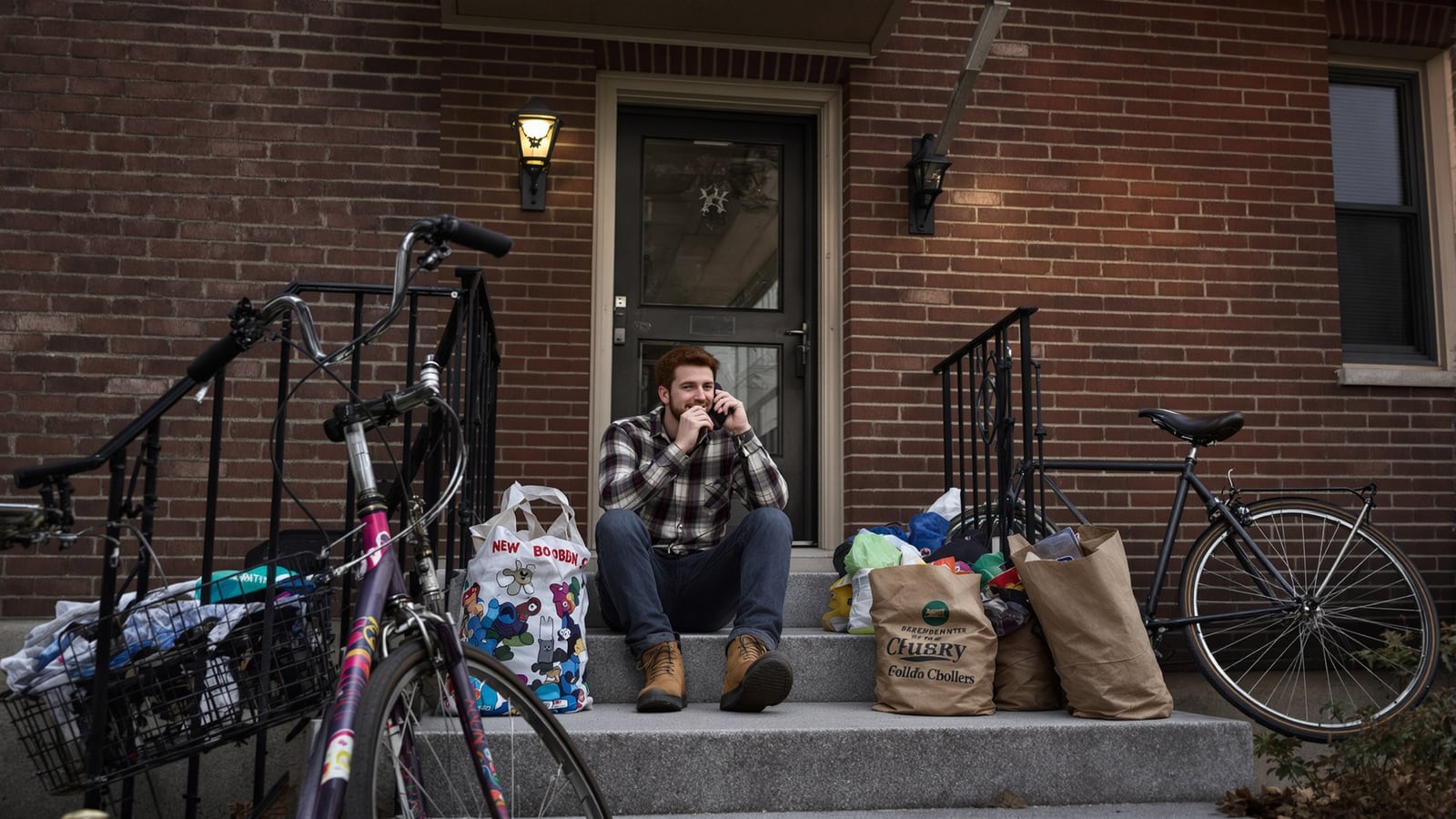
Quick answer: Pick one night a week and call at the same time. Ask about something specific in their life, tell them one real thing from yours, and hang up while it's still good. If the news is bad, make the call before somebody else carries it to them.
They're listening to your voice, not your words
Your mother can tell in about ten seconds whether you're okay. She isn't checking what you say. She's checking how fast you say it, whether you laughed at the right spot, and whether "good, just tired" sounds like tired or like something heavier.
Your father does the same thing, only he'll hide it better. He'll ask about the truck's oil change because it's easier than asking whether you're lonely.
That's why a text doesn't do the job. "All good, talk soon" can be typed by a kid who's fine and a kid who's sinking, and it looks identical on the screen. A voice can't hide as well. Calling isn't a courtesy so much as a way of letting them stop worrying, and parents who stop worrying are far easier to live with, from three hundred miles or three.
You're also the only one who can fix it. They won't call you every night, because they don't want to be the parents who hover. So they wait. Don't make them wait very long.
Pick a night and keep it
Random calls fail because "I'll call when I get a minute" never arrives. Nobody has a minute. You have a Sunday evening.
Pick a night and a rough time. Sunday after dinner works for a lot of guys because the weekend's wrapping up and nobody's mid-shift. Tell them: "I'm going to call Sundays around seven." Then do it.
Some rules that make it stick:
- Fifteen minutes is plenty. Twenty if it's going well. Five if you're swamped, but make the five.
- Walk while you talk. Pacing keeps you from scrolling with the phone on speaker and half-listening. They can hear that. They always can.
- Miss one, call the next day. Don't skip two. The second miss is where the habit dies.
- Mind the gap when you're busy. First year on a job, you'll be tired and the call will feel like a chore. That's exactly when it matters.
Your parents will build their week around it. For some of them it'll be the best part. Keep that in mind on the Sunday you'd rather watch the game.
What to say when you've got nothing to say
Most guys freeze here. Life feels boring and you don't want to waste their time. So you say "nothing much" and the call dies at ninety seconds.
Use a simple shape instead.
Start with them. Not "how are you," which gets "fine." Ask about something specific. How's Dad's knee after the procedure? Did Mom's tomatoes ever come in? Did the neighbor finally fix that fence? Remembering the detail from last week is the whole trick. It tells them you were listening.
Give them one real thing. Not a highlight reel and not a complaint list. One thing that happened. "My foreman had me run the saw alone Thursday and I was nervous the whole time." That's a story. It gives them something to hold and something to ask about.
Ask for a hand. More on that next.
End clean. "Love you, talk Sunday." Say the second part out loud. It's the promise that makes the next call easy.
Ask your dad how to do something
This is the part nobody hands you, and it's the one that pays off most.
Your father spent decades learning things he'd love to pass down. Maybe he did it badly. Maybe he never found the words. But if you call and say, "My landlord says the water heater pilot light keeps going out. What should I check first?", you've handed him a job he's good at.
You get a real answer. He gets to be useful to you, which is a big part of how a lot of men feel loved. And you've told him, without saying it, that you still need him.
That goes for your mother too. Ask her how long you can keep chicken in the fridge. Ask how she got a stain out. She'll be glad you asked and a little amused you're finally paying attention.
There's a wider point in what older men are actually watching when they meet you. Asking a real question and listening to the answer is one of the things they notice most. Your dad is the first older man you practice on, and the lowest-stakes one.
Beat the bad news
Something will go wrong. You'll total a fender, get written up, lose a job, break up with someone your mother liked. Maybe worse.
The instinct is to wait until you've fixed it. Resist that.
Call before the news travels. A sibling, a cousin or somebody's group chat will carry it home, and it'll arrive bent. Your mother will spend a day imagining something worse than what happened, and she'll be hurt that she was the last to know.
Say it plainly: "I need to tell you something. I got let go today. It happened like this, and this is what I'm doing about it." You don't need the plan finished. You need to have started one.
Most parents can handle almost anything if it comes to them straight, early, and with you owning your part. What they can't stand is being managed. If you were wrong, say so in the first minute. Nothing stops a lecture faster than getting there before they do.
And if you need money, ask for it as what it is: a loan, with a date. Then pay it back before they mention it. That one habit will do more for your standing at home than any speech. The same goes for the first month after you move out, when the budget's tightest and the temptation to say nothing is strongest.
When home is complicated
Not every guy has the parents in this piece. Some homes were hard. Some parents are gone, or unreliable, or the kind of people who turn every call into a fight. If that's you, you haven't failed at anything, and nobody here is going to hand you a lecture about it.
A few things still hold.
You get to set the terms. Call less often if it needs to be less often. Keep it short. If a parent starts in on something that goes nowhere, you can say, "I'm going to hang up now and call you Sunday," and then do exactly that. Serving your family doesn't mean taking whatever's thrown at you. It means showing up, and also keeping your footing.
And if the call home can't carry the weight, find someone else who can. A grandparent, an uncle, a coach, the older guy at the shop who always asks how you're doing. Pick one and give him a Sunday. Men get built by other men paying attention. The phone is a fine way to start.
The call that gets harder
Here's the one that costs you something. The longer you wait, the heavier it gets. A week's silence is nothing. A month turns into a conversation that starts with an apology. A year, and you're a stranger who sends birthday texts.
Your parents won't be easy to call forever. One day the voice on the other end will be older, slower, a little repeated. You'll want every Sunday back that you skipped.
So pick your night. Put it in your phone with a reminder. Then pick up and dial.
Sam Ortiz
Dads & Family
Father of three. Writes about presence, discipline and the long game, without pretending any of it's tidy.

Watch
Worth an hour of your evening
More from Young Men.
From channels we rate. Plays on YouTube.
Read next