
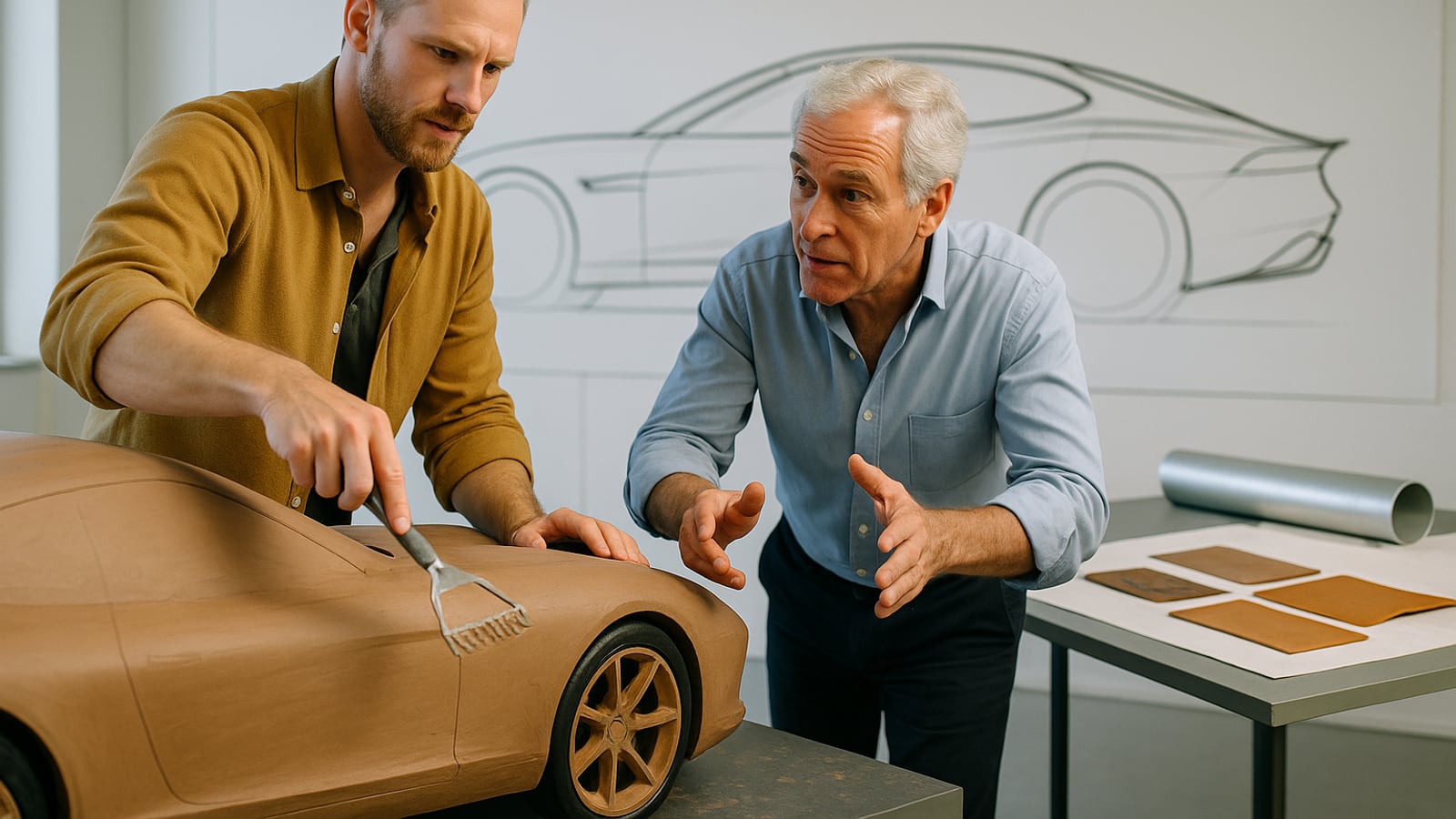
Quick answer: A coachbuilt car is a body designed and built for one client. The factory versions cost millions. A commissioned build from a good independent shop follows the same rules for a fraction of that, and it goes wrong the same way when you're careless with the money and the paperwork.
In May 2021, on the lawn at Villa d'Este on Lake Como, Rolls-Royce rolled out a car called the Boat Tail. The rear deck opened in two wings, like a butterfly, and inside sat a hosting suite with fitted cutlery and a parasol that rose out of the middle. Three were built, each for a different client. Rolls-Royce never published a price. The figure that got reported, about $28 million, is unconfirmed, and it's also beside the point.
The owners weren't paying for a car. They were paying for a few years of meetings where designers asked them how they liked to spend a Sunday afternoon, then built the answer out of aluminum and wood.
That's coachbuilding. It's the rarest luxury in the car world because money alone won't get it for you. You also need patience, a clear head and a builder willing to say no to you.
How it used to work
Before World War II, buying a top-tier car meant buying half of one. Duesenberg sold the Model J as a running chassis: frame, engine, wheels. Then you took it to a coachbuilder like Murphy in Pasadena, LeBaron or Derham, and they built a body to your order. Rolls-Royce worked the same way. So did the French houses, where firms like Figoni et Falaschi and Saoutchik shaped some of the most beautiful objects of the century.
Two cars from the same factory could look like they came from different planets. That was the whole idea.
The unibody killed it. Once the body became the structure, you couldn't just lift it off and drop a custom one on. Crash standards and emissions rules finished the job, since every new design had to be tested and certified. So the craft faded.
Walk the lawn at Pebble Beach in August, though, and look at where the crowds pack in deepest. It's around the 1930s coachwork. People still know what they're looking at.
Who does it now
There are three real tiers.
The factory programs. Rolls-Royce revived a dedicated Coachbuild department. After the Boat Tail came the Droptail, with the first one called La Rose Noire. Before both there was the 2017 Sweptail, a single car for a single client. Ferrari has a Special Projects arm that builds one-offs on current platforms. The best-known is probably the SP12 EC, built for Eric Clapton on a 458 Italia and styled after the old 512 BB. Bentley does limited runs through Mulliner, a name that goes back to the horse-drawn era.
The Italian carrozzerie. Touring Superleggera and Zagato still exist and still build bodies. Zagato's signature "double bubble" roof is one of the few design cues you can spot from across a parking lot. The classic modern example of a private commission is the Ferrari P4/5, built by Pininfarina in 2006 on an Enzo for American collector James Glickenhaus. He didn't want a faster Enzo. He wanted the 1960s endurance racers back.
The American builders. This is where it gets interesting for a regular person. Shops like Ringbrothers in Wisconsin and Icon and Singer in California don't build bodies from blank paper the way Figoni did. They take an existing car and rebuild almost every part of it to one owner's spec. Purists call that a restomod, not coachbuilding. Fair enough. But the relationship is the same one. A client, a builder, a set of decisions, and a car nobody else has.
The part nobody puts in the brochure
Most one-offs are bad investments.
A car built to one person's taste is, by definition, built to one person's taste. The next buyer has to love the exact shade of green you agonized over, and most won't. Plenty of expensive custom builds sell for a fraction of what they cost. The prewar cars that bring big money at auction are the exceptions, and they had eighty years to become exceptions.
So take the honest view. If you're commissioning something, you're buying an experience and an object you love. If it holds value, great. Don't plan around it.
The one real counterargument: a build from a famous shop with full documentation does hold up better than a random custom job. Paperwork and reputation are worth money. Which leads to the useful part.
Commissioning your own, at a price a normal person can reach
You won't be calling Goodwood. But a restomodded truck, a resto on your dad's old Chevelle, a coachbuilt-style wagon on a classic chassis from a skilled local shop? That's within reach for a lot of people who save for it. The rules the billionaires follow apply just as well at $40,000 as at $4 million.
Don't make this your first project. If you've never turned a wrench on an old car, start with something boring, cheap and popular and learn what things actually cost. A commission goes a lot better when you know what you're asking for.
Buy the donor car yourself. Get a clean title in your name before a single bolt comes out. A car with paperwork problems becomes a much bigger problem once it's in pieces. Go through what to check before you hand a stranger cash for a car, and pay special attention to the title and the VIN.
Write the spec before metal gets cut. Engine, trans, brakes, interior, paint code, wheels. Get it on paper, with sketches if there's body work. Every change after work starts costs money and time, and "while you're in there" is the most expensive sentence in the hobby.
Pay in milestones, never far ahead. Tie each payment to work you can see: frame done, body in primer, engine running. Get photos at every stage. Shops do close mid-build, and the customer who prepaid for work that never happened is the one who loses.
Keep a list of every part you paid for. Itemized, with receipts. If you ever have to pull the car out, you want to leave with everything that's yours.
Show up. Visit every few weeks. Good builders like engaged clients. Bad builders don't, which tells you something.
Ask your DMV before you start, not after. Rules for heavily modified or specially constructed vehicles vary a lot by state. Engine swaps can trigger emissions questions, especially in California. A short call to the DMV, or a lawyer who knows vehicle titling, costs nothing next to a car you can't register.
Insure it for what it's worth. A standard policy pays book value on a 1969 pickup, which won't cover your build. Collector insurers like Hagerty offer agreed-value policies. Get an appraisal and keep the build file current.
Assume it'll run over budget and over time. Plan for that from the start and you won't find yourself furious in month fourteen.
Be the client builders fight to work with
The best shops pick their customers. The ones who get the best work, and get squeezed into the schedule when a slot opens, are the ones who make it easy.
So be that client. Make decisions on time. Pay the invoice the day it arrives, not the day it's due. Stop by with lunch for the crew once in a while. When you take delivery, send a handwritten note and a photo of the car on its first real drive. Builders keep those. Word gets around.
And think about the next owner, because there'll be one. Put together a binder with the spec, the receipts, the build photos and the builder's contact info. Hand the car on better documented than it came to you. That binder is the difference between "some custom thing" and a car with a story, and it's the one part of the value you control completely.
The Boat Tail owners got a parasol that rises out of the trunk. You'll get something that means just as much to you: a car that exists because you knew exactly what you wanted and had the discipline to see it through.
Dean Shaw
Gear & Garage
Reads the warranty, the parts list and the long-term owner reviews before anything else. Trucks, tools, watches, and the cheap version that costs more.

Watch
Worth an hour of your evening
More from Autos.
From channels we rate. Plays on YouTube.
Read next