How Do You Know God Hears Your Prayers
An Ask a Pastor answer for the man praying into what feels like silence, with the verses that settle it and the honest questions Christians still argue about.
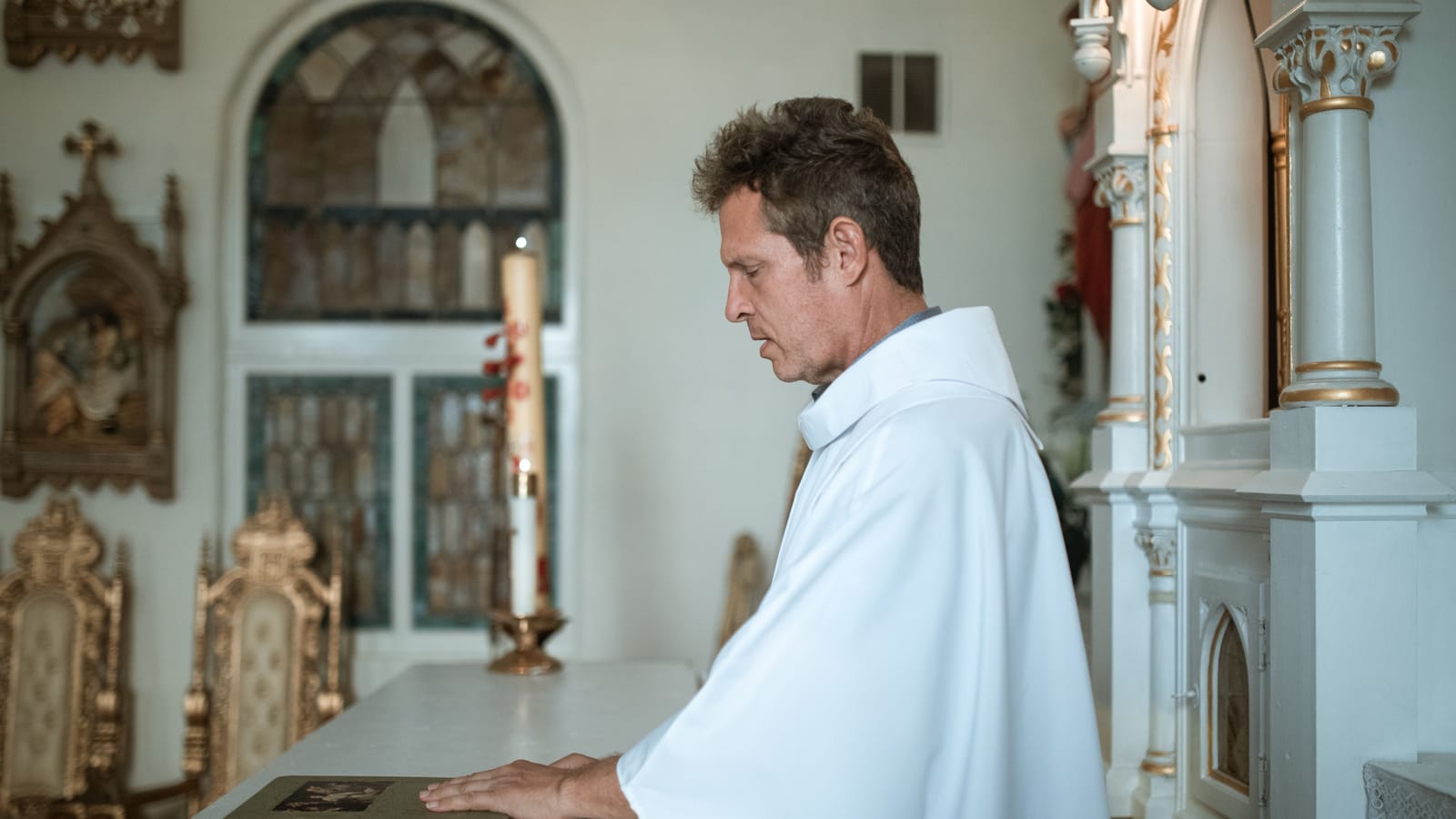
I've had this conversation beside a pickup in a church parking lot in January, both of us too stubborn to take it inside where it was warm. He put it plainly. "I pray every night. It feels like I'm talking to the ceiling. How do I know anybody's listening?"
That's the real question. Not does God exist — he'd have told you he believed that. The question is whether his particular words, muttered in a dark bedroom after a long shift, landed anywhere.
The short answer: you don't know it by feel. You know it by promise. And that's better news than it sounds, because feelings move with your blood sugar and your sleep, and a promise doesn't.
The verse that settles the question
"And this is the confidence that we have toward him, that if we ask anything according to his will he hears us. And if we know that he hears us in whatever we ask, we know that we have the requests that we have asked of him." (1 John 5:14–15, ESV)
Context matters. John is writing late in his life to churches that had been shaken by teachers who left and took people with them. The whole letter is about assurance — how do you know you're in Christ, how do you know this is real. The word translated "confidence" carried the sense of open, unafraid speech, the freedom a citizen had to say his piece out loud rather than whisper it.
That's the posture. Not hoping you got the wording right. Speaking freely to a Father who is already inclined toward you.
Now, "according to his will." Some men read that as a trapdoor — so he only hears me when I happen to ask for what he already planned. Read it the other way around. John isn't narrowing the guarantee, he's anchoring it. Your prayers get their weight from God's character, not from the intensity you manage to generate at 11:40 p.m. Which means a tired, clumsy, half-sentence prayer from a man who belongs to Christ is heard, and a polished one isn't heard any better.
Feeling nothing isn't evidence of anything
Read Psalm 13 and notice who wrote it. "How long, O LORD? Will you forget me forever? How long will you hide your face from me?" (Psalm 13:1, ESV) That's David. Anointed king, man after God's own heart, writing what sounds like a complaint you'd be embarrassed to pray out loud.
He wasn't feeling heard. He was heard.
Six verses later he lands here: "But I have trusted in your steadfast love; my heart shall rejoice in your salvation." (Psalm 13:5, ESV) Nothing in his circumstances changed between verse 1 and verse 5. He talked himself back to what was true.
Do that. Out loud, if it helps. Most men pray silently by default and then wonder why it feels like nothing happened, when in fact nothing happened audibly, which is a different problem with a simple fix.
The honest audit
Scripture does say some things get in the way, and a pastor who skips this part isn't doing you a favor.
"If I had cherished iniquity in my heart, the Lord would not have listened." (Psalm 66:18, ESV) Cherished. Not committed, not struggled with — held onto and protected. James adds the other angle: "You ask and do not receive, because you ask wrongly, to spend it on your passions." (James 4:3, ESV)
And there's one aimed straight at married men. Peter tells husbands to live with their wives in an understanding way, showing honor, "so that your prayers may not be hindered." (1 Peter 3:7, ESV) That's a remarkable connection. How you treat your wife on Tuesday is tied to your prayer life on Tuesday night. If things are cold at home, that's not a separate department from your walk with God.
None of this is a checklist you complete to earn a hearing. It's relational. A son who's stonewalling his father can still speak to him, but something's in the way, and both of them know it. Deal with the thing. Then pray.
Silence isn't the same as absence
Paul asked three times for a specific affliction to be taken away. The answer came back: "My grace is sufficient for you, for my power is made perfect in weakness." (2 Corinthians 12:9, ESV) That's a no. It's also an answer, and Paul spent the rest of the chapter treating it as one.
Then there's Gethsemane. "Abba, Father, all things are possible for you. Remove this cup from me. Yet not what I will, but what you will." (Mark 14:36, ESV) The cup didn't pass. And Hebrews says of that night: "he was heard because of his reverence." (Hebrews 5:7, ESV)
Sit with that. The Son of God prayed, was heard, and went to the cross anyway. Whatever "God hears me" means, it can't mean "God does what I asked." If that's the definition you've been working with, the problem isn't that God has gone quiet. It's the definition.
Where good Christians disagree
Three live disagreements, so you're not blindsided when you hear someone confident say the opposite of what your pastor said.
Does prayer change God's mind, or change us? Reformed brothers emphasize that God ordains the ends and the means, and your prayer is one of the means he ordained — real, effective, and never a surprise to him. Others read the pleading of Moses and Hezekiah more straightforwardly. Both camps pray hard. Neither thinks you're wasting your breath.
Should you expect miraculous healing now? Cessationists and continuationists have argued this for a long time and won't finish today. Either way, James 5 tells you to call the elders and ask.
Is repeating a request a sign of doubt? Some hear "do not heap up empty phrases" (Matthew 6:7, ESV) and pray once. Others point to the widow in Luke 18 who wore down an unjust judge, in a parable Jesus told so that his disciples "ought always to pray and not lose heart" (Luke 18:1, ESV). I'd tell you to keep asking. But I've known godly men who wouldn't, and they weren't faithless.
What to actually do this week
- Pray out loud, alone, for five minutes. In the truck counts. The change in your attention is immediate and it's almost embarrassing how much it helps.
- Get a notebook. A three-dollar spiral one. Date the entry, write the request in one line. Go back in six months. One warning: don't let it become a scoreboard where you grade God's performance. It's a memory aid, because you will forget what he did.
- Pray a Psalm when you've got nothing. Psalm 25 and Psalm 86 are built for men who are out of words. You're not faking it. You're borrowing language the Holy Spirit already inspired.
- Pray with your wife before bed. Thirty seconds. Short and consistent beats long and occasional, every time.
- Tell one man what you're asking for. Not the whole small group. One.
And if you're not sure you're in Christ at all — if the reason prayer feels like shouting up a chimney is that you've never actually knelt at the bottom of it — that's the conversation to have first, with a pastor, this week. Everything above assumes a Father. Get the Father settled and the hearing takes care of itself.
The man in the parking lot kept praying. Nothing dramatic happened for a while. Then a bunch of ordinary things did, slowly, in the order you'd expect if someone were paying attention the whole time.
You're not talking to the ceiling. You never were.
Josh Halloran
Christian Bro
Leads a mid-week mens group and has done for eleven years. Writes about faith as a practice rather than a position.

Watch
Watch how it's done
Picked for this article.
From channels we rate. Plays on YouTube.
David Jeremiah
How Do I Know God Hears My Prayers?
Christianity.com
How Do I Know That God Hears My Prayers?
Read next