

Samson Lost His Strength Long Before the Haircut
The strongest man in the Bible judged Israel for twenty years and still wasted most of what God gave him. His slide started with what he wanted.
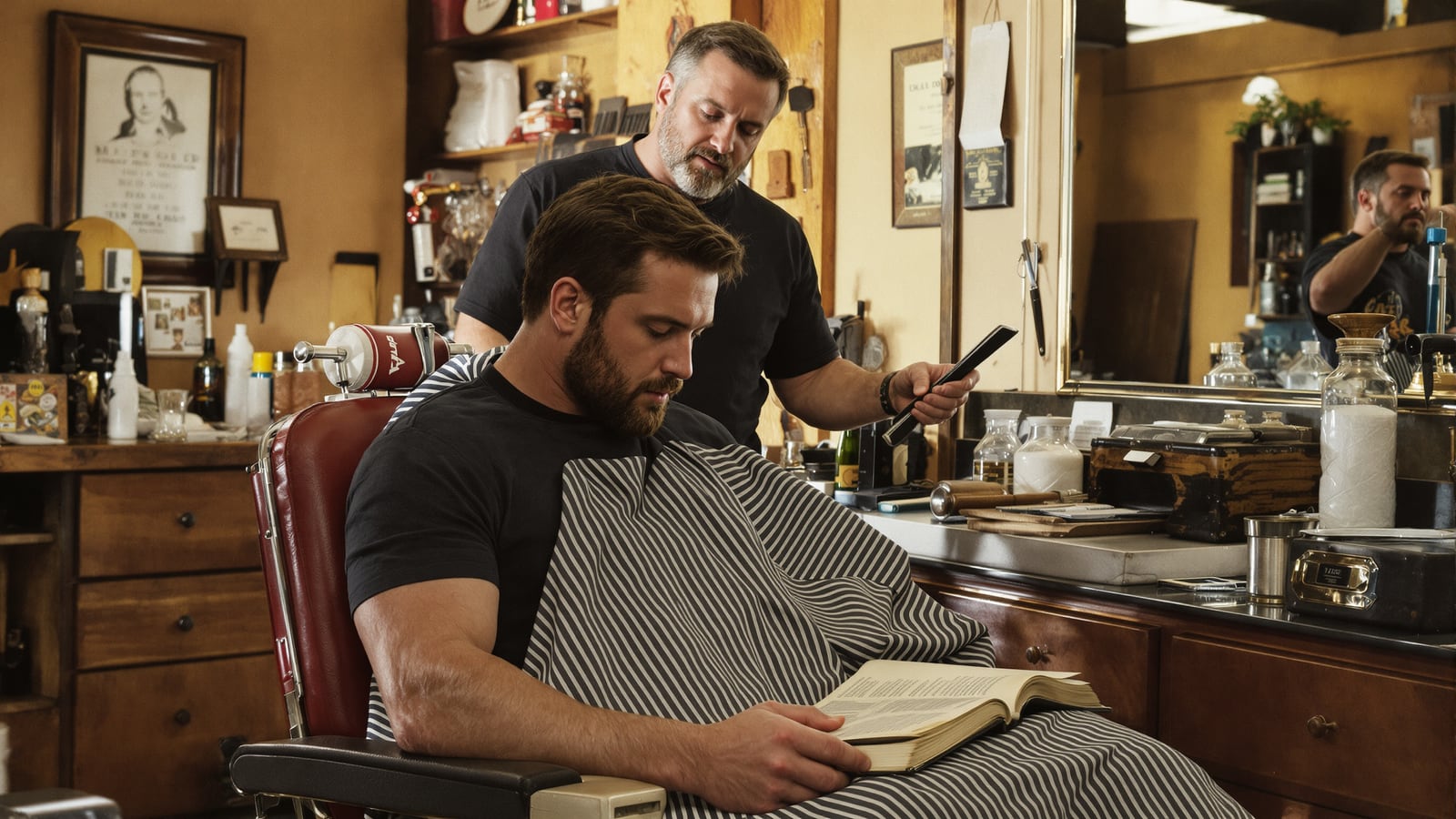
Quick answer: Samson's hair wasn't his real weakness. Appetite was. He treated a gift from God as something he owned, and by the time the razor came, he'd been ignoring the warning signs for years.
Samson judged Israel for twenty years (Judges 16:31). Most of what we remember about him is how it ended. That's a mistake, because the ending was set in motion by his first request.
The first thing he asks for
Samson's first recorded words as an adult are an order. He sees a Philistine woman in Timnah and tells his parents to get her for him. They push back. In the English Standard Version (ESV), they say, "Is there not a woman among the daughters of your relatives, or among all our people, that you must go to take a wife from the uncircumcised Philistines?" He answers, "Get her for me, for she is right in my eyes" (Judges 14:3, ESV).
Context matters. The Philistines were the nation oppressing Israel at the time. Judges 13:1 says the people had been under them forty years. Marrying into the enemy camp wasn't a small cultural quirk.
The narrator adds something odd. Verse 4 says his parents "did not know that it was from the LORD, for he was seeking an opportunity against the Philistines" (ESV). God was working through the situation. That doesn't make Samson's motive clean. The Lord can steer a man's bad choice toward a good end without signing off on the choice.
Remember the phrase "right in my eyes." The book of Judges closes with it: "In those days there was no king in Israel. Everyone did what was right in his own eyes" (Judges 21:25, ESV). Samson is that sentence in one man.
The strength was never in the muscle
An angel told Samson's mother he'd be a Nazirite from the womb, with no razor on his head, and that "he shall begin to save Israel from the hand of the Philistines" (Judges 13:5, ESV). Notice the word begin.
The strength came and went with the Spirit. "The Spirit of the LORD rushed upon him" at the lion, at Ashkelon, and again when he faced a thousand men with the jawbone of a donkey (Judges 14:6, 14:19, 15:14-15). It wasn't a stored-up stat. It was a gift, handed over when God chose.
The Nazirite vow in Numbers 6 had three parts: no grapes or wine, no razor, no contact with a dead body. Samson had already bent the others. He scooped honey out of a lion's carcass and ate it (Judges 14:8-9). He hosted a feast at his wedding, and the Hebrew word there points to a drinking party. By Delilah's valley, the hair was the only piece of the vow he had left. It was a sign of everything else.
How a man loses it slowly
Delilah asks him where his strength lies. He lies three times, and each lie comes closer to the truth. Fresh bowstrings, new ropes, the loom. Each time she calls the Philistines, and each time he tears free.
A sensible man would have left after the first. Samson stayed, because the danger was part of the thrill. He was a man who thought he could stand next to the fire and never burn.
Then she works on him. "How can you say, 'I love you,' when your heart is not with me?" she says. "And when she pressed him hard with her words day after day, and urged him, his soul was vexed to death" (Judges 16:15-16, ESV). So he tells her.
Look at the pattern. The man who could snap ropes couldn't break one habit. He didn't fall in a night. He kept returning to the edge to see how close he could stand. Most men who lose what they were meant to be lose it that way.
"He did not know"
Here's the verse that should make a man put his coffee down:
"And he awoke from his sleep and said, 'I will go out as at other times and shake myself free.' But he did not know that the LORD had left him" (Judges 16:20, ESV).
The strength was gone, and he couldn't feel it. His confidence was running on memory.
That's what chasing the wrong things does. It dulls the instrument you'd use to notice the loss. The Philistines seized him, gouged out his eyes, and put him to grinding grain in a prison in Gaza (Judges 16:21). The eyes that said "she is right in my eyes" were the first thing they took. It's hard to read that as a coincidence.
Where good Christians differ
Some read Samson as a hero. Hebrews 11:32 lists him among those who acted by faith, and his final prayer is real. Others read Judges as a deliberate portrait of decline, with Samson as the sharpest picture of an Israel doing what was right in its own eyes. Most pastors land somewhere in between: a flawed man, genuinely used, whose life is a warning.
They also differ over his death. Some see a righteous act of judgment on the enemies of God's people. Others find it troubling and note that Samson's prayer was mixed with personal revenge ("that I may be avenged on the Philistines for my two eyes," Judges 16:28, ESV). Both can point to verse 30: "the dead whom he killed at his death were more than those whom he had killed during his life" (ESV). For a longer look at hard passages like this, see Reading the Old Testament Wars Without Flinching.
What no serious reader says is that the Spirit's power on Samson meant God approved of everything he did.
What the potential costs
God said Samson would begin to save Israel. He never finished. The Philistines were still a problem long after he died, through the reigns of Saul and David. The cost of a wasted gift isn't just a man's own downfall. It's the work that went undone.
A few practical things follow:
- Name your "get her for me." Every man has one thing he demands because it looks right to him. Find yours and ask who gets a vote in it.
- Watch the small vows. Samson didn't lose everything at once. He lost the honey and the feast first. If you're making small compromises with what you've promised, the big ones aren't far behind.
- Tell someone. Paul wrote, "I discipline my body and keep it under control, lest after preaching to others I myself should be disqualified" (1 Corinthians 9:27, ESV). A man who says that has people around him who'd notice. Find your pastor or a trusted older man before the third lie.
- Guard the middle. "Keep your heart with all vigilance, for from it flow the springs of life" (Proverbs 4:23, ESV). It's one of the verses on Thirty Verses Worth Memorizing Before the Hard Day Arrives.
For a man who held the line when it cost him far more than a haircut, read Three Men Who Kept Their Integrity Far From Home.
The last prayer
Blind and shackled in Gaza, Samson finally asks for what he'd been treating as his own. "O Lord GOD, please remember me and please strengthen me only this once, O God" (Judges 16:28, ESV). The man who once said "I will shake myself free" now says please.
God answered. The grace in that is real, and it's also the point. Strength was always going to be a gift, and the only question was whether he'd ask for it or assume it.
Samson began to save Israel and didn't finish. No human deliverer ever does. "There is salvation in no one else, for there is no other name under heaven given among men by which we must be saved" (Acts 4:12, ESV). That's the name to ask.
Josh Halloran
Christian Bro
Leads a mid-week mens group and has done for eleven years. Writes about faith as a practice rather than a position.

Watch
Worth an hour of your evening
More from Bible.
From channels we rate. Plays on YouTube.
Read next