Dress shoes that survive a ten thousand step day
Ten thousand steps is about four and a half miles of concrete. Most smart shoes quit around mile two. Here's what separates the ones that don't.
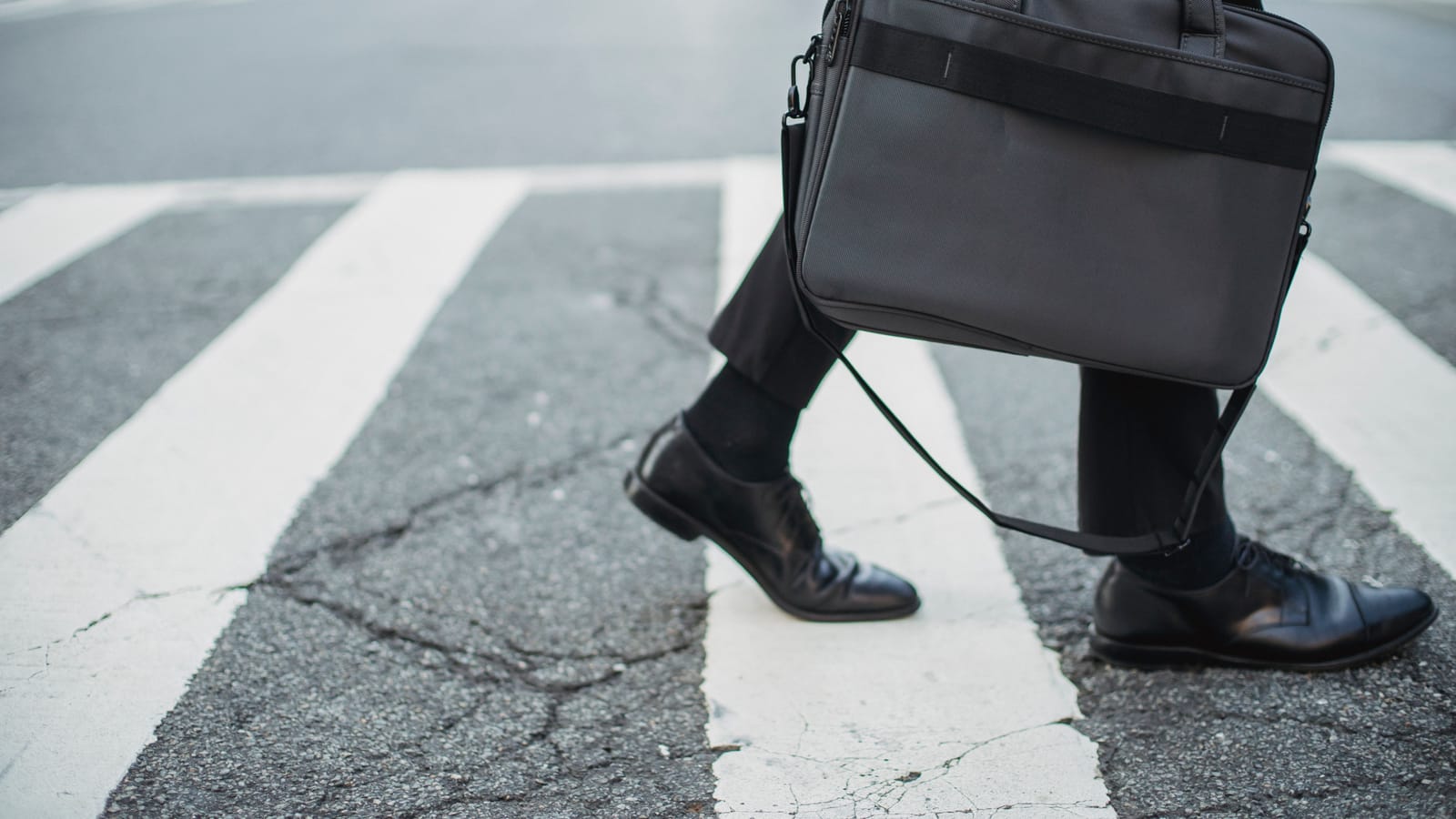
Ten thousand steps is roughly four and a half miles. On sidewalk, in one pair of shoes, with a couple of flights of subway stairs and a train platform in the mix. That's a normal Tuesday if you live in a city and don't drive to work, and it's the exact load that most good-looking shoes fail.
The failure isn't dramatic. You don't blow out a sole. You just notice, somewhere around four in the afternoon, that your heels are hot and your knees feel like they've been in a meeting longer than you have. Then you start planning your walking routes around how much more of the shoe you can take.
The fix is almost entirely underfoot.
The sole is the argument
A leather outsole on city concrete is a bad trade. It looks correct, it's thin and elegant, and it transmits every seam in the sidewalk straight into your heel. It also turns into a hockey puck on wet marble lobby floors and on the metal nosing of subway stairs. Slipping on stairs isn't a style problem.
What you want is rubber, and specifically rubber with some thickness to it. A studded rubber sole like Dainite is the standard answer because it's low-profile enough to sit under a proper dress shoe without looking orthopedic, and it grips wet stone. A lug sole from Vibram gives you more traction and more cushion and reads more casual, which is fine on a boot. Crepe is soft and comfortable and picks up every piece of grit on the street, and it's a nightmare in the rain.
If you already own a pair you love with a leather sole, a cobbler can add a thin rubber half-sole over the front. It costs a fraction of a resole, it takes a few days, and it changes the shoe from a taxi shoe to a walking shoe. The heel usually needs a rubber top piece at the same time.
What's between the sole and your foot
Goodyear-welted shoes have a layer of cork between the insole and the outsole. It's soft when the shoe is new and it compacts under your foot over the first month or two until it holds the shape of your arch. That's the reason a welted shoe that felt merely fine in the store can feel excellent in November. It's also the reason you shouldn't judge a welted shoe on day one.
Blake-stitched shoes skip most of that. They're lighter, more flexible, and noticeably closer to the ground. Good for a dinner. Less good for four miles.
Cemented sneakers with a proper cup sole sit at the other end. More foam, less structure, no real resole path. You get comfort now and a shorter total life.
None of these is the right answer for everyone. If your day is mostly desk and cabs, the thinner shoe looks better and you'll never notice. If you're walking your commute both ways, take the cork and the rubber.
Fit that only shows up at mile three
Your feet swell over a day. A shoe that fits at nine in the morning can be a half size tight by six. Buy in the afternoon, and stand up while you check.
Two things to feel for. The ball of your foot should sit at the widest part of the shoe, not ahead of it or behind it. If the shoe's break, the crease across the toe, lands anywhere other than across your knuckles, the length is wrong regardless of what the box says. And your heel should stay put. A quarter inch of lift as you walk is normal in a stiff new shoe and it'll settle. Half an inch of slop is a blister factory and it doesn't get better.
Width matters more than length for walking. A lot of men wear a size too long because the width is too narrow and the extra length gives them room. That's how you end up with heel slip and a toe box you're swimming in. If a brand offers an E width, try it.
Four shoes that actually do it
A derby with a rubber sole. Open lacing, so it adjusts around a swollen foot in a way a plain oxford won't. Dark brown suede is the underrated version: it hides scuffs, it looks less formal than polished calf, and it takes a spray protector well.
A chelsea or a service boot. The ankle support is real on uneven pavement, and the boot shaft stops your sock from sliding down into the heel, which is where a lot of blisters start. Elastic gussets stretch out eventually. Budget for that.
A leather sneaker with a stitched-down cup sole, not a foam runner with a leather upper. It should look like a shoe from ten feet away. Keep them clean or the whole thing collapses.
A loafer, with caveats. A loafer has no way to tighten around your foot, so it holds on by gripping your heel and the top of your instep. Over four miles that grip becomes friction. Loafers are a great two-mile shoe and a bad eight-mile one.
The unglamorous half
Change the factory insole. Most shoes ship with a thin piece of foam glued to cardboard. A leather-topped replacement insole costs very little and adds both cushion and a layer that absorbs sweat.
Wear proper socks. Merino wool in a medium weight beats thin dress cotton by a distance, in July as well as January. Cotton holds moisture against your skin and wet skin tears. If you get a hot spot in the same place every time, put a strip of tape on it before you leave the house rather than after it's already raw.
Give each pair a day off. Shoes take a full 24 hours to dry out properly inside, and cedar trees pull moisture out of the lining and hold the shape while they do it. Two pairs in rotation last more than twice as long as one pair worn every day. That's the whole trick to footwear economics and it's boring, which is why nobody does it.
What goes wrong
New rubber soles are slick until they're scuffed. Walk the first mile on pavement, not on a tiled station floor.
Heel top pieces wear from the outside back corner. Once you wear through to the leather stack underneath, the repair goes from cheap to not cheap. Look at the back of your heels once a month and get them replaced early.
Winter salt leaves a white tide line on leather and it will eventually crack the finish. Wipe it off the same night with a cloth dampened with a little white vinegar and water, let the shoe dry away from a radiator, then condition it.
And don't break in a new pair on a day you can't escape. Wear them around the house for a few evenings first. Two hours at a time, thick socks.
The shoe you'll actually wear is the one you stop noticing by the second block. Everything above is just a way of getting there before your feet make the decision for you.
Tobias Reed
Style & Grooming
Spent a decade in menswear retail watching men buy the wrong size. Believes fit is ninety per cent of it and says so weekly.

Watch
Worth an hour of your evening
More from City Style.
From channels we rate. Plays on YouTube.
Read next