Oxfords, derbies and loafers, and when to wear each
The difference is in the lacing, and it decides everything else. What to wear to a funeral, an interview, a wedding in August and a Tuesday at the office.
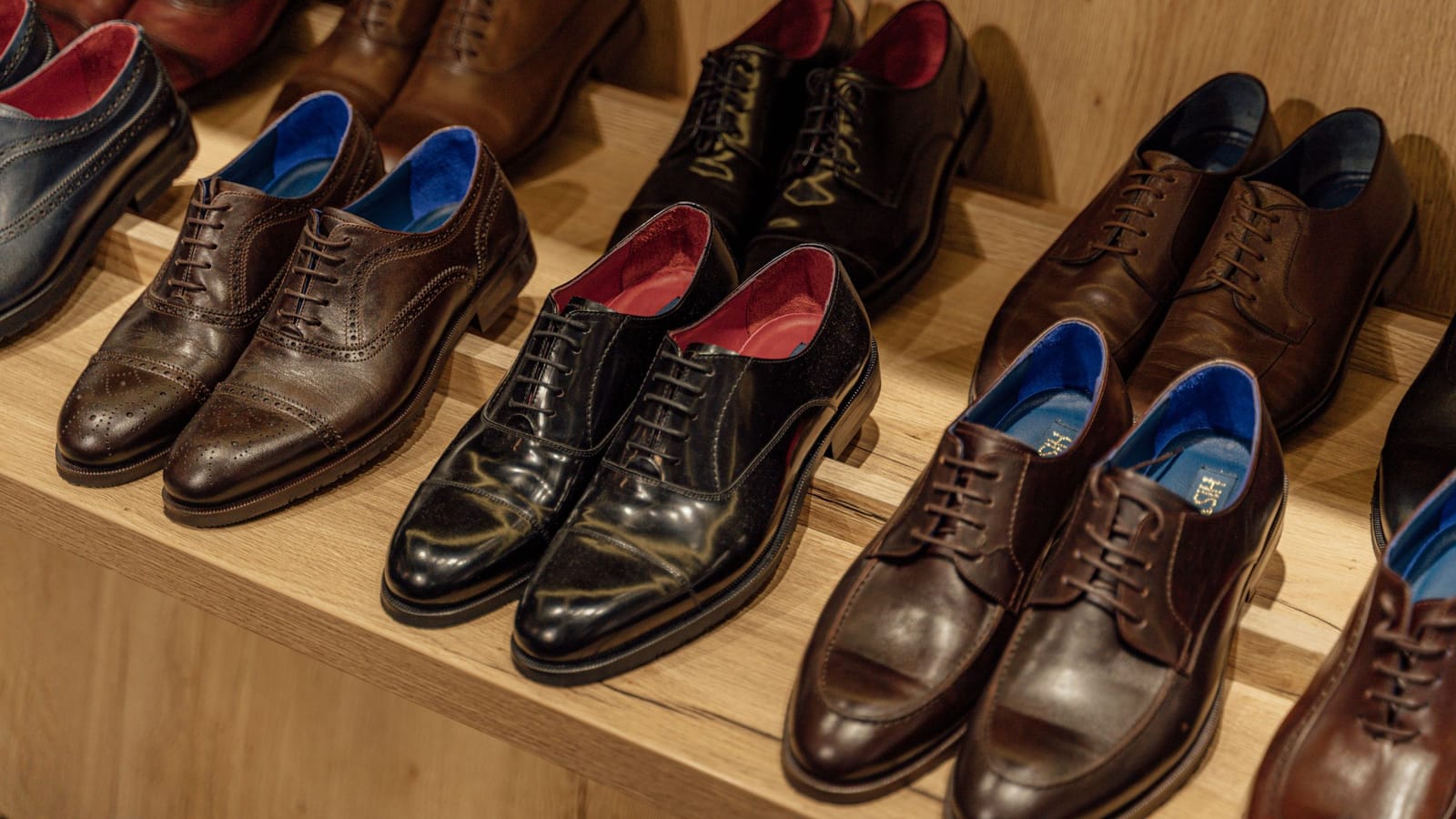
Look at where the lace panels meet the front of the shoe. If they're stitched underneath the vamp so the whole thing closes flat, like two halves of a book shutting, that's an oxford. Closed lacing. If the panels sit on top and flap open when you loosen them, that's a derby. Open lacing. No laces at all, you're holding a loafer.
That one detail sets the formality. Closed is dressier than open, and open is dressier than none. Everything else — the leather, the toe shape, the sole, the color — adjusts the dial a notch either way. A black five-eyelet cap-toe oxford on a smooth calf sole is about as formal as a shoe gets before you're into patent leather and a dinner jacket.
The shoe that gets you through the hard days
Own one pair of black cap-toe oxfords. Not brogued, not perforated, not fashion-toed. A plain cap across the front, a clean waist, a leather or thin rubber sole.
That's the funeral shoe, and you will need it. I've stood on wet grass in February watching a man in brown suede loafers with a navy suit shift his weight from foot to foot, and he wasn't a bad person or badly dressed, he just hadn't thought about it in advance. You don't want to be buying shoes the week somebody dies.
The same pair does the job interview where you don't know the dress code, the court appearance, the wedding where you're in the photographs, and any evening thing involving a dark suit. It's the least interesting shoe you'll own and the one that never lets you down.
If you're going to spend properly on one pair, spend on this one, because you'll wear it less often and it'll last longer. Goodyear welted, so it can be resoled. Get shoe trees. Cedar ones, in the shoe within a few minutes of taking them off, while the leather's still warm and damp.
The derby is the one you'll actually wear most
Open lacing is more forgiving. The panels spread, so a high instep or a wide foot fits without the laces gaping into a V, which is the giveaway that an oxford is too small across the top of your foot.
That makes the derby the sensible daily shoe. A dark brown plain-toe derby on a lugged rubber sole will handle a commute, a rainy Thursday, a client meeting, a pub after work, and a train platform where the gap between platform and carriage is full of water. It reads as smart without asking to be admired.
The trade-off is that it's a step below the oxford, and you can't fully close that gap. But a well-kept derby beats a scuffed oxford with rolled-over heels every single time, and most people in the room are reading condition long before they're reading construction.
Brogue detailing — the punched holes, the wingtip — pushes a shoe further toward country and away from the city. A full brogue derby with a chunky sole is a Saturday shoe with heavy trousers. It's not the thing for a navy suit at a board meeting.
Loafers, and where the line actually sits
The penny loafer is the most versatile of the three main shapes. Dark brown calf, a slim sole, a clean apron on the front. It works with chinos, with gray flannel, with a summer suit in linen or lightweight wool, and with jeans that aren't falling apart.
Tassel loafers sit oddly in most people's heads but they're the dressier option, historically the lawyer's shoe. On a sharp sole with a dark suit they look deliberate rather than casual.
Horsebit loafers, the ones with the metal hardware across the vamp, are the most stylised. They look best when the rest of the outfit is calm.
Suede changes everything. Suede loafers in mid brown are a summer and spring shoe, brilliant with cream trousers and a navy blazer in August, and wrong at a January funeral. Suede in a downpour is survivable if you've sprayed them and you brush them dry, but you'll be doing maintenance.
On socks: wear them. No-show socks are fine and they're what most people are wearing with loafers in warm weather anyway. Bare ankles in a professional setting will divide a room and the half you lose tends to be the half making decisions.
Loafers with a proper suit is where people argue. In southern Italy nobody blinks. In a London or New York office it depends entirely on the office, and if you're new, watch what the senior people wear for a fortnight before you commit.
Color, and the rule that's loosening
Black is for black. Dark suits, formal occasions, evening. It's also increasingly a shoe most men wear four times a year, because offices have moved away from it.
Dark brown is the workhorse. It goes with navy, gray, olive, charcoal at a push. Mid brown and tan go with lighter, softer things and look bad against a very dark suit.
Oxblood and burgundy are the useful third color. They're dressy enough for work, warmer than black, and they don't look like you tried too hard.
Don't buy the fourth color before you've worn out the first three.
Soles, because city pavements eat leather
A full leather sole is elegant, breathes well and is lethal on wet tile. It also wears fast if you walk a mile to the station twice a day. You can have a thin rubber topy glued to the bottom by a cobbler for very little money, and it doesn't change how the shoe looks from standing height.
Studded rubber soles handle rain and cold properly. They add visual weight, so they suit derbies and boots more than they suit a sleek oxford.
Whatever you buy, ask whether it can be resoled. A cemented sole can't, or not well, and that turns a shoe into a consumable.
The order to buy in
Start with the dark brown derby if your life is mostly office and street. Add the black cap-toe oxford next, even though you'll wear it rarely, because of the days you can't plan for. Then a dark brown penny loafer for warm months and travel.
Three pairs. Rotate them, never two days running, always with trees in. That rotation does more for how long they last than the price you paid.
What goes wrong
People break new shoes in on the day. Don't. Wear them around the house for an hour at a time across a couple of weeks, with the socks you'll actually wear.
People let the heel go. A worn heel block is cheap to replace and ruinous to ignore, because once you're through to the sole you're into a rebuild.
And people buy the interesting pair first. The double monk in blue suede is fun, you'll wear it eleven times, and it'll still be sitting in the box when your uncle dies on a Tuesday in February and you need something black by Friday.
Tobias Reed
Style & Grooming
Spent a decade in menswear retail watching men buy the wrong size. Believes fit is ninety per cent of it and says so weekly.

Watch
Watch how it's done
Picked for this article.
From channels we rate. Plays on YouTube.
Gentleman's Gazette
Men's Dress Shoes: Difference Between Oxford , Derby & Blucher Shoes Explained
ThomasBirdShoes
Oxford vs Derby vs Brogue | What's the difference? | Thomas Bird Shoes
Read next