Cool him first, then drive him to the hospital
Heat exhaustion and heat stroke look similar for about a minute. Then one of them starts killing him, and the tell is how he talks.
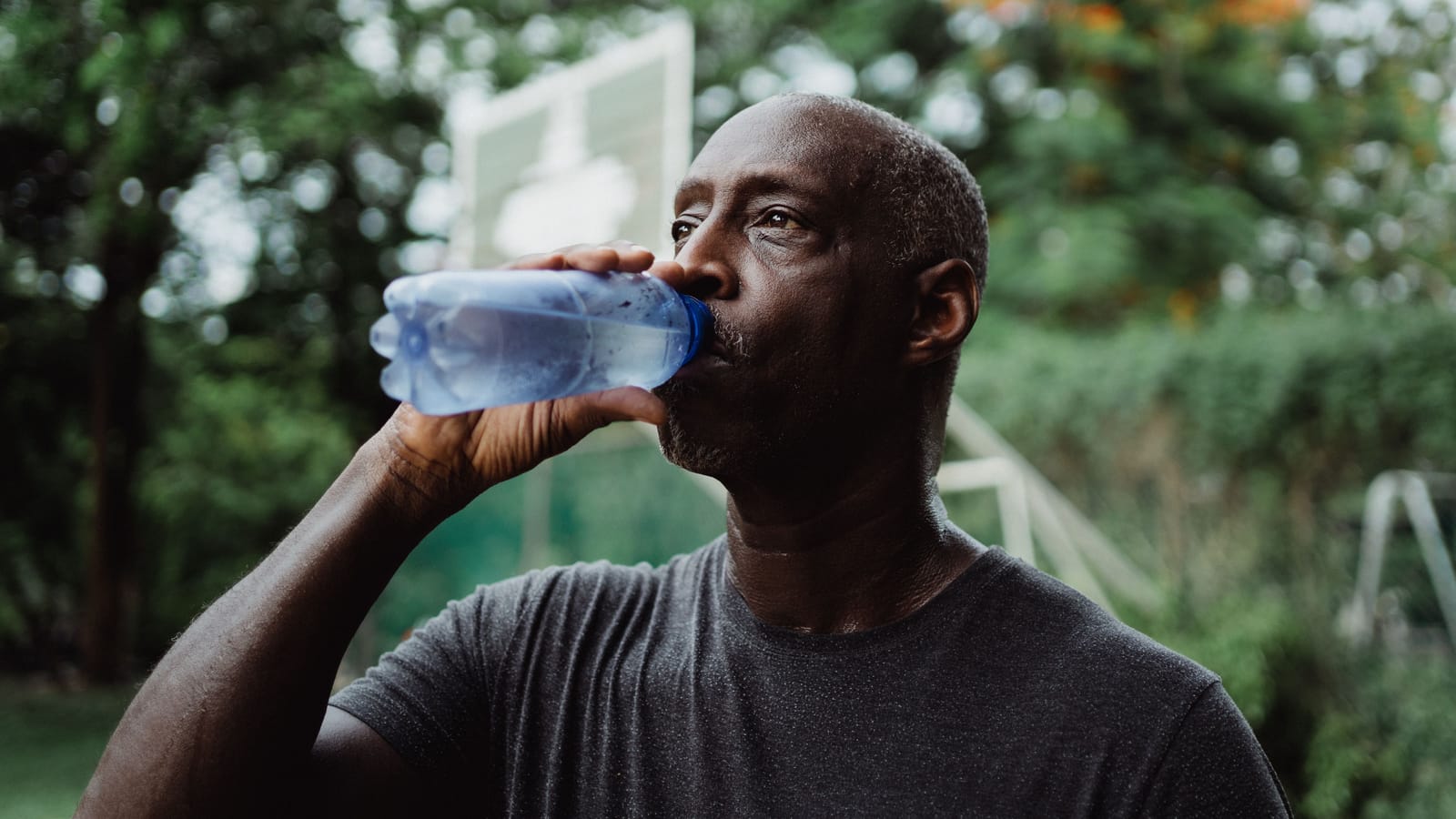
The tell isn't sweat. It's speech.
A man with heat exhaustion will tell you he feels awful. He'll be specific about it. Head's pounding, he's nauseous, his calves cramped up on the ladder. He knows your name, he knows what day it is, and he's embarrassed about sitting down. That man needs shade, water, and about thirty minutes of nothing.
A man with heat stroke can't do that. He gets the words in the wrong order. He answers a question you didn't ask. He's suddenly irritable with a guy he's worked beside for six years, or he's staggering like he's had a few, or he swings at you when you take his arm. That's not stubbornness and it's not attitude. That's his brain cooking, and he's now on a clock.
Learn that one difference and you've got most of what matters. Everything else is procedure.
The myth that gets people killed
Somebody taught half the trades that heat stroke means hot, dry skin. So the crew looks at a guy who's drenched and decides he's fine, just needs a Gatorade.
Wrong, and dangerously so. The dry-skin version shows up more in older folks who cook slowly in an apartment with no air conditioning. The kind that drops a framer in July is exertional heat stroke, and that man is usually still pouring sweat when he goes down. Soaked shirt proves nothing.
Same with a temperature reading. Forehead scanners and the oral thermometer in the first aid box won't give you a reliable core temperature on somebody who's been drinking water and breathing hard in 96-degree air. You can get a normal-looking number off a man in real trouble. EMS has a way to measure core temp accurately. You don't, on a job site. So stop chasing the number and watch the man.
Mental status is your thermometer. Confused, combative, slurring, unsteady, seizing, or unconscious equals heat stroke until a hospital says otherwise.
Heat exhaustion, start to finish
Get him out of the sun. Truck cab with the air on full works. Shade with a breeze works. Shade with no air movement in a bottom is the worst of your options, but it beats standing in the open.
Shirt off, or at least unbuttoned, and boots off. Two minutes of loosening gear does more than most people expect.
Cool water on the skin and air moving across it. A wet rag on the neck feels nice and accomplishes almost nothing. Wet the whole torso and fan him. Evaporation is the engine.
Let him drink if he's steady enough to hold a bottle and swallow normally. Cool water is fine. Something with electrolytes is better if he's been sweating for hours. Skip the energy drinks.
Then the part nobody honors: he's done for the day. Not done for twenty minutes. Done. A man who cramped out at 11 a.m. and went back on the roof at noon is the same man you'll be carrying at two. And he should not be driving himself home while he's still weak and nauseous.
If he's not clearly improving in twenty or thirty minutes, or he starts vomiting and can't keep water down, or he gets confused at any point, that's an ambulance.
Heat stroke, in the order it happens
Somebody calls 911 while somebody else starts cooling. Both at once. Don't finish the phone call first.
Get him flat in shade with his clothes and boots off. Then cool him aggressively, and understand that this is the treatment, not comfort care. Cooling is the medicine. Everything else is a ride.
The best thing available to a crew is cold water on as much of his body as you can manage.
- Tub or trough. A stock tank, a clean 100-gallon trough, a kid's pool out of the garage, anything that holds water and a man. Fill it with the coldest water you've got, dump in every bag of ice from the gas station, and get him in to the neck. Somebody holds his head and shoulders the whole time. This is the fastest cooling a job site can do.
- The tarp method. No tub? Lay him on a tarp, have two or three guys lift the edges to make a shallow basin around him, and pour in water and ice. Rock the tarp gently to keep the water moving against his skin. This works, and a tarp lives on every truck already.
- Soak and fan. Last resort. Hose him, pour coolers on him, keep him soaked, and fan hard with a piece of cardboard or a box fan off the generator. Ice packs in the armpits, the groin, along the neck. Slower than immersion, better than nothing.
Don't stop because he starts shivering. Don't stop because he's cussing you out, which is its own kind of good news since it means he's still moving air.
Cool first, transport second. If EMS is twenty minutes out, those twenty minutes of cooling on the tarp are the most useful twenty minutes of his life. Unless you truly have no water and no ice, in which case get him in an air-conditioned cab with the vents on his chest and drive. Tell the dispatcher what you're doing so they can meet you.
And don't pour water down the throat of a man who's confused or half out. He'll aspirate it.
Who goes down, and when
Rarely the guy you'd guess. The 55-year-old who's been doing this since Reagan usually has it figured out. The ones who fold are the new hire on day two, the one who's not used to the heat yet, and whoever came to work already behind: short night, a stomach bug last week, or a Saturday that ran long.
Body armor for your lungs also cooks you. Tyvek suits, harnesses, respirators, welding leathers, waders in an August creek. Any layer that stops evaporation turns a manageable day into a trap, and the man in it's the one to watch.
Some prescriptions change how a person handles heat. That's a real thing and a conversation with his own doctor, not with a foreman. Worth telling the crew to ask, especially in spring before the first hot stretch.
The worst days aren't always the hottest. They're the humid ones where sweat just sits on you, and the first 90-degree day in May after a cool spring. Nobody's acclimated in May.
A heat kit is cheap and lives on the truck
A 10-by-12 tarp. Two five-gallon jugs kept full. A cooler you'll actually fill with ice, not just intend to. A box fan and a cord if you run a generator. A couple of gallons of water set aside for pouring on people instead of drinking.
Write the site address and the nearest cross road on a card and tape it inside the gang box. When a guy is on the ground and everybody's yelling, the man on the phone forgets where he is. It happens every time.
Then set the day around the heat instead of pretending it isn't there. Heavy work at 6 a.m. Long breaks in real shade at the worst part of the afternoon. Water where the work is, not a hundred yards back at the trailer, because men won't walk for it.
The crew learns what you tolerate. If sitting down in the shade gets a guy a comment, nobody sits down, and eventually somebody stops being able to.
Cal Brennan
Fitness
Strength coach. Trains fathers, tradesmen and desk workers, which means programs that survive a bad week.

Watch
Watch how it's done
Picked for this article.
From channels we rate. Plays on YouTube.
NHS
Heatstroke vs heat exhaustion: symptoms and treatment | NHS
Safety+Health YouTube channel
Heat exhaustion and heat stroke from the National Safety Council
Read next