How to buy a flannel shirt that lasts ten winters
Yarn-dyed or printed, 6 ounces or 12, tucked or out. The details that separate a shirt you keep from one you replace in March.
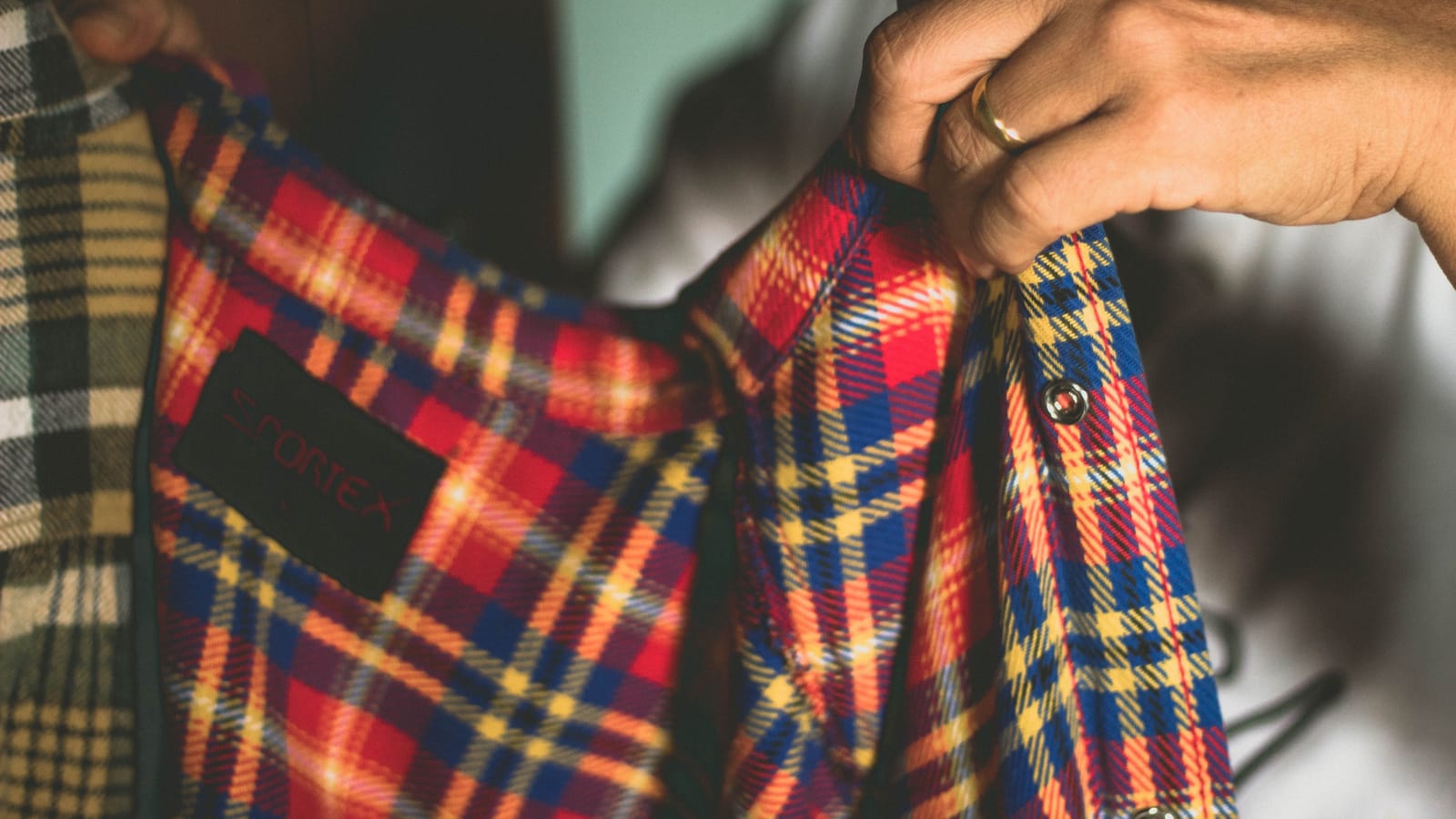
Turn the shirt inside out before you do anything else. If the plaid on the inside is a faded ghost of the plaid on the outside, the pattern was printed onto finished cloth. It'll wash pale in a season. If both faces look near enough identical, the yarn was dyed before it was woven, and the color goes all the way through the thread. That single check kills about half the flannel on most racks.
Next, find the weight. Good makers list it in ounces per square yard. Anything around 4 to 6 ounces is a warm-weather shirt that layers under a jacket without bulk. Seven to nine is the everyday range, the one that works from October through March over a t-shirt. Past 10 ounces you're into shirt-jacket territory, heavy enough to wear as an outer layer on a still day and too hot for a truck cab with the heater on.
Most people buy one weight and expect it to do everything. It won't.
Fit, at four points
Shoulder seam sits at the outside corner of your shoulder. Not on top of the deltoid, not hanging down your arm. A seam that's dropped an inch makes every other measurement lie to you, and no tailor fixes it cheaply.
Chest should let you pinch an inch and a half to three inches of fabric at each side. Less and you'll pop the placket when you reach. More and it billows over a belt like a sail.
Sleeve length runs to the base of your thumb with your arm hanging. Flannel shrinks, so err long. A cuff that ends mid-forearm after two washes is a rag with buttons.
Hem shape tells you what the shirt was designed for. A curved tail wants to be tucked. A straight hem wants to be out, and should end somewhere around the middle of your back pocket. Straight hems that drop past your seat were cut for someone taller than you.
The details that actually change how it ages
Collar. Press it between your fingers. A flannel collar should be soft, maybe lightly interlined. If it feels like a dress shirt collar with fused stiffening, it'll bubble and separate at the points after enough washing, and it looks strange sitting on brushed cotton anyway.
Brushing. Cheap flannel is brushed on the outside only, so it looks fuzzy and feels like sandpaper against your skin. Better cloth is brushed on both faces. Run your hand inside the back panel. You'll know instantly.
Buttons versus snaps. Pearl snaps are the western tradition and they have one real advantage: they let go before the fabric tears. They also pop open when you bend over a fence post at the wrong angle. Buttons stay shut. Pick based on what you do in it, not on what looks right hanging up.
Pockets. Two flapped chest pockets read as work or western. One plain patch pocket reads quieter and looks better under a jacket. Flaps with snaps hold a pen upside down in a truck. Flat pockets don't.
Stitching. Look at the side seams. A flat-felled seam, the kind with two visible rows of stitching and no raw edge inside, is what you want. Serged seams are faster and cheaper and they're the first thing to go.
Plaid scale is a fit issue, not a taste issue
Big blocks of color enlarge whatever they sit on. A buffalo check in red and black on a broad man is a lot of shirt. The same man in a small tattersall or a muted glen check disappears into the pattern instead of being framed by it. If you're slight, the opposite holds. A large check gives you shape you don't otherwise have.
Color near your face matters more than the pattern does. Hold two shirts up in daylight. One of them will make you look rested and one will make you look like you've been driving all night. Buy that one for chores.
Washing, which is where most of them die
Cold water. Inside out. Fabric softener is the enemy. It coats the brushed nap with a waxy film, kills the loft, and leaves the shirt feeling slick instead of warm. Skip it entirely.
The dryer does more damage than wearing does. High heat shrinks cotton hard, and the tumbling abrades the nap into pills across the chest and under the arms. Hang the shirt damp on a wide hanger and it'll dry overnight in a warm house with the collar and placket already straight. If you must tumble, use low and pull it out while it's still slightly damp.
When pills do show up, and eventually they will, a fabric shaver or a disposable razor run lightly over the flat of the fabric takes them off. Don't press. You'll cut threads.
Button the top button and the cuffs before it goes in the wash. Unbuttoned plackets twist, and twisted plackets set a permanent wave into the front of the shirt.
Wearing it without looking like you're in costume
Over a plain t-shirt, sleeves down, buttoned from the second button up. That's the default, and it works from the feed store to a Saturday morning with the kids.
Open over a henley with the sleeves rolled to just below the elbow. Roll them properly, two or three wide turns, not a tight scrunch at the bicep.
Under a waxed cotton or canvas jacket, a mid-weight flannel is the whole insulation layer you need down to about freezing if you're moving. Standing still is a different problem and wants a vest.
Tucked, with a belt that matches your boots, is right if the shirt has a curved tail and you're wearing it with a clean pair of jeans. Tucking a straight-hemmed shirt leaves a bunch of fabric around your waist and everyone can see it.
One thing worth saying out loud, because the flannel-as-fashion crowd never does: loose cuffs are a genuine hazard around rotating machinery. PTO shafts, augers, drill presses, bench grinders. Button the cuff or roll it tight and high. A flapping sleeve is how people lose arms.
When to just buy another one
Elbows go first, then the collar fold, then the cuff edge. Elbow patches in leather or contrasting cloth cost less than a new shirt and a competent alterations shop will do both in a week. A collar can be turned, though fewer people do that work now than used to.
Side seams that are too generous are a twenty-minute job for a tailor and the single best money you can spend on a shirt you already own. Shoulders that are too wide aren't worth fixing.
Buy two of the one that fits. In five years, when the maker has changed the pattern and moved the factory, you'll be glad you did.
Tobias Reed
Style & Grooming
Spent a decade in menswear retail watching men buy the wrong size. Believes fit is ninety per cent of it and says so weekly.

Watch
Worth an hour of your evening
More from Country Style.
From channels we rate. Plays on YouTube.
Read next