

The Twilight Zone Trusted You With the Scary Part
Half an hour, one soundstage, no budget for spectacle. Five episodes that still beat modern sci-fi at the one thing it keeps forgetting.
Quick answer: Start with "Time Enough at Last," "The Monsters Are Due on Maple Street," "Eye of the Beholder," "The Invaders" and "Walking Distance." Each runs about half an hour, in black and white, and none needs a recap. Content notes for each are below. This is opinion, and we'll defend it.
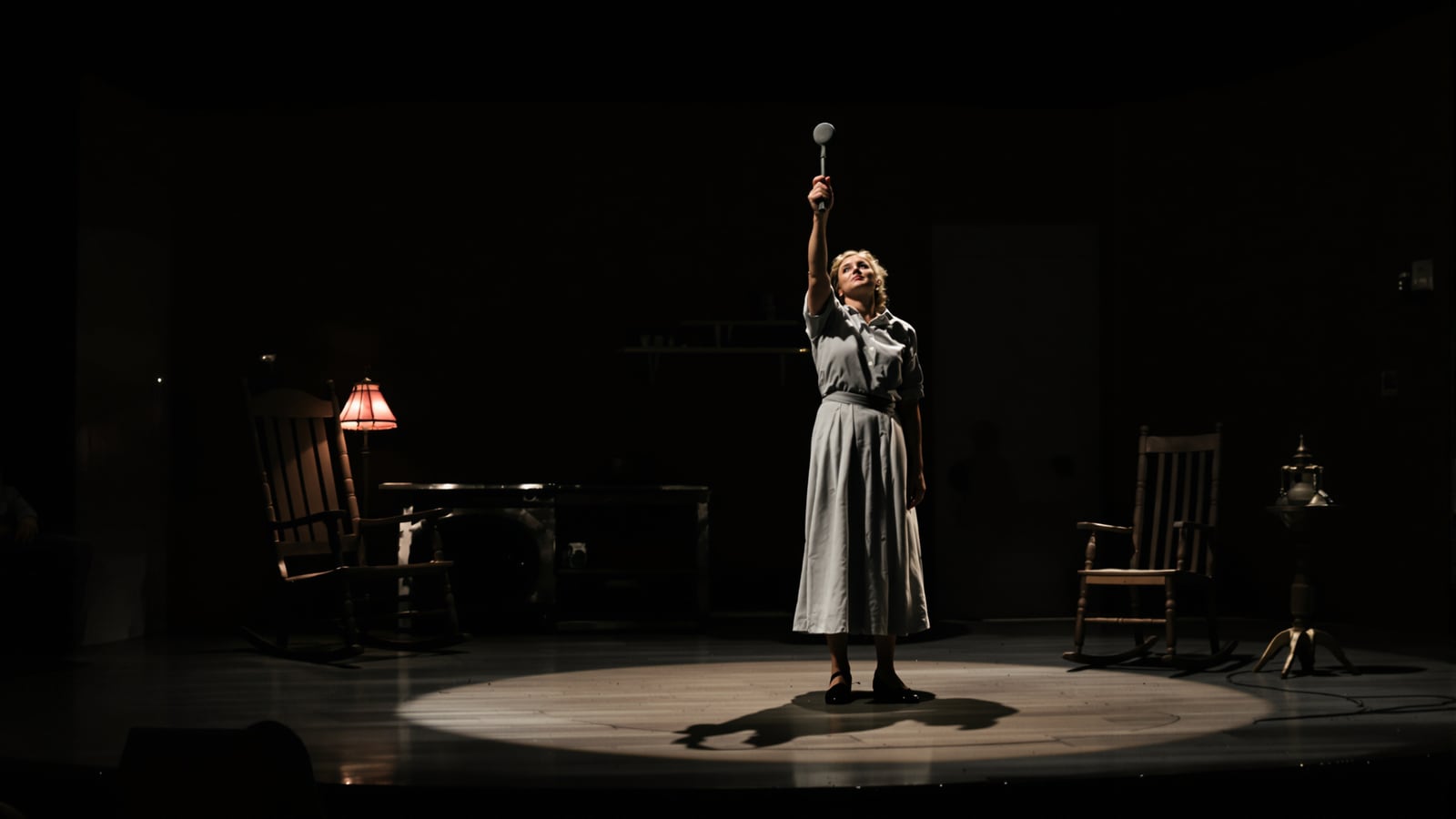
In "The Invaders," Agnes Moorehead plays a woman alone in a rickety farmhouse. Something small and hostile has landed on the roof. Barely a word of dialogue is spoken in the whole episode. She creeps, she listens, she swings a fire poker. You don't need anyone to explain the stakes.
Try to imagine that pitch today. Somebody would add a cast of twelve, a cosmic backstory and a sequel hook before lunch.
This is opinion, but it's a firm one. The best of The Twilight Zone beats most modern sci-fi because it hands the frightening part to you. Your imagination has a bigger effects budget than anyone in Hollywood, and these writers knew it.
The constraint was the gift
The Twilight Zone ran 156 episodes on CBS from 1959 to 1964. Rod Serling created it, wrote many of the scripts and stood in front of the camera to introduce them. He'd served in the Army in the Pacific in World War II, and it shows. He wasn't interested in gadgets. He was interested in what fear does to ordinary men and women.
Most episodes had a TV budget and a TV schedule. So the writers did what good writers do when they can't buy a spaceship. They put two or three people in a room and let a single idea turn the screw.
That's the whole method. One idea, a few people, no padding. You get a complete story in the time it takes to make popcorn, and it stays with you for a week.
Five worth your evening
"Time Enough at Last." Burgess Meredith plays Henry Bemis, a bank teller who just wants a few quiet minutes with a book. Everyone around him, his wife included, makes sure he can't get them. Then the world changes, and he finally gets all the time he wanted. The ending is one of the most famous in television, and it works because the camera does very little.
Content notes: The setting is the aftermath of a nuclear attack. His wife is unkind to him early on. There's a brief moment where a despairing Bemis considers ending his life. It's not graphic, but it's heavy. Good for teens and adults. Skip it for little kids.
"The Monsters Are Due on Maple Street." The power goes out on a quiet suburban block. A kid says aliens are among them. Within a few minutes, neighbors who've shared fences and cookouts are pointing fingers over whose lights still work. No monster appears. The neighbors do all the damage themselves.
Content notes: A man is shot in the dark by his own neighbors, and mob fear drives the whole story. Fine for kids around twelve and up, and a strong one to pause and talk about. Serling's closing narration says the real weapons are suspicion and prejudice. It's still true, and you don't need a lecture on top of it.
"Eye of the Beholder." A woman lies in a hospital bed, face wrapped in bandages, waiting to learn whether a treatment worked. For most of the half hour, the camera won't show you the faces of the doctors and nurses around her. You hear voices. You see shadows. When the reveal finally comes, it lands like a slammed door.
Content notes: No sex, no violence. The reveal is deliberately unsettling, and younger children may find it frightening. Fine for teens. It asks a sharp question about who gets to decide what normal looks like, and the answer isn't comfortable for any crowd.
"The Invaders." The episode above. About twenty-five minutes, very little speech, and a twist you should absolutely go in cold on.
Content notes: Tense, with small stabbing attacks and some blood. Not for the youngest kids. Fine for older children and up.
"Walking Distance." A man stops for gas near his hometown while his car gets serviced. He decides to walk the rest of the way. The town looks exactly as it did when he was a boy, and then he finds out why. It's the quietest of the five and probably the most moving. It's a story about the pull of home and the harder job of living in the life you've actually got.
Content notes: Nothing objectionable. The whole family can watch it, and dads in particular might find it lands harder than expected.
Why it works better
Two reasons, and neither is nostalgia.
The stories are built around a choice. A man chooses, a neighbor chooses, a town chooses. Modern franchise sci-fi tends to build around a world, with rules, lore and a timeline you need homework to follow. A world can't give you a conscience. A person facing a decision can.
The restraint is respect. When the camera cuts away, the show is saying you're smart enough to fill in the rest. That's a compliment. A lot of today's big releases do the opposite. They show every beat, explain every twist and then explain it again in the dialogue, as if the audience can't be trusted to hold a thought for ten seconds.
Cheap effects helped, too. When the monster is a sound in the dark, nobody can complain that the rubber looks fake.
Where it doesn't hold up
Be fair. Some episodes are creaky. A few lean on a Serling narration that tells you what you've already figured out. The famous gremlin on the airplane wing in "Nightmare at 20,000 Feet" is a good example of what happens when the show finally does show you the creature: the dread drains out. That's the point of this whole piece, and the show proves it against itself.
And modern sci-fi has real triumphs. Better effects can serve a good story. The complaint isn't that money ruins movies. It's that money often replaces the one thing a story can't buy, which is a sharp idea told with discipline.
How to watch them
Don't binge. That's the mistake. These episodes are built to land and linger, and five in a row blurs them.
- One a night, phone in the other room. Twenty-five minutes is nothing. Treat it like a short film.
- Stop before the closing narration. Ask your wife or your teenager what they thought just happened and what they'd have done. Then press play.
- Preview first if kids are in the room. Our guide to vetting a movie in eight minutes before family night works for TV too.
- Check where it's streaming. Availability moves around, and it's one more reason to know what your streaming bill is actually buying you.
For kids who've outgrown cartoons and aren't ready for modern blockbusters, this is a good middle step. Pair it with the classic movies your kids should see before thirteen and you've built a shelf worth having.
Start with "Maple Street" this weekend. Turn off the lights halfway through, if you dare, and see which of your neighbors you start to suspect.
Marcus Vale
Editor-in-Chief
Twenty years in magazines, most of it deciding what to cut. Writes about work, discipline and the decisions that compound.

Watch
Worth an hour of your evening
More from Movies & TV.
From channels we rate. Plays on YouTube.
Read next