

Put every business dollar on one card, and nothing else
A business credit card won't make you richer. It will make your books honest, your taxes easier, and your family's money harder to tangle up.
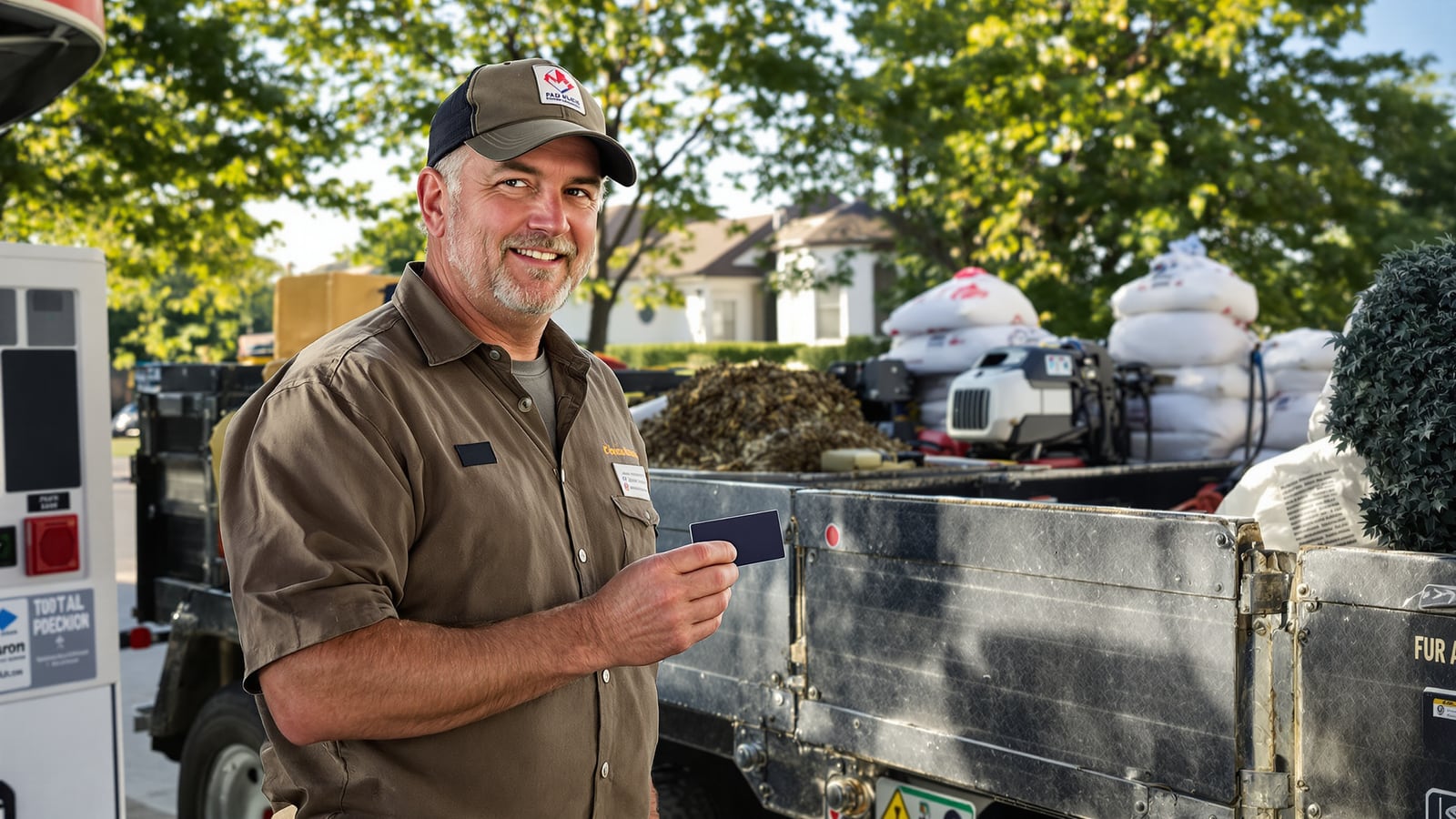
Quick answer: Get a no-annual-fee business card, put every business expense on it and nothing else, and pay it off in full every month. The card isn't for rewards or borrowing. It's a wall between your business money and your household money.
The shoebox in April
Picture a guy who runs a two-truck landscaping outfit. Come tax season, he opens the checking account statement and finds a $212 charge at a hardware store. Was that mulch for the Hendersons' job or a sprinkler for his own backyard? Next line: $41 at a gas station. Truck or minivan? Then a $19 lunch. Client lunch or Tuesday?
He spends a Saturday guessing. His wife spends part of it with him, because it's her money too. They guess conservatively, which means they guess in the IRS's favor and against themselves.
One card fixes that. Every charge on it is a business charge. Nothing else goes through it, ever.
What the card actually does
It does three jobs, and rewards aren't one of them.
It builds the record for you. Every purchase gets a date, a vendor and an amount, and the statement arrives whether you feel like doing bookkeeping or not. Download it monthly and you've got the skeleton of your books.
It protects the family side of the ledger. When the household account stays clean, your wife can read it and understand it. She doesn't need a decoder ring to know whether the electric bill got paid or a supplier did.
It makes the business look like a business. If you ever form an LLC, the legal protection depends partly on treating the company as separate from you. Mixing personal and business spending is one of the classic ways owners weaken that separation. Ask an attorney how it works in your state, and ask your CPA how to record it.
Which means the card isn't optional bookkeeping hygiene. It's the habit that holds the other paperwork up. If you haven't sorted the basics yet, start with the paperwork you can't skip in your first year.
The part the brochure skips
Most small business cards, especially for a new or one-person outfit, require a personal guarantee. If the business can't pay, you can. Your LLC doesn't change that, because you signed.
Some consumer protections written for personal cards also don't carry over to business cards, and how an issuer reports a missed payment varies. Read the cardholder agreement before you sign. Yes, the whole thing. It's twenty minutes you'll be glad you spent.
So treat the card like a tool with a sharp edge. Nobody's saying don't use it. Just don't hand it to somebody who hasn't been taught.
Pay it in full or don't carry it
A business card with a balance on it is a loan at a rate you'd never choose on purpose. Credit card interest runs high, and it doesn't care that your biggest client is sixty days late.
That's the trap for service businesses. You buy materials in March, the customer pays in May, and the card's due date lands in April. It's tempting to carry it. Don't build the habit.
Instead:
- Hold the line on invoicing. Net 15 beats net 30. A deposit before you buy materials beats both. A client who won't put money down before you spend yours is asking you to finance them, and you can say no.
- Keep a cash cushion. One month of card spending sitting in the business account means a slow-paying client is an inconvenience, not an emergency.
- Pay before the due date, not on it. Set the autopay to the full statement balance. Then check it anyway.
A card you pay in full works like a free thirty-day float. A card you carry is a leak.
Set it up in an afternoon
- Get an EIN. It's free from the IRS and takes minutes online. Sole proprietors can often use a Social Security number, but an EIN keeps your number off invoices and vendor forms.
- Open a business checking account first. Pay the card from it. The chain should run client, business account, card, nothing touching the household in between.
- Apply with the bank or credit union you already use. A no-annual-fee card is enough at the start. Skip anything with a $500 fee that promises lounge access. You're hauling mulch, not flying to Zurich.
- Move every recurring business bill onto it. Software, phone line, insurance, your website, the supply house account. Do it in one sitting, so the first full month is clean.
- Photograph receipts the day you get them. The card record shows what you paid. A receipt shows what it was for. You need both if you're ever audited.
Employee cards, carefully
When you hire, you can issue cards to workers, often with spending limits. That's useful. A foreman who can fuel the truck without fronting his own money is a happy foreman.
Set the limit low, tell them in plain words what the card is for, and review the statement every month. You aren't distrusting a good man. You're keeping a good man from ever being in doubt. Whoever you hire, the card is also part of why your first hires matter so much, since early mistakes with money stay with the business for years.
The one honest reason not to
If you can't pay a card in full right now, you shouldn't have one. A struggling owner with a loose card often just moves the hole around. The failures in this section tend to look the same: a business that was slow, got patient with debt and ran out of road. Read how to tell the difference between slow and dead before the card tempts you to pretend it's the first one.
If that's you, use a debit card from a separate business account. You get the same wall without the interest.
Leave the books better than you found them
The old rule about borrowing a truck applies here: bring it back cleaner than you got it. Run your books the same way. Reconcile the statement on the first of every month, categorize what you can, and flag what you can't. Fifteen minutes a month. An owner who does that doesn't spend a Saturday in April squinting at a $212 hardware charge.
And when you hand the shoebox to your accountant, there isn't a shoebox. There's a folder, a statement and a clear conscience. That's what a good wall gets you. A man who knows exactly where the business ends and his family begins sleeps better, and he can look his wife in the eye when she asks how the month went.
Ray Okonkwo
Money & Business
Former commercial banker turned small-business owner. Covers salary, credit, margins and the arithmetic nobody does before signing.

Watch
Worth an hour of your evening
More from Startups.
From channels we rate. Plays on YouTube.
Read next