Your Dishwasher Won't Drain. Do This Before You Call Anyone
Four inches of gray water in the tub is almost never a dead machine. Work the blockage points in order and most of these fix themselves in an hour.
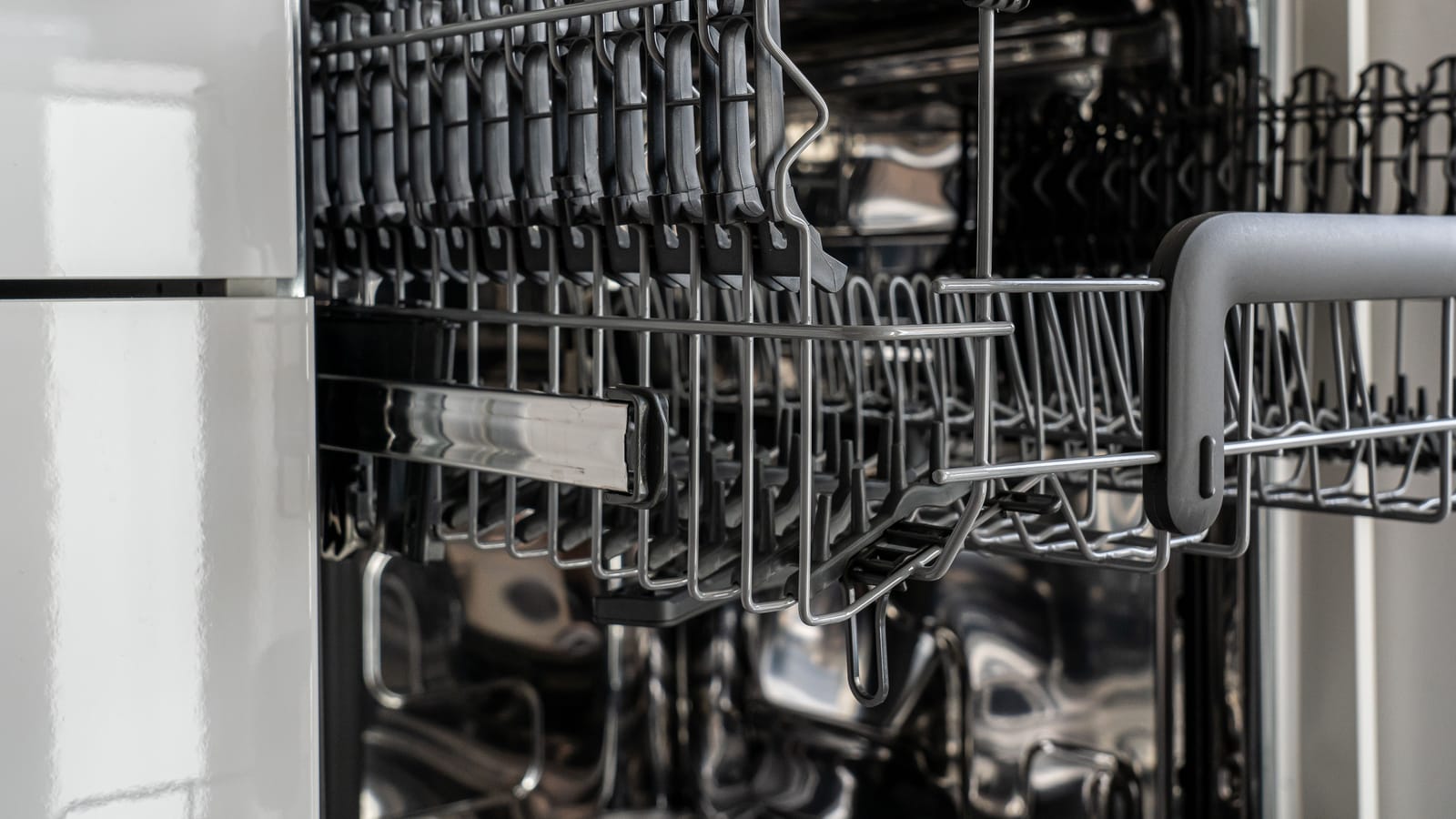
Kill the power first. Not the cabinet switch, not the start button. Go to the panel and flip the breaker labeled for the kitchen or the dishwasher, then come back and press the buttons to confirm the display is dark. A dishwasher is a box of water with a heating element and a motor in it, and you're about to put your hands in the bottom of it.
Now the good news. Standing water in the tub is one of the least serious appliance failures you'll ever have. Nine times out of ten it's a clog, and the clog is in one of four places you can reach with a screwdriver and a shop towel. The drain pump is the last suspect, not the first, and people who skip straight to buying one waste about $90 finding that out.
What you need on the floor next to you
- A wet/dry vac. The single most useful thing here. A small 2.5-gallon unit runs somewhere in the $60 to $80 range and you'll use it for the rest of your life. No vac? A plastic cup and a bucket work, plus old towels.
- A Torx driver set and a #2 Phillips. Dishwasher filters and sump covers love T20 screws.
- Channel-lock pliers for hose clamps, and a flathead for spring clamps.
- A flashlight. Your phone works. A headlamp works better because you'll want both hands.
- Nitrile gloves. Broken glass in the sump is real and it's invisible under an inch of murk.
Total outlay if you own nothing: under $120, and most of that's the vacuum.
Step one, get the water out
Don't diagnose anything through four inches of dishwater. Vac the tub dry, or bail it with a cup until you're down to the last half inch and sponge that. Pull the bottom rack out entirely and set it on a towel.
While you're down there, look at what comes out. Gritty sand-colored sludge means you've been rinsing too little and the filter is packed. Chunks of label paper, produce stickers, and rice mean the filter has been letting things through it. A smell like a pond is normal and doesn't tell you anything.
Step two, the filter, because it's the filter
Bottom center of the tub, under where the lower spray arm sits. Most modern machines use a two-piece filter: a cylindrical fine mesh that twists out counterclockwise a quarter turn, and a flat coarse screen underneath it that lifts free.
Twist, lift, and look at what you're holding. If it's coated in a gray paste, you found at least part of your problem. Take both pieces to the sink, run hot water through the mesh from the outside in, and scrub with an old toothbrush and a drop of dish soap. No wire brushes. You'll tear the mesh and then you get to buy a filter.
Reach into the opening underneath. Gloves on. Feel around the sump for glass shards, a rogue olive pit, a chicken bone, one of those little plastic tabs off a bread bag. That cavity is where everything that survives the filter ends up.
Put the filter back in and make sure it locks. A filter that isn't seated will let debris straight into the pump, and then you really do have a project.
Step three, the sink side
Here's where a huge number of these calls actually end, and it costs nothing.
If your dishwasher drains into a garbage disposal, run the disposal for 20 seconds with cold water. Grinding, clogged disposals back water right up the drain hose and into the dishwasher tub.
If the disposal is new, check the knockout plug. Every new disposal ships with a solid plug sealing the dishwasher inlet, and it has to be punched out with a hammer and screwdriver before the hose is connected. Plumbers forget. Homeowners forget more. If your dishwasher stopped draining the same week somebody installed a disposal, that's your answer, and the fix is thirty seconds of work plus fishing the plug out of the disposal chamber.
No disposal? Look for an air gap, the little chrome cylinder on the countertop behind the faucet. Twist the cap off, pull the plastic cover, and check the inside for gunk. They clog with the same paste you found in the filter. Some jurisdictions require an air gap, some accept a high loop under the counter instead. Codes vary by area, so if yours doesn't have one, that isn't automatically wrong.
Then check the hose itself under the sink. It should rise up near the underside of the countertop before dropping to the drain. A hose lying flat on the cabinet floor will siphon and hold water. And look for a crush point where somebody stacked cleaning supplies on it.
Step four, the drain hose and the check valve
Still full? Time to disconnect. Put a shallow pan and towels under the sink first, because the hose holds a couple of cups of water and it will find your socks.
Loosen the clamp at the disposal or drain nipple, pull the hose, and let it drain into the pan. Then blow through it, or better, run a length of trimmer line through it. You're feeling for a hard plug. Grease plus that gray sludge sets up like caulk in the low spots.
At the machine end there's usually a check valve where the hose meets the pump housing. It's a flapper that stops sink water from running backward into the tub. They stick. A stuck-shut flapper gives you exactly the symptom you have, and freeing it with a fingertip sometimes solves everything.
Step five, the pump
This is the fork in the road. Turn the breaker back on, start a drain cycle, and listen.
Silence. No hum, no motor noise. Could be the pump motor, could be the drain solenoid, could be a control board. That's a multimeter job.
A hum with no water movement. The impeller is jammed. Debris, usually glass or a fruit pit wedged in the vanes. Power back off, pull the sump cover screws, and look.
Normal pump noise but no drain. Go back to the hose. You missed a clog.
Replacing a drain pump on most machines is a real but manageable job: pull the unit out, tip it back, remove the lower panel, disconnect the wiring harness and hose. Parts commonly run $50 to $120. Budget two hours the first time and expect one screw in a place designed by someone who hates you.
When you stop and call somebody
Call a licensed plumber if water backs up into the sink when the dishwasher drains, or if the sink drains slowly on its own. That's a branch line or main line problem and the dishwasher is just the messenger.
Call a licensed electrician if the breaker trips when the dishwasher runs, if you see scorching at the junction box, or if the unit is hardwired and you're not confident working in that box with the circuit dead and verified.
Call an appliance tech if you're into control board diagnostics. The board can cost more than a replacement machine on a ten-year-old unit, and a good tech will tell you that straight.
Permits and connection requirements differ by city and county. If you're replacing the machine rather than repairing it, check your local rules before you cut anything.
Keep it from happening again
Scrape plates. Don't pre-rinse them spotless, since modern detergent needs something to work on, but get the rice and the bones off. Peel the sticker off the apple before it ends up in the mesh. Run the hot tap at the sink until it's hot before you start a cycle. Pull and rinse the filter once a month, which takes ninety seconds and prevents most of what you just spent your Saturday on.
And when you empty the vac, look at what you pulled out. That pile of gray paste and produce stickers is a pretty good record of how the kitchen's been run.
Dean Shaw
Gear & Garage
Reads the warranty, the parts list and the long-term owner reviews before anything else. Trucks, tools, watches, and the cheap version that costs more.

Watch
Worth an hour of your evening
More from Can You Fix It.
From channels we rate. Plays on YouTube.
Read next