
Commentary
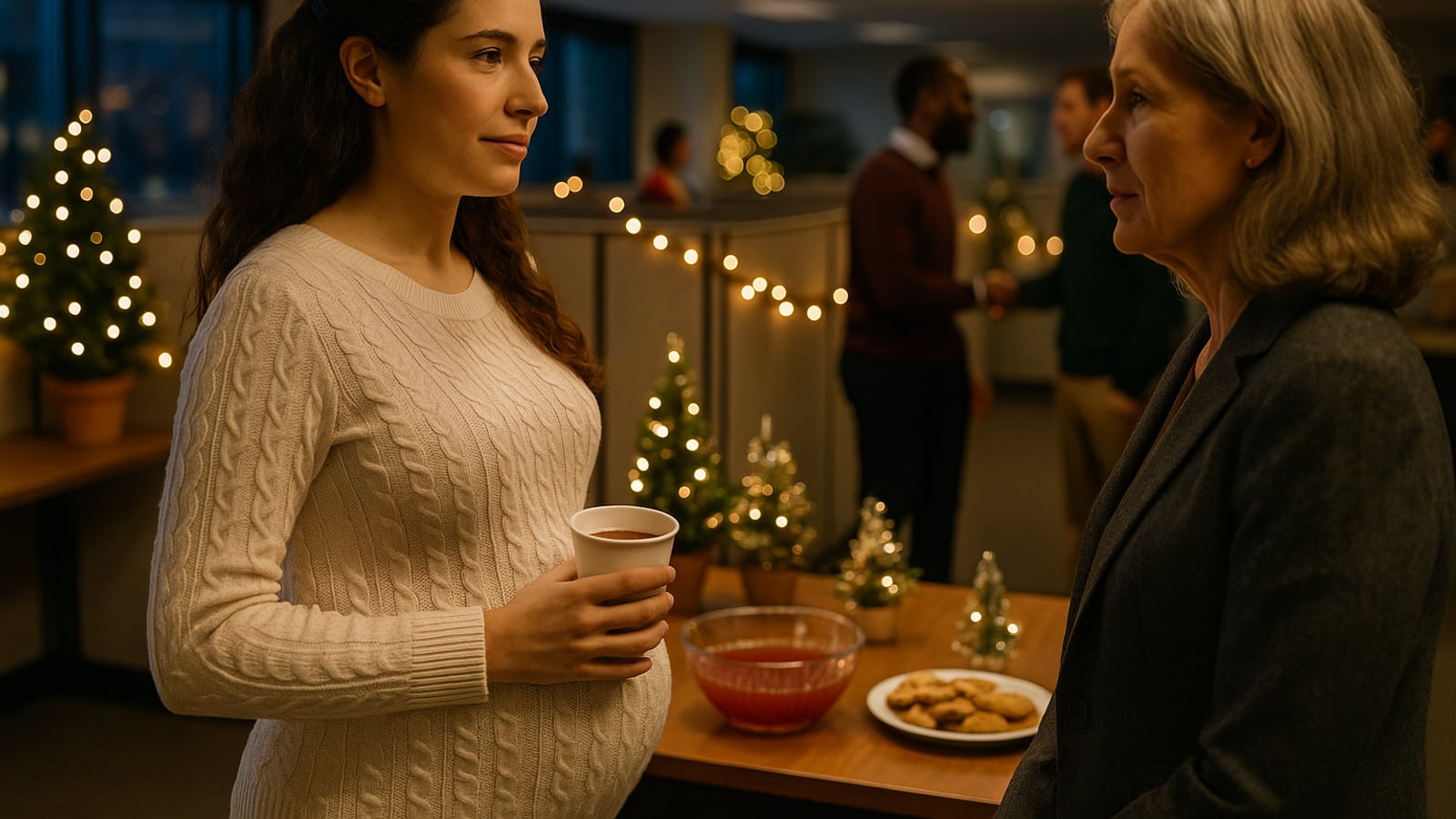
You've heard yourself say it. Office holiday party, second week of December, a paper cup of cider in your hand, and somebody from accounting asks what you're doing after the baby comes. Out it pops: "I know it's old-fashioned, but I'm going to stay home for a while."
That little clause in the middle is the whole problem.
Nobody taking a promotion in Denver says "I know it's ambitious, but." Nobody signing a lease on a downtown apartment says "I know it's selfish, but." The disclaimer only ever shows up in front of one kind of choice: the traditional one. And every time you use it, you tell the person across from you that you share their low opinion of your life before they've even voiced it.
Where the flinch comes from
You didn't invent the apology. You were handed it.
For most of your mother's lifetime, the loudest voices in schools, magazines and HR departments have told girls there's exactly one respectable script. Career first. Marriage maybe. Kids if you can fit them in around quarterly reviews. A home is something you outsource. Anything else gets filed under "wasted potential."
That's an idea, and it's a bad one. It measures a woman by the only yardstick the market understands, which is a W-2. It has nothing to say about the woman who turned a rented duplex into the place every kid on the block wants to be at four in the afternoon. It has no column for the wife who held a marriage together through a layoff and a move. It calls her lucky, or brainwashed, or "just a mom."
The women who bought that script aren't the enemy. Plenty of them are exhausted and quietly wondering whether they were sold something. Be kind to them. Just don't borrow their vocabulary to describe your own life.
Feminine isn't the soft option
A lot of women drop femininity because they think it's the decorative, weaker version of womanhood. Pastels and politeness.
It isn't. Watch a woman who's genuinely good at it. She notices the friend who went quiet at dinner and texts her the next morning. She remembers the date of the neighbor's surgery. She can walk into a tense room at a family reunion and have it laughing inside ten minutes. She shows up at a new mom's door with a lasagna in a disposable pan so nobody has to worry about returning a dish.
That's a skill set. It's reading people, hospitality and logistics, done so well it looks effortless. Which is exactly why it gets underrated.
And it runs on backbone. The warmest woman in any room is usually the same one who'll tell a pushy car salesman no three times without raising her voice.
A fair concession: traditional doesn't mean one template. Some women work because the bills demand it. Some have built a business they're rightly proud of. Some are carrying the family while a husband finishes school. The value was never "stays home." It's the order of loyalties. Family comes ahead of career, not behind it, and the home is treated as the main event instead of the place you sleep between meetings. If you do step out for a few years, keep a foot in the door. Getting hired again after years out of the workforce is very doable if you plan for it early.
Faithfulness is mostly small and daily
Big betrayals start as small ones nobody bothered to notice.
Being faithful in a marriage means the obvious thing. It also means a lot of less obvious things that decide whether the obvious one ever comes under pressure:
- Don't run him down to your friends. Venting about the dishwasher is one thing. Making him the running joke at brunch is another. If you wouldn't say it with him sitting at the table, don't say it.
- Close the side doors. The old boyfriend who "just wants to catch up" in your DMs doesn't need a reply. Neither does the coworker who's a little too curious about how your marriage is going.
- Back him in public, disagree in private. You can think he's dead wrong about refinancing the mortgage. Tell him in the truck on the way home, not in front of his brother.
- Keep your word to everybody. If you said you'd bring the rolls, bring the rolls. Faithfulness that only applies to one person isn't a virtue. It's a transaction.
Expect every bit of this from him too. If you're still deciding who to marry, judge him by what he does when it costs him something. A man who won't guard a marriage shouldn't be handed one.
Strength that doesn't need to announce itself
The strongest women I know put other people first and still refuse to be walked on. They serve their families and their neighbors hard. Then they hold the line.
That looks like telling your mother-in-law, warmly and exactly once, that you're doing Christmas morning at your own house this year. And then not relitigating it every Sunday until December.
It looks like saying no to the third school committee, because two is what your household can carry.
It looks like refusing to let a relative talk down to your husband in front of your kids, even if it makes Thanksgiving awkward for an hour.
And it looks like bringing a bottle of good olive oil when you visit, then leaving your friend's kitchen cleaner than you found it. Being a generous guest and being a firm one use the same muscle. Both say: I take my part seriously.
None of that requires a speech. Strength rarely does. The women who have it tend to say less and mean all of it.
What to say instead
Drop the disclaimers and keep a few honest sentences in your pocket. You'll need them, usually at a party, usually from someone who means well and hasn't thought it through.
- Instead of "I know it's old-fashioned, but I'm staying home": "We decided I'd be home while they're little. Best call we ever made."
- Instead of "I'm just a mom": "I run the house and I'm raising three kids. Hardest job I've ever had."
- When someone asks, "Don't you want more for yourself?": "I've got more. This is what I wanted."
- When someone says your husband's lucky: "He is. So am I."
Say it with a smile. Then ask about their kids, or their trip, or their new job, and mean it. You're not trying to win a debate at the punch bowl. You're just declining to argue against yourself in public.
Because once you stop apologizing for the life you're building, something odd happens. The people who used to raise an eyebrow start asking how you do it. Usually right around the time their kids start showing up at your door at four o'clock.
Nina Castellan
BRO for Her
Runs the women-facing desk. Same standard, same tools, written for a different reader — not a softer one.

Watch
Watch how it's done
Picked for this article.
From channels we rate. Plays on YouTube.
TEDx Talks
Why have we stigmatized and marginalised the stay-at-home mom? | Ben Young | TEDxOxbridge
Dr. Mayim Bialik
Choosing To Be A Stay At Home Mom || Mayim Bialik
Read next