I was twenty-five, sitting on a porch in October while a woman about fifty scrubbed a roasting pan, and she said something I filed under "nice, but not for me." She said the decade I was standing in was worth more than any decade I'd get later, and that almost nobody spends it on purpose.
I nodded. Then I did nothing about it for six years.
That's the part that stings. The advice was free. It was correct. It was delivered by a woman whose kitchen smelled like something I wanted my kitchen to smell like someday, which is the only credential that matters. And I let it slide off because I was busy being twenty-five, which mostly meant being tired in ways I thought were temporary.
So this is that porch conversation, minus the roasting pan.
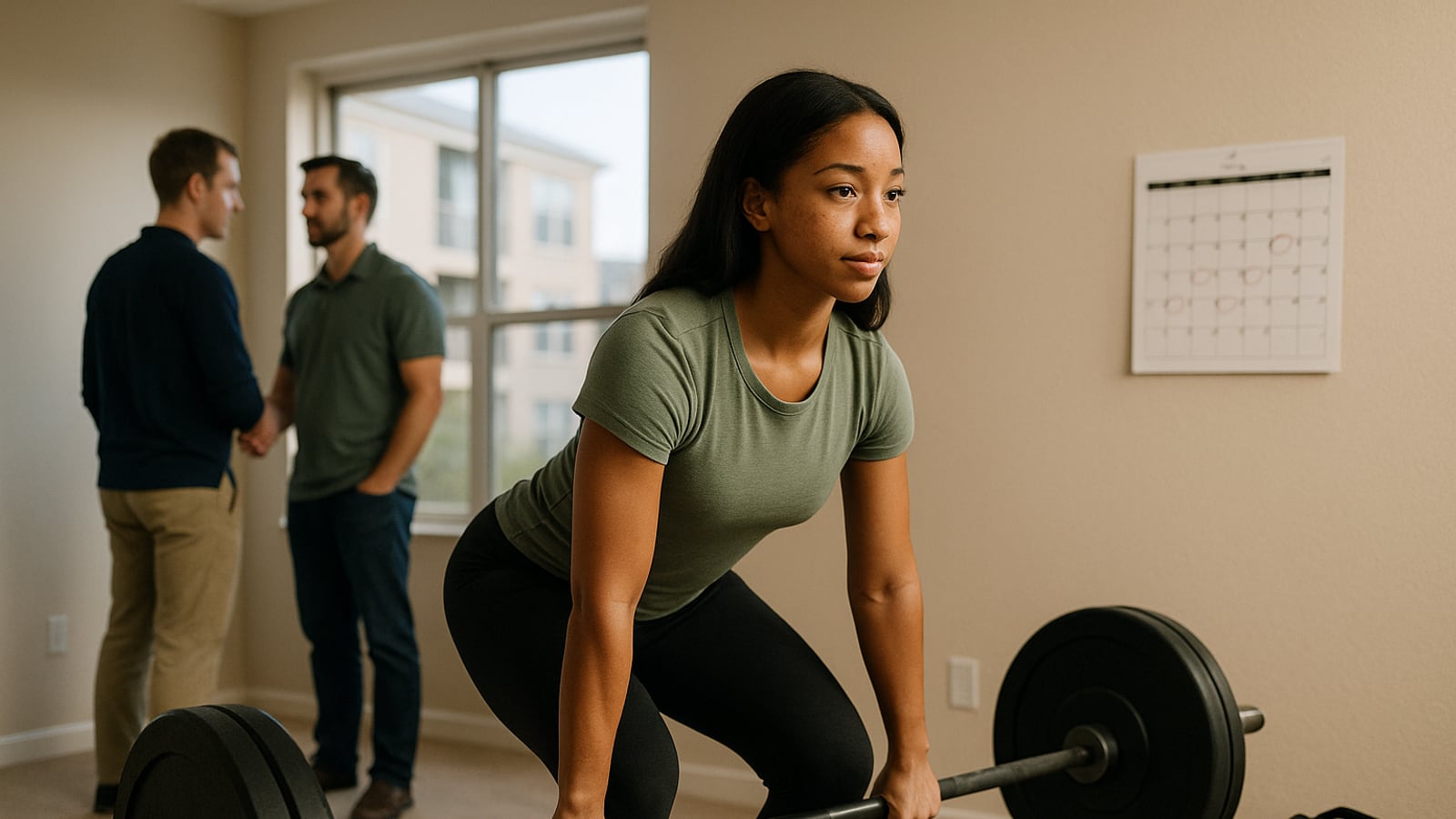
Lift something heavy, twice a week, starting this week
Not a class. Not a bike in a dark room with somebody shouting at you. Actual weight, going up over time.
Two sessions a week is enough to change the shape of your next forty years. Squat, hinge, press, row, carry. Five movements. You can learn all of them from a coach in a month, and a month of coaching is the cheapest insurance you'll ever buy on your own spine.
The reason is unglamorous. Peak bone mass shows up earlier than most women expect, somewhere around the end of your twenties into your early thirties, and after that you're managing a balance rather than building one. Muscle works the same way. You're either making deposits or you're coasting on the ones you already made. Ask your doctor what your baseline looks like and whether anything in your history changes the plan. But the general instruction doesn't change: get strong while it's easy, because it gets less easy.
Also, and I say this with love, the goal isn't to be smaller. Smaller is what I chased at twenty-five and it made me weak, cold, and irritable. Strong made me useful. There's a version of you that can carry a sleeping four-year-old up a flight of stairs with a diaper bag on the other shoulder, and she's built in a gym on a Tuesday years before she's needed.
Nobody will tell you about the timeline, so I will
If you want children, that's a plan, not a mood. Treat it like one.
Fertility declines with age, and the decline is steeper through your thirties than anyone mentions over brunch. That's not a scare tactic, it's biology, and you're allowed to build a life around it the same way you'd build a life around a career you cared about. Talk to an actual doctor about where you stand. Get the real information from someone with a license, not from a comment section full of strangers whose only stake in your life is winning an argument.
The culture will hand you the opposite message for free, on every screen you own. It'll tell you there's unlimited runway, that thirty-eight is the new twenty-eight, that wanting a family young is something to apologize for. Notice who's telling you that. Notice that none of them will be in the room with you at forty-one, and none of them will owe you a thing.
I'm not saying marry the next man who holds a door. I'm saying if you want a husband and kids, then order your twenties around that the way a med student orders hers around residency. Live where good men live. Say yes to dinners you're too tired for. Stop spending three years on somebody who has told you plainly he doesn't want what you want. He's not being coy. He's being honest, and that's the most useful thing he'll ever do for you.
Take advice only from women whose lives you'd actually want
This one fixed more in my life than any habit tracker.
Make a short list of women five to twenty years ahead of you whose marriages, homes, health, or work you'd trade for. Then narrow your input to them. Not the loudest voice online. Not the friend who's been giving you dating advice since 2019 while her own situation hasn't moved an inch.
Then do the uncomfortable half: ask them direct questions, out loud, in person. "What would you do differently?" gets you a real answer more often than you'd believe. Women in their fifties are usually dying for someone younger to ask, and almost nobody does.
And keep in mind your world is smaller than it looks. Every industry is three people deep. The associate you were curt with at twenty-six is doing the hiring at thirty-six, and she remembers, because women remember tone. Be the person who's easy to work with and hard to replace.
Learn what things cost
Not a budget app. Prices.
Learn what a set of tires costs for your car and how long they last. Learn what a roof runs in your area, what a water heater runs, what a plumber charges to come out on a Saturday versus a Wednesday. Read a lease all the way through, including the part about who pays for what when something breaks. Learn how to read a pay stub line by line and what each deduction actually is.
Women who know what things cost don't get talked into much. They also don't panic, because a surprise expense isn't a surprise when you already knew roughly what the number would be. For the parts that involve your actual money, talk to a professional who's legally obligated to act in your interest, and ask that question directly before you hire anyone.
Be able to defend yourself, and train like it's real
Take a class that involves live fire and a qualified instructor, not one afternoon and a certificate. Learn your state's laws yourself rather than trusting a boyfriend's summary of them. If you keep a firearm, store it properly and know it cold. If you'd rather not, then learn the door, the deadbolt, the window latch that never quite catches, and the habit of looking up from your phone in a parking garage.
Competence here's a quiet thing. It doesn't make you paranoid. It makes you calm, which is the whole point. The woman who has trained walks differently, and other people can tell.
The part where I'd argue with myself
Everything above can curdle into fear with a spreadsheet. I've watched it happen.
There's a version of planning that's really just anxiety wearing a nice outfit, where you're so busy optimizing the decade that you don't live in it. The woman who front-loads every decision at twenty-five, who won't take the job in the unglamorous city or the cheap trip with the college friends, ends up with a very tidy life she doesn't particularly like.
So take the trip. Say yes to the wedding across the country. Let one summer be slightly irresponsible. The advice isn't "seize every hour," it's "know which decisions have a clock on them and which ones don't." Strength, health, timing, character, skill. Those have clocks. Almost nothing else does.
Learn one thing that works without a company
Something you can do with your hands that people will always need. Bread. Sewing a seam that holds. Growing tomatoes that aren't embarrassing. Hanging a shelf that's level. Writing a clear paragraph. Backing a trailer.
Pick one and get genuinely good, not Pinterest-good. It'll feed people, steady you in a bad year, and give you something to hand your kids that isn't a screen.
That woman with the roasting pan is in her seventies now. She still bakes on Fridays, she still lifts, and she still says the same thing to twenty-five-year-olds who mostly don't listen.
Be the one who listens. You'll save six years.
Nina Castellan
BRO for Her
Runs the women-facing desk. Same standard, same tools, written for a different reader — not a softer one.

Watch
Worth an hour of your evening
More from BRO for Her.
From channels we rate. Plays on YouTube.
Read next