

Why your screws strip, and the bits that stop it
The bit that came free in the drill case is why your screw heads look chewed. Here's what to buy instead, and how to use it.
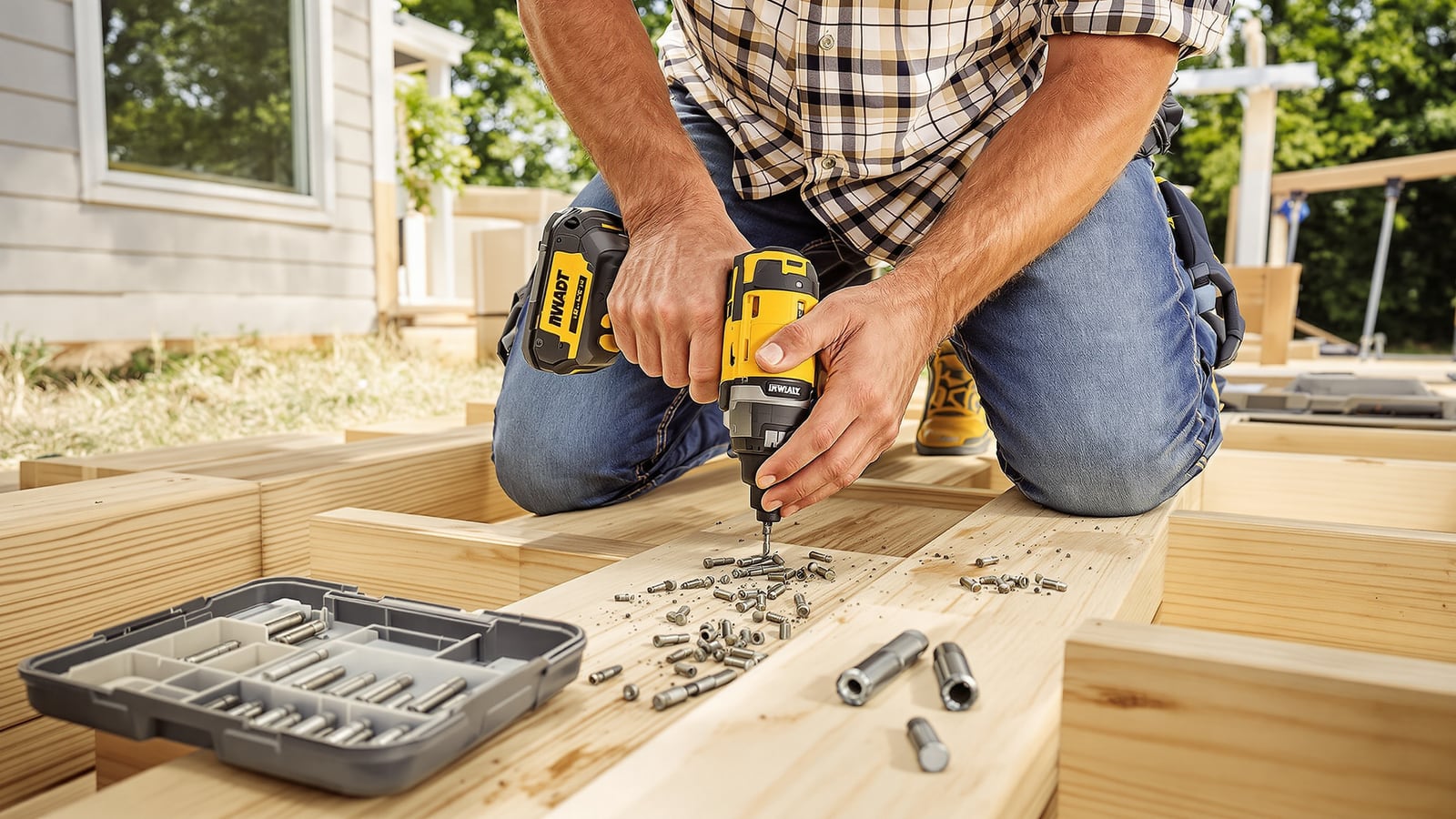
Quick answer: Buy impact-rated bits in the exact size and style your screws use, keep them short, and replace one the moment its tip goes shiny and rounded. Most stripped heads come from a worn or mismatched bit, plus too much speed and too little push.
The bit that came with the drill
Every cordless drill kit ships with a little bag of bits. They're free, and they're priced accordingly. The tips are often soft or brittle and cut a bit loose. Soft ones round off. Brittle ones snap.
A Phillips #2 is the one that matters most, since it fits drywall screws, most wood screws and a lot of deck screws. A bad one will cam out (climb up out of the screw head and chew it) in about the time it takes to say a word your mother wouldn't like.
Don't blame the screw yet. Throw the freebie in a drawer for hanging a picture frame and buy something better.
Match the bit to the head
This is the cheapest fix, and people skip it constantly.
- Phillips (PH): The classic cross. Designed to cam out, which was a feature in 1930s factories and is a nuisance in your garage.
- Pozidriv (PZ): Looks like Phillips with extra tick marks between the arms. Common on European hardware and cabinet screws. A Phillips bit in a Pozidriv head wobbles and strips. A PZ2 bit in a Phillips head does the same.
- Torx or star (T20, T25 and so on): Six-point. Grips hard and rarely cams out. Many deck and construction screws use it for that reason.
- Square (Robertson): Common in Canada and increasingly everywhere. Very hard to strip.
Look at the head. If you see tick marks between the arms, it's Pozidriv. If it's a star, use a star. If you don't know, take one screw to the hardware store and test bits in it before you buy a pack.
A bit that fits snugly without rocking is the right bit. If it wiggles in the head, it's wrong, and the wiggle is the damage happening.
And if you have a choice when buying screws, pick star or square drive. Your future self, upside down under a deck, will thank you.
Impact-rated, and why it matters
If you own an impact driver, the kind that hammers as it turns, regular bits aren't built for it. The sudden jolts snap them. Look for bits labeled "impact" or "impact rated." They usually have a narrowed section called a torsion zone, which flexes slightly to absorb the shock instead of shattering.
That same flex helps in an ordinary drill, too, which is why impact-rated bits are the sensible default for most people. One set covers everything.
What you want in a set:
- The sizes you actually use: Phillips #2 and #3, star T20 and T25, square #2.
- Steel that's tough rather than glass-hard. Bits labeled S2 steel are a common sign of the right idea, though the label alone doesn't guarantee a good bit.
- A hex shank that locks properly in your chuck or quick-release collar.
A few dollars per bit in a decent brand beats a hundred pieces for the price of a sandwich. The hundred-piece case is mostly bits you'll never use, and the ones you will use are the soft kind.
Keep them short
Long bits flex and wander. A 1-inch bit is the right choice for most work. It sits tight to the screw, and there's less wobble between your wrist and the head.
Reach for a 3-inch or 6-inch bit only when you have to, like recessed hardware or tight framing. And buy a magnetic bit holder. It keeps the screw on line, saves your fingers and makes a surprising difference to how straight the bit enters the head.
Technique is half the problem
A great bit still strips a screw if you drive it like you're angry at it.
- Set the clutch. Most drills have a numbered ring. Start low. If the screw doesn't sit flush, go up a number. The clutch clicks before the bit can chew anything.
- Start slow. Squeeze the trigger gently until the screw bites, then speed up.
- Push straight in. Lean your weight behind the drill, in line with the screw. Most cam-out happens when the drill drifts off angle.
- Pilot hole for hardwood. A screw fighting dense wood will either strip the head or snap off. A pilot hole costs ten seconds.
- Stop at flush. Driving past it strips the head and the wood both.
If a head is already chewed, a wide rubber band pressed between the bit and the screw will sometimes give it enough grip to back out. A screw-extractor bit is the next step. Buy a small one and keep it in the case, because you'll need it eventually.
When a bit is finished
Look at the tip. A good one has crisp, sharp edges. A worn one looks polished and slightly rounded, and it's just starting to slip in the head. That's your signal. Don't squeeze one more job out of it, because the next stripped screw costs you more than the bit does.
Bits are consumables. The man who keeps one tired bit for a decade out of thrift ends up paying in ruined screws and lost afternoons. Keep spares.
And here's a courtesy that belongs in any toolbox: if you borrow a neighbor's drill, return it with a fresh bit in the chuck or a couple of spares in the case. Leave it better than you found it.
Bits for holes
The other kind of bit, for drilling, has its own rules, but they're short.
- Wood: A brad-point bit has a center spike that keeps the hole from wandering. Better starts, cleaner holes.
- Metal: High-speed steel handles ordinary work. Cobalt bits are the step up for tougher stuff like stainless. Use slow speed and a drop of cutting oil.
- Masonry: You want carbide tips. Use a hammer drill setting if your drill has one.
- Coatings: Titanium-coated bits are a fine buy, but the coating is a surface layer. Once it wears off, you're back to the steel underneath, so the steel matters most.
Sharp bits cut. Dull ones burn. If you smell smoke and the bit has stopped making progress, stop pushing and replace it.
What to buy, what to skip
Buy:
- A modest set of impact-rated bits in the sizes you use, from a known tool brand
- A magnetic holder or a few 1-inch bits
- A small screw extractor
- A short set of brad-point bits for wood
Skip:
- The giant mystery-brand case with 150 pieces
- Long bits as your daily driver
- Any bit with a rounded tip, no matter how much you paid for it
Keep three Phillips #2 bits in the case. You'll thank yourself the day one gives out halfway through a fence.
Dean Shaw
Gear & Garage
Reads the warranty, the parts list and the long-term owner reviews before anything else. Trucks, tools, watches, and the cheap version that costs more.

Watch
Worth an hour of your evening
More from Gadgets.
From channels we rate. Plays on YouTube.
Read next