

Swap one fence board and leave the other forty standing
A busted picket takes thirty minutes to fix if you check the rail first, pull the old board right, and don't trust your eye on the cut.
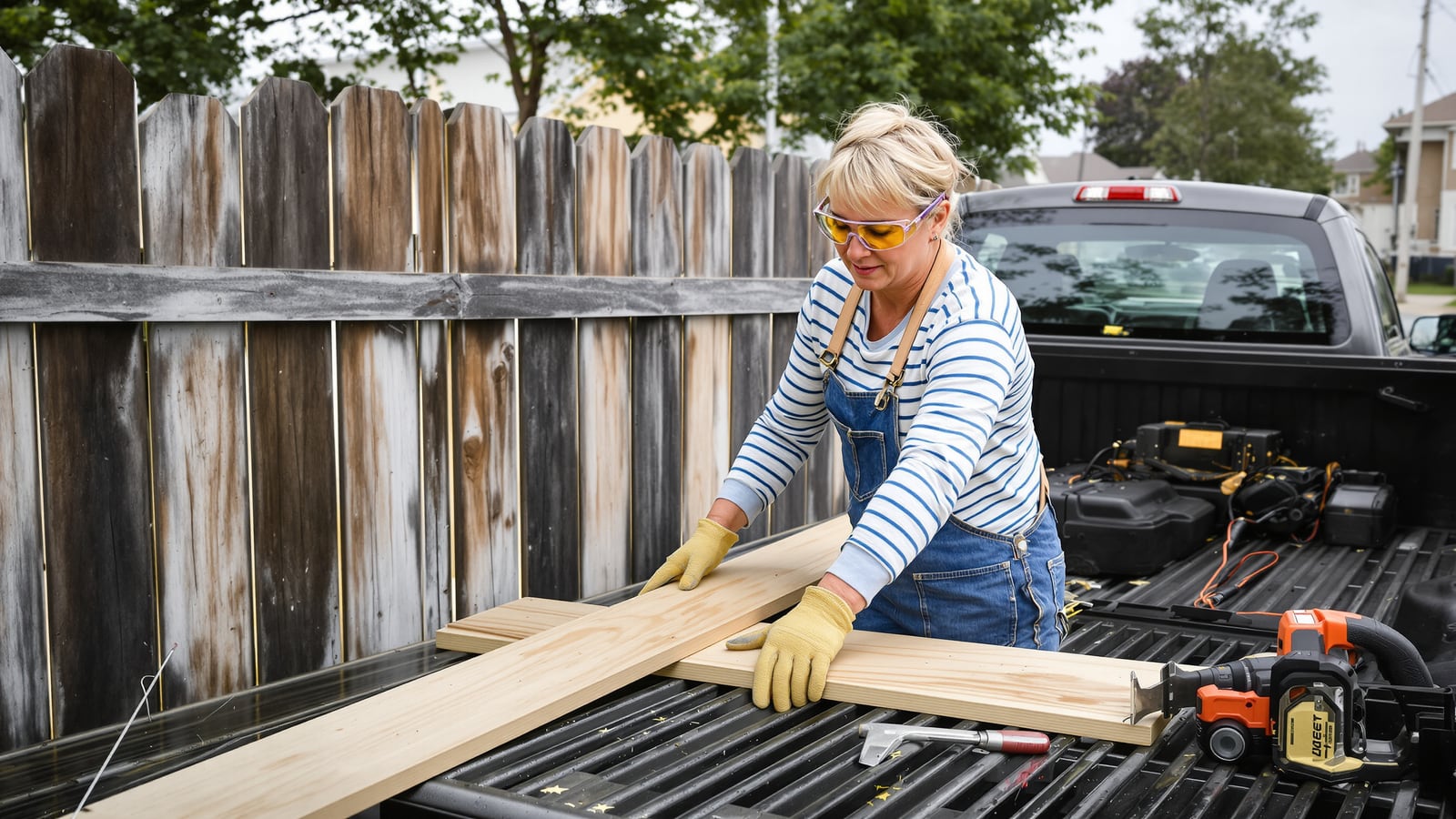
Quick answer: Pull the broken board, check the rail behind it, cut a new one to match the old, and fasten it in fresh wood, not the old nail holes. Thirty minutes and about six dollars of lumber, if the rail is sound.
That "if" is the whole job. A board that snapped in a windstorm is a one-board problem. A board that fell off because the rail behind it rotted is a rail problem, and the next board you nail on will fall off the same way by spring.
What you need
- Flat pry bar, 12 inches or so
- Hammer
- Cordless drill and a bit that fits your screws
- Tape measure and pencil
- Handsaw or circular saw
- A small scrap of wood, to protect the neighboring board
- One replacement board
- Exterior-rated screws or galvanized nails, about 2 inches long
- Safety glasses and work gloves
Take a piece of the broken board to the lumberyard if you can. Pickets look the same on the rack and aren't. Thickness, width and the shape of the top (flat, pointed, dog-eared) all vary, and you'll see the mismatch from the street. If the fence is cedar, buy cedar. If it's pressure-treated pine, buy that.
Get your safety in order first
Glasses on before the pry bar comes out. Old nails snap and rust flakes fly. Gloves on too, because a weathered board is a splinter factory and a pulled nail has a point on it.
Look behind the board before you reach behind it. Wasps like the gap between a picket and a rail. So do spiders you'd rather not meet barehanded.
If you're cutting pressure-treated lumber, wear a dust mask and wash up afterward. Keep your tetanus shot current, since you're about to handle old rusty metal. Your doctor can tell you where you stand. And if the pry bar slips and you take a deep gash, learn what to do before help arrives.
Check whose fence it's
If the fence sits on the property line, it's probably shared, or at least the neighbor has an opinion about it. Knock on the door before you start. Tell him which board, say you're fixing it this weekend, and ask if he wants anything else looked at while you're out there. Most men are glad to be asked. If there's a cost question or a disagreement about style, negotiate it without making an enemy.
Pull the old board
Start with the cleanest look at how it's attached. Count the fasteners at each rail. Usually it's two per rail.
If the board is cracked but still hanging on, set the pry bar behind it near a rail and put your scrap block between the bar and the neighboring board. That block keeps you from denting the good wood. Pry gently. Move to the next rail and pry again. Alternate so you don't split the board further.
If the board is in pieces, pull the pieces off one at a time. Don't yank the rails.
Nails will stay behind in the rail. Pull them with the claw. If a nail is too rusted to grab, drive it through the rail with a punch or the head of another nail, or hammer it flush so it can't catch you later. Leave no sharp points sticking out. Every bent nail you pick up is one a kid's bike tire or a dog's paw won't find.
Check the rail
This is the step people skip. Press your thumb into the rail where the board was. Then poke it with a screwdriver.
Solid wood pushes back. Rotten wood is soft, dark and comes off in crumbs. If the screwdriver sinks in a quarter inch without effort, the rail is shot.
A bad rail means a bigger repair. You'd cut out that section and sister in a new piece of 2x4, screwed to the posts or to a solid length of the old rail. That's a different afternoon. But it's better to know now than to hang a new board on a rail that can't hold it.
If the rail is sound, move on.
Measure the new board from the fence
Don't trust the old board's length. A broken board is often a few inches short, and the one next to it might be the real measurement.
Hold your tape against the neighbor board, top to bottom. Mark the length on the new picket. Measure twice, because a board cut short is a board you're buying again.
The top shape matters more than people think. If the old pickets have angled or dog-eared tops, copy one. Trace the angle using the neighbor as your template, then cut the new board to match.
Cut on the waste side of the line. Clamp the board or brace it on a sawhorse. Keep your off hand well back from the blade.
Seal the cut ends
Any fresh cut on pressure-treated wood exposes untreated core. Brush the cut end with a wood preservative made for treated lumber. Cedar benefits from a coat of sealer or stain on the ends too, since water wicks into end grain faster than anywhere else.
Do this before the board goes up. You can't reach the bottom edge once it's in place.
Set it and fasten it
Slide the new board into the gap. Check that it sits plumb with a level, or just sight along the neighbor's edge. Leave a gap to each side about as wide as the other boards have. Wood moves. A board jammed tight swells in July and buckles.
Pre-drill your screw holes, especially near the board's edge, so the wood doesn't split. Drive two screws or nails into each rail, and place them at least an inch from the old holes so they bite fresh wood. Screws are easier to adjust and easier to remove later. A hammer works fine too, if you'd rather swing it.
Don't drive fasteners so deep that the heads crush the surface. Flush is what you want.
Deal with the color
The new board will look like a stranger at a funeral. It's bright. The neighbors are gray.
Stain or sealer helps. A semi-transparent stain tones down the contrast and protects the wood at the same time. If the whole fence is weathered, you can match it closely with a gray-tinted stain, or live with the mismatch for a year or so while the new wood catches up. It will.
Clean up like you were never there
Sweep up sawdust. Pick up the broken pieces and the bent nails. Check the grass with your hand, not just your eye, because a nail that lands in the lawn finds a bare foot in July. Put the leftover board somewhere dry, since a spare of the same stock is useful the next time a branch comes down.
Then walk the rest of the fence line. Press your thumb into every rail you can reach. The one that's already soft is next, and finding it today costs you a ten-minute fix instead of a ruined weekend.
Wes Dunbar
Country & Skills
Grew up on an acreage and never quite left. Covers trucks, trades, land, and how to do the thing yourself.

Watch
Worth an hour of your evening
More from Skills.
From channels we rate. Plays on YouTube.
Read next