Plant in Waves and You'll Eat From the Garden Until October
One planting day gives you one August flood. Sow every two weeks, count back from your first frost, and the harvest runs from June to October.
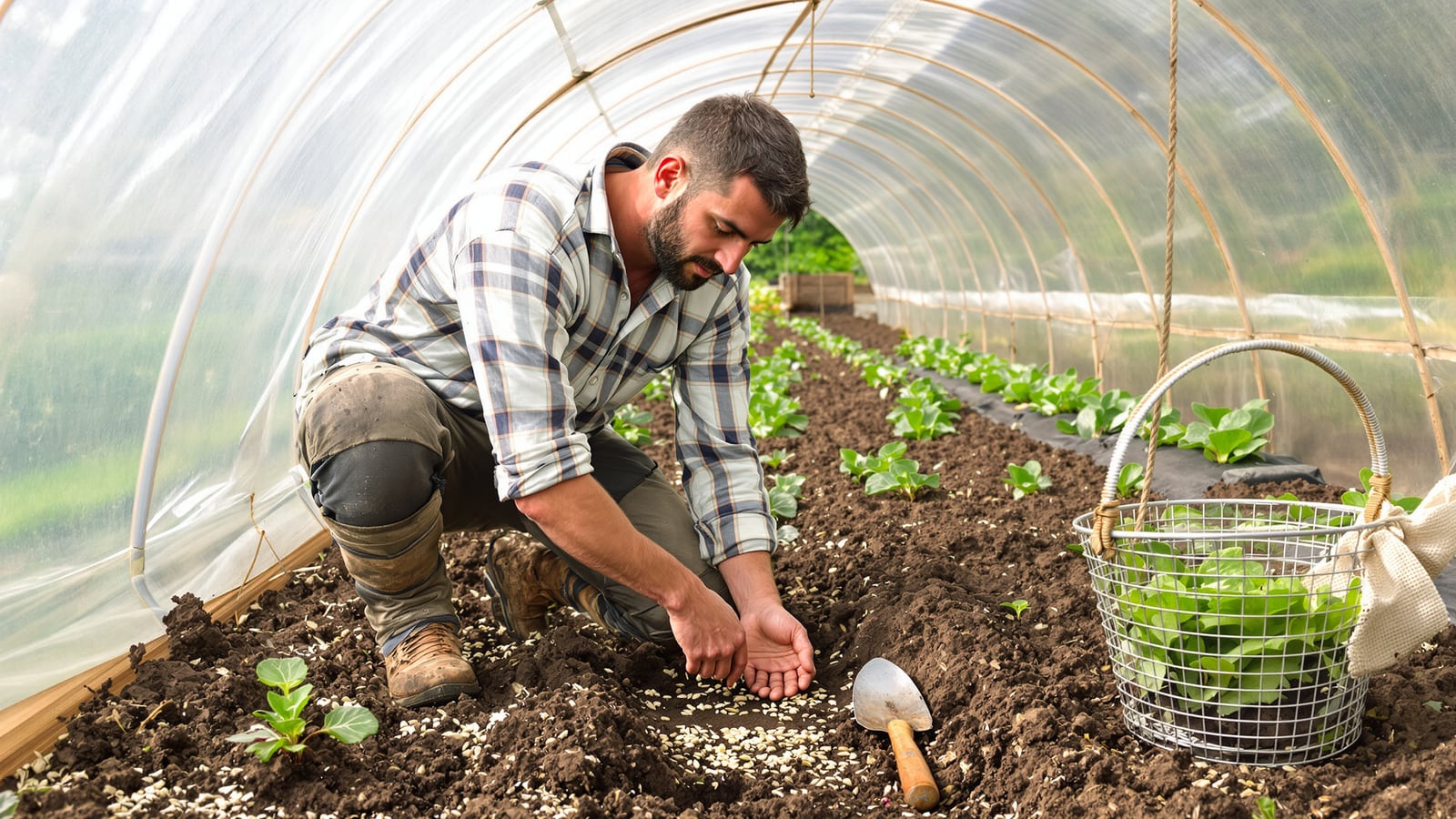
Quick answer: Find your average first frost date, then count backward from it using each crop's "days to maturity" plus two weeks. Sow quick crops every two weeks, and keep a few beds empty in July for fall.
Most home gardens peak on one weekend in August. Eleven pounds of green beans arrive together, the lettuce went bitter in June, and by Columbus Day the beds are bare. That isn't bad luck. It's what happens when everything goes in the ground on Memorial Day weekend.
Fix it with a calendar and a notebook. No new equipment required.
Get your two dates first
You need your average last spring frost and average first fall frost. Your county extension office publishes both, and so do most state university garden pages. Look them up by county, not by what your neighbor swears by.
Everything below uses an example: a last frost around May 10 and a first frost around October 15, which is roughly a zone 6 garden. Your dates will differ. If you're not sure of your zone, your hardiness zone decides what lives and what dies, and it's worth settling before you buy a single packet.
If you're in zones 8 through 10, flip the whole plan. July and August are your dead months, and your best harvests come from fall planting. Same method, different calendar.
The math that sets your last sowing date
Every seed packet lists days to maturity. Take that number, add 14, and count backward from your first frost. The extra two weeks cover the slower growth as days shorten and the soil cools.
Bush beans run about 55 days. Add 14 and you get 69. Count back from October 15 and you land on August 7. That's your last sowing for beans. Sow them August 20 and you'll be staring at flowers when the frost arrives.
Do this for every crop you care about and write the dates on a single sheet of paper. It takes twenty minutes and it's the most valuable twenty minutes in your gardening year.
June: the crops that beat the heat
June harvests are decided in March and April. Peas go in as soon as you can work the soil, often six weeks before the last frost. Lettuce, spinach, radishes and kale can go in at the same time. Radishes are ready in about a month, which makes them the one crop that rewards impatience.
Start cabbage and broccoli indoors in February or early March and set them out in April. Frost won't hurt them. If you've never started your own, start seeds indoors and skip the garden center six-pack covers the setup, and it's cheaper than you'd expect.
July and August: sow in waves, not in a block
For anything you eat continuously, sow a short row every two weeks instead of one long row once.
- Bush beans: a 10-foot row every two weeks from mid-May through early August. Pole beans bear longer per plant, so one planting in May and a second in early July is plenty.
- Carrots: three sowings, one in late April, one in early June, one in mid-July for fall.
- Lettuce: every two weeks until early June, then stop. Pick it back up in late August.
- Cucumbers and zucchini: two plantings, mid-May and early July. The first batch will wear out from disease and pests around the time you're sick of it anyway. The second starts producing just as the first fades. Zucchini needs pollination to set fruit, and your zucchini rots because nothing visited the flower explains what to do when it doesn't.
- Tomatoes: don't succession plant them. Stagger varieties instead. Pick one early variety, one main-season, and one late, and read the days to maturity on each tag. You'll pick over six or seven weeks, not two.
A packet runs a few dollars, and a packet of bush beans will cover several sowings. Budget on the order of forty or fifty dollars for seed to run a 4x8 bed or two through the whole season. If you don't have a bed yet, a 4x8 raised bed under two hundred dollars is the place to start.
What goes wrong in July
July is where the plan usually dies, and the reason is almost always dry soil.
Seeds sown into hot ground crust over and bake. Lettuce is the worst. It won't germinate well once the soil climbs past the low 80s. Water the row lightly every day until you see sprouts, and lay a board or a strip of burlap over it for the first few days to hold moisture. Pull it off the moment you see green. Leave it on a day too long and the seedlings go pale and leggy.
A piece of 30 to 50 percent shade cloth over your fall lettuce bed costs less than a restaurant salad and buys you a few degrees. Run it on hoops or just clip it to stakes.
The second problem is space. Peas finish by early July. Spring lettuce is done. If you didn't clear and refill those spots the same week, you'll find them full of weeds in August. The bed that's empty on July 10 is the bed that feeds you in October. Pull the spent plants, add an inch or two of finished compost, and sow right away. If you don't have a compost pile going, compost that doesn't stink or feed the rats will get you started.
Third problem: you forget. Put the sowing dates on your phone calendar with an alarm. A garden planned in April and forgotten in July is a garden that quits in August.
October: the part nobody plans for
The fall garden is the best-tasting one. Kale and carrots sweeten after a light frost. Beets, turnips and spinach hold well into the cold.
Start broccoli and cabbage indoors in mid-June and set them out in mid-July. Seeding them directly into July soil mostly fails. Sow carrots, beets and kale in the 10 days around the middle of July, and keep them watered.
Cover tender plants with row cover on the first frost warning. Light fabric cover gains you a few degrees and a couple more weeks of harvest. Hardy crops like kale, carrots and turnips can stay in the ground through several frosts.
Keep a record
Write down what you sowed, when it came up, and when you picked the first and last of it. One season of notes beats ten years of memory. By next spring you'll know which gap in your harvest was a planting problem and which was a weather problem, and you'll move the sowing date two weeks and fix it.
Do that for three years running and you'll stop buying vegetables in September.
Wes Dunbar
Country & Skills
Grew up on an acreage and never quite left. Covers trucks, trades, land, and how to do the thing yourself.

Watch
Worth an hour of your evening
More from Garden & Yard.
From channels we rate. Plays on YouTube.
Read next