Waders don't rot in the water. They rot in your garage.
Chest waders fail from storage, seams and bad fit long before the water wins. What to buy, what to skip, and when the cheap pair is the right call.
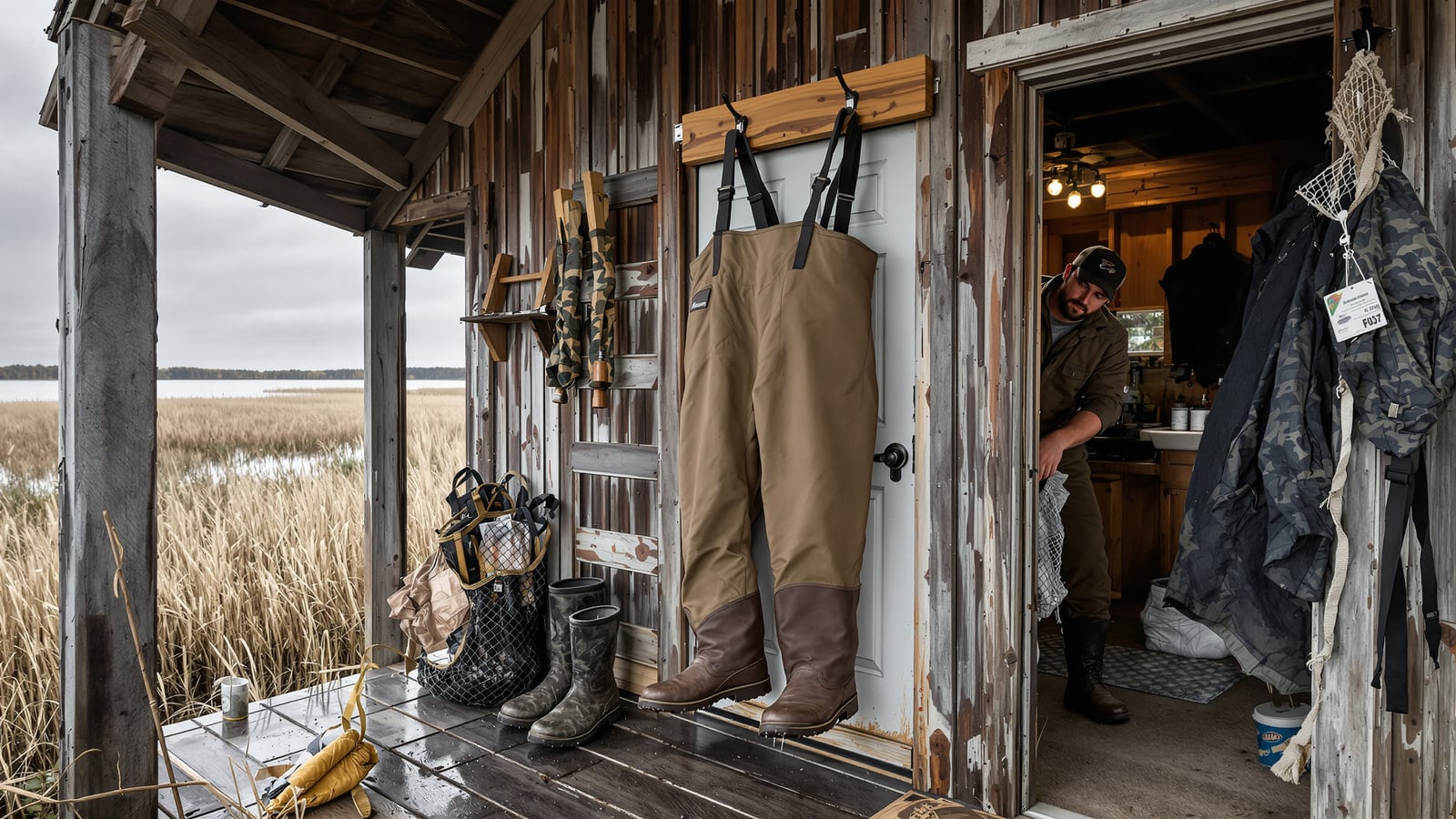
Quick answer: For cold-water duck hunting, buy insulated neoprene bootfoot waders and spend the extra money on fit. For fishing and warm-weather work, buy breathable stockingfoot waders with separate wading boots. Skip anything you can't try on over your real layers. And hang them up dry, every time, or the best pair you own will die in the garage.
What kills waders
Not the river. Not the marsh. Most waders die on a shelf.
Neoprene and rubber both break down from sun, heat and being folded wet. A pair tossed in a truck bed in August, then crammed into a tote in September, is already cracking at the creases by opening day. Breathable waders fail a different way. The laminate delaminates at the knees and seat, and pinholes open up where you kneel, climb and sit.
So the buying question isn't only "how tough is it." It is "how will I treat it, and can it be fixed?" That second part matters more than people think. A pair you can patch for ten dollars in glue beats a pair you replace every two seasons. We made the same case in Buy-it-for-life should mean repairable, not expensive.
Neoprene or breathable
Pick by what you do, not by what looks best on the shelf.
Neoprene bootfoot is the hunter's wader. The boot is built in, the material insulates, and you can sit in a blind in cold water without feeling it. Thickness usually runs 3.5mm or 5mm. Go thicker only if you're standing still in cold water for hours. It's heavy, and it's miserable to hike in. Walk a mile to your spot in 5mm and you'll be soaked inside from your own sweat before you set a single decoy.
Breathable stockingfoot is the angler's wader, and the better choice for any hunter who walks a lot. It's lighter and it vents. You wear a separate wading boot over the neoprene sock. Warmth comes from your layers, so you can dress it for October or for March.
Two honest drawbacks. Breathables puncture more easily on briars, barbed wire and rough stumps. And the separate boot adds a second thing to buy and size.
Fit is the whole game
A wader that fits wrong leaks faster, because the stress lands in the wrong place.
- Try them on over your real layers. Wear the fleece and the thick socks you'll actually hunt in. Showing up in a T-shirt is how people end up in waders that bind.
- Squat and step up. If the crotch pulls or the knees fight you, the seams are going to take that strain all season.
- Check the torso length. Too short and every reach pulls the shoulder straps tight. Too long and the extra fabric bunches and rubs through at the fold.
- Size the wading boot up. The neoprene sock needs room. A boot that's snug in the store will crush your toes and cut off circulation in cold water.
If the store can't let you try a pair, buy from one with a decent return window and do it at home with your actual clothes on.
The test before opening day
Don't find your leak at five in the morning in a flooded field.
In September, put the waders through a dry run. Turn them inside out, mist the seams, seat and knees with 70 percent rubbing alcohol, and watch the other face for dark spots. Mark each one with a pen. Or stand in a tub of water for ten minutes and check for damp.
Fix what you find. Aquaseal or a similar flexible urethane cement handles most pinholes and small tears. Seam Grip works on seams. Follow the directions on the tube, and let it cure fully before the first wet trip. Rushing the cure is the most common way a repair fails.
Keep a patch kit in the truck. The roadside kit can carry a tube of this and a spare pair of dry socks for about the same space as a sandwich.
What the cheap pair really costs
A cheap pair of waders doesn't cost you the price tag. It costs you a morning.
Picture it. You're 200 yards from the truck. The water is cold. A seam at the crotch gives out, and the leg starts filling. You're done for the day, and in cold water you might be done in a worse way than that. Hypothermia is a real risk when you're wet and the wind is up. Always wear a wading belt cinched snug over the waders. It limits how much water gets in if you go down.
That's the cost. Not the forty dollars you saved. The hunt, the ride home in wet clothes, and the trip you don't get back.
When the cheap one is right
Sometimes it is. Be honest about which case you're in.
- You wade a few times a year. If it's a pond edge, a shallow marsh, or a couple of weekends, expensive waders are money you won't earn back in use.
- It's a backup. A second pair in the truck for a buddy or for the day your good pair springs a leak doesn't need to be great. It needs to be dry.
- A kid is growing. Don't spend big on a pair that fits for one season.
- You're learning. Find out whether you like hunting wet before you buy the good pair.
If you wade every week from October to January, the cheap pair is the expensive one.
What we'd buy and what we'd skip
Buy:
- Insulated neoprene bootfoot for cold-water waterfowl, sized to your layers, with a built-in or well-reinforced knee.
- Breathable stockingfoot with an external gravel guard and a real wading boot, if you walk a lot or fish.
- A wading belt, a patch kit, and a boot dryer or a good habit of hanging them to dry.
Skip:
- Anything you couldn't try on over your clothes.
- Waders with no way to be repaired, or from a seller who won't talk about warranty.
- Felt-sole wading boots, if your state has banned them. Several states have, to slow the spread of invasive species, so check the rules for the water you fish. Rubber soles with studs are the safe default.
- Plastic-and-glue "emergency" waders, unless you really mean emergency.
Care that doubles the life
None of this takes more than five minutes.
- Rinse off mud and salt before it dries.
- Turn them inside out and let them dry completely. Moisture trapped inside is what grows mildew and slowly rots the lining.
- Hang them by the boot feet or the straps. Don't fold them in a heap.
- Store them out of sun and away from heat, in a place mice can't reach.
- Wash and dry the neoprene socks and your wading boots separately, and sand grit out of the boot seams.
If you also need to stay dry from the shoulders up, read Buying rain gear that still works in hour three. A good wader under a leaking jacket is half a solution.
Hang the pair up tonight. Ten seconds. It beats every upgrade in the store.
Wes Dunbar
Country & Skills
Grew up on an acreage and never quite left. Covers trucks, trades, land, and how to do the thing yourself.

Watch
Worth an hour of your evening
More from Gear.
From channels we rate. Plays on YouTube.
Read next