Buy the chain saw for the biggest tree you'll actually cut
Most people overbuy for the one big storm or underbuy for the whole property. Here's how to match the saw to the work, and when the cheap one is fine.
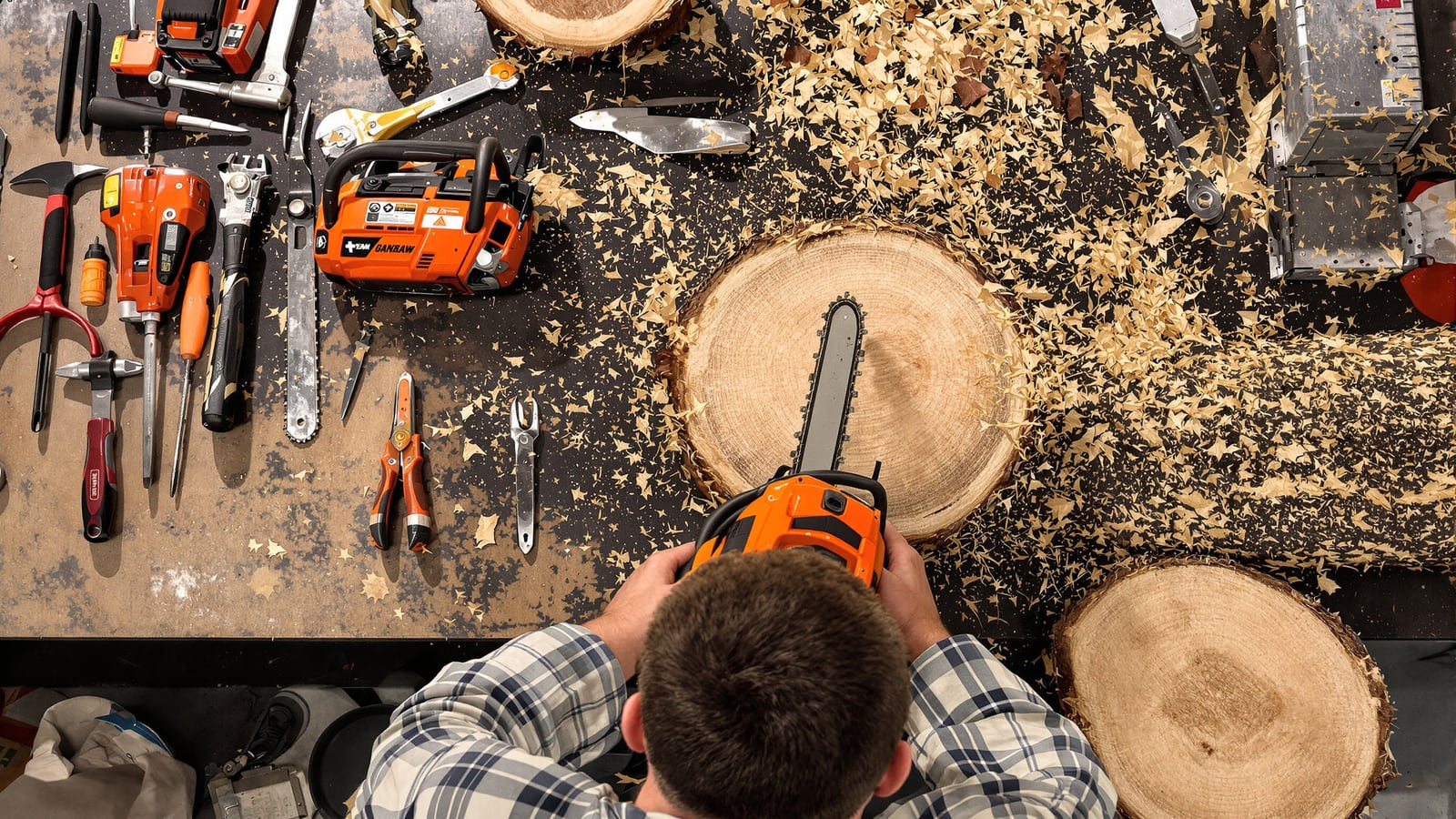
Quick answer: For a suburban lot, buy a battery saw with a 12 to 14 inch bar. For an acre or more, or if you heat with wood, buy a gas saw in the 50cc range with an 18 inch bar from a brand with a local dealer. Buy chaps the same day, whichever you pick.
Start with the biggest log, not the biggest fantasy
Walk your property with a tape measure. Find the thickest trunk you'll realistically cut in the next five years. Not the oak you hope never comes down. The one that will.
A bar should run about two inches longer than the wood it's cutting. That's the rule of thumb most dealers use, and it holds up. A 14 inch bar handles a 12 inch limb comfortably. An 18 inch bar covers most of what a homeowner with some acreage will ever drop.
Go bigger than you need and you pay for it every weekend. The saw is heavier, it tires you out sooner, and tired arms are how people get hurt. A twenty-four inch bar on a small engine is the worst of both worlds. It's slow, it bogs down, and it's awkward to hold.
Battery or gas
Battery saws have earned their place. They start the second you squeeze the trigger. There's no fuel to mix and none to go stale in the garage over winter. They're quiet enough that you won't need to shout at your neighbor over the fence. For limbing, storm cleanup on a normal lot, and cutting a few trees a year into firewood, they're the right call.
The trade-off is runtime and the batteries. A saw that lives on a battery you already own for your trimmer or blower makes sense. A saw that needs a second charging system and two extra batteries gets expensive quickly. Pick the platform you're already on, or pick one you'll live with for a decade.
Gas still wins when the work is long. If you're bucking a downed tree into rounds all Saturday, or cutting a winter's worth of firewood, a gas saw doesn't run out of charge. You top off the tank and keep going.
The annoying part about gas is fuel. Mixed fuel goes stale, and ethanol gas gums up a carburetor that sat all summer. Mix only what you'll burn in a month or two. Use the ratio printed on the tank or in the manual, not the one your uncle swears by. If the saw is going into storage, run it dry first.
What we'd buy
For a property with real acreage, look at a Stihl MS 271 or a Husqvarna 455 Rancher. Both sit in the 50cc range, both come with bars sized for this work, and both are sold and serviced by dealers who stock chains, bars, and parts. That last point matters more than the spec sheet. When the saw needs a carburetor kit in year six, you want a counter you can walk up to.
For a standard lot, a battery saw from Stihl, Husqvarna, Echo, Ego, or Milwaukee will do the job. Don't shop it on bar length alone. Check how the chain tensions, whether the chain brake feels solid, and whether the battery you'd be buying fits other tools you own.
What we'd skip
- The mystery-brand gas saw. It looks like a bargain until the chain needs replacing and nobody sells one that fits.
- A bar longer than your engine can pull. It's the cheapest way to make a good saw feel bad.
- Any saw you can't have serviced within driving distance. A saw that sits dead in your garage for six weeks waiting on a part isn't cheap.
- The saw sold as a combo with a pole attachment, if you don't need the pole. Pay for what you'll use.
When the cheap one is right
A few times a year, mostly limbs under six inches? A cheap electric or entry-level battery saw is a perfectly good tool. It's the right answer for a man with a half-acre who cuts up a fallen branch after a windstorm and otherwise never thinks about it.
It's also right when the job is one-time. Renting a good saw for a weekend beats buying a mediocre one and storing it for fifteen years.
The cheap one does have a real cost, though. The chain steel is usually softer, so it dulls faster. The saw is harder to start, harder to tension, and harder to fix. If you use it hard, it will cost you in hours and frustration. Used lightly, it's money well saved.
The line is simple. If the saw's job is occasional, buy cheap. If you'll lean on it every season, buy once from a dealer.
The gear that matters more than the saw
A saw with no protective gear is a bad idea at any price. Budget for these before you buy the saw:
- Chainsaw chaps, rated for the job. The fibers are designed to jam the chain if it touches your leg.
- A helmet with a face screen and ear protection. Wood chips and noise are the everyday hazards, and both add up.
- Gloves that grip, and boots with a solid toe.
Chaps cost far less than a trip to the ER. And they're the piece of gear people most often skip because they've been lucky so far.
Habits that keep the saw working
Keep the chain sharp. A dull chain throws fine dust. A sharp one throws real chips. If you're getting dust, stop and sharpen. You'll need a round file matched to the chain size, which is stamped on the bar or listed in the manual. A dull chain makes you push, and pushing is how saws kick back.
Know where kickback comes from. It happens when the upper tip of the bar catches something. Keep that tip away from anything solid, use a firm two-handed grip, and keep the chain brake in working order.
Don't cut above your shoulders. Don't cut from a ladder. If a limb is out of reach from the ground, hire a tree service. A good ladder is a tool worth buying right, and we've covered that. A chain saw on top of one is a different matter.
Clean the saw after every use. Brush out the sawdust, wipe down the bar, check the chain tension while it's cool. If you buy right, a repairable saw will outlast the truck you haul the wood in.
Lend it carefully
Sooner or later a neighbor will ask to borrow it. You're allowed to say no. If he's never run a saw, he's better off with you holding it, or with a rental and a quick lesson.
If you do lend it, hand it over with a sharp chain, a full tank, and a pair of chaps. And if you borrow one, bring it back sharper than it left, fueled up, and clean. That's the old rule, and it still holds.
A good saw doesn't ask permission, and it doesn't ask for much. Sharpen it, fuel it fresh, and wear the chaps. It'll be clearing the same property when your kids are doing the hauling.
Wes Dunbar
Country & Skills
Grew up on an acreage and never quite left. Covers trucks, trades, land, and how to do the thing yourself.

Watch
Watch how it's done
Picked for this article.
From channels we rate. Plays on YouTube.
In The Woodyard
CHAINSAWS - THE RIGHT SIZE FOR YOU!
Wranglerstar
What Chainsaw Bar Is Right For You? | Wranglerstar
Read next