

The driver swing for guys who'd like to find the fairway
A simple setup, one tempo rule and two drills that fix the big miss. Plus the honest point where chasing yards stops paying and starts costing strokes.
Quick answer: Tee it high, put the ball off your front heel, tilt away from the target, and swing at about 80 percent. Hold your finish until the ball lands. If you're still losing a ball a round off the tee, put the driver away for a while and hit something shorter.
The swing is smaller than you think
Watch a tour player and you'll copy the wrong thing. You'll see a huge turn, a violent hip slide and a ball gone before the camera catches up. What you won't see is thirty years of flexibility and a body built for it.
Your swing doesn't need to look like that. It needs to deliver the clubhead to the ball moving slightly upward, with the face pointed roughly where you want the ball to go. That's the whole job.
Most weekend golfers fail at it in one of two ways. They swing from the top down and outside, which slices. Or they swing as hard as they can and lose their balance, which does everything else. Both come from the same place: trying to hit it hard instead of hitting it well.
Set up so the swing is easy
The driver is the one club you hit on the way up. Your setup should say so before you move.
- Tee height: Half the ball should sit above the top of the driver's face. If the ball looks like it's perched on a flagpole, it's about right.
- Ball position: Opposite your front heel, or just inside it. Further back and you'll hit down on it. Hitting down with a driver gives you a weak, high pop-up.
- Stance: A little wider than your shoulders. Wider than that and you can't turn.
- Tilt: Drop your back shoulder lower than your front one, so your spine leans slightly away from the target. It feels like you're hanging back. You're not. That's what lets you hit up on the ball.
- Grip pressure: Hold it like a tube of toothpaste you don't want to squeeze out. If your forearms are tight at address, they'll be tight at impact.
Do all of that and you've fixed half your driver before swinging it.
Swing at 80 percent, and mean it
This is the advice everybody has heard and nobody follows, because 80 percent feels like quitting.
Pick a pace you could repeat all day. Smooth going back, no hitch at the top, and let the club speed up on its own through the ball. The goal is to be in balance at the end. Finish with your belt buckle facing the target, almost all your weight on your front foot, and stand there. Hold it for a count of three after the ball lands.
If you can't hold the finish, you swung too hard. It's that simple, and it's the most honest feedback you'll get without a lesson.
You'll lose a few yards at first. Maybe ten. Then your contact gets better, and you'll often get them back.
Two drills that fix the common misses
The feet-together drill. Hit a few balls off a low tee with your feet touching. You can't muscle it from there. You'll swing at about half speed, turn easily and stay balanced, or you'll fall over. Do ten, then go back to your normal stance and keep that feeling of being quiet below the waist.
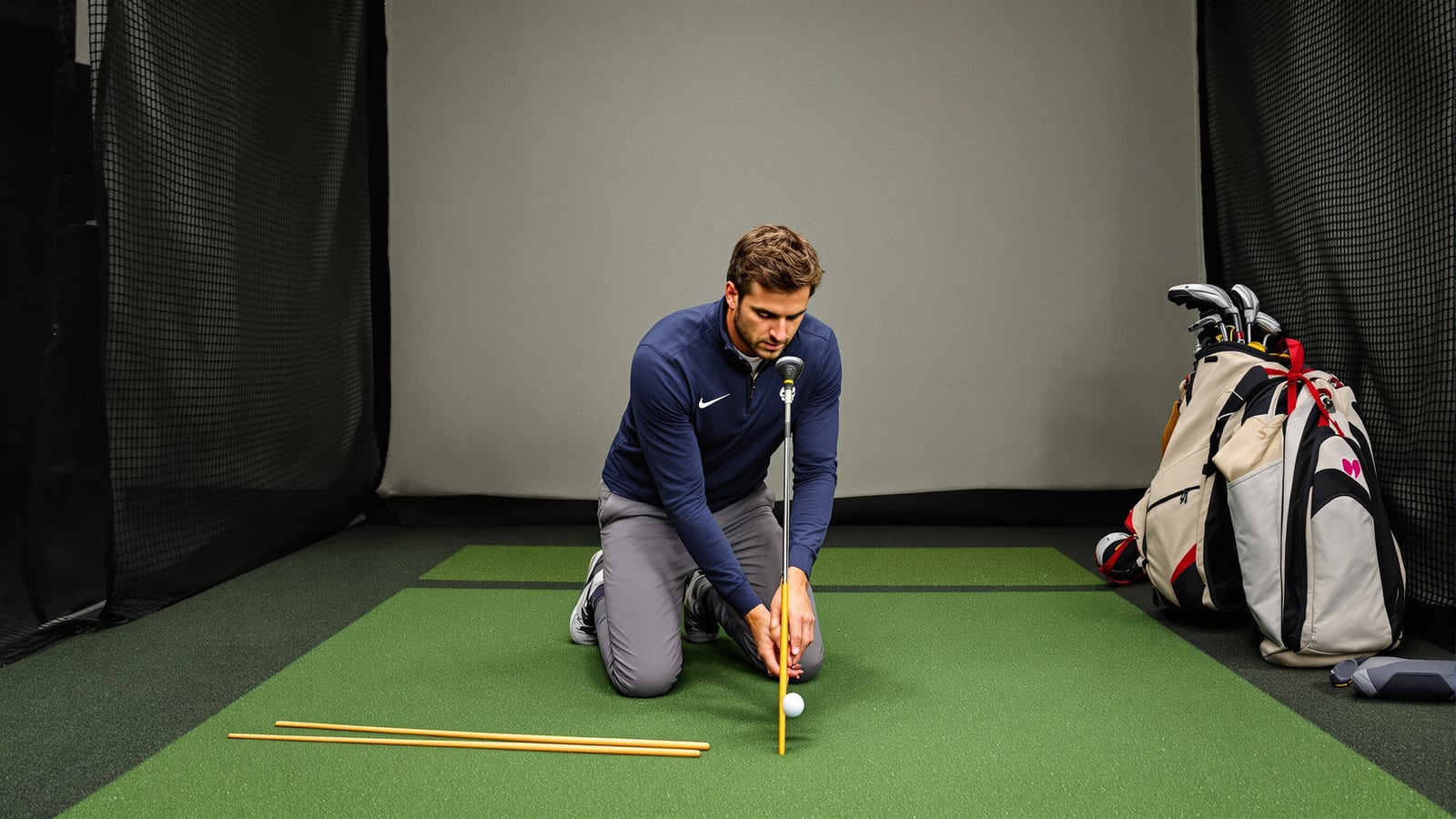
The headcover drill for the slice. Most slices come from a path that cuts across the ball from outside to in. Put a headcover on the ground a foot behind the ball and a few inches outside the ball line, farther from you than the ball. Now swing without clipping it. To miss it, the club has to come from the inside, which is the path you want. Start with a few slow swings, then hit balls.
It'll feel strange. Your first few shots may go right or left. Give it twenty balls before you decide it doesn't work. It's also a good use of range time, because at an average range session most of us just hit the same bad swing repeatedly.
If you're working through your whole game and not just the driver, the five changes that get you under 100 put this swing in its proper place in the order of things.
The gear question, honestly
Buy a driver with enough loft. Ten and a half degrees or more suits most weekend swings. The 8 or 9 degree heads the pros play will make your ball come out low and spin sideways. More loft is more forgiving, and no one will ever ask what's stamped on the bottom of your club.
A driver a few years old, bought used, will serve you almost as well as this season's model, and costs far less. If you're going to spend money, spend it on one lesson with a local teaching pro and on having your shaft flex checked. A shaft that's too stiff for your speed will cost you more yards than any amount of clubhead technology gives back.
And don't hit forty drivers in a row at the range. You'll tire out and groove the tired swing. Hit ten, hit some irons, come back to it.
When to stop chasing distance
Here's the test, and it takes one round. Count the strokes the driver costs you. Lost ball, out of bounds, a punch-out sideways from the trees, a drop under penalty. Add them up.
If it's two or more, the driver isn't helping you right now. Every one of those is a full stroke, and a stroke you give back is the same as a stroke you didn't make up with distance. Take a 3-wood or a hybrid off the tee on tight holes, or on any hole where the trouble is in range of your usual miss. You'll give up twenty or thirty yards and you'll be playing from grass.
Most golfers who shoot 95 can't turn an extra thirty yards into a better score. They'd rather hit a 7-iron from the fairway than a pitching wedge from behind a pine tree, and it's not close. If you're not sure which ball to play while you sort this out, the ball you should be playing if you shoot 95 is worth a read.
Distance becomes worth chasing again when you can hit your driver in play most of the time, and what stands between you and the green is a long second shot. That's the moment to work on speed, with the same smooth tempo and a little more of everything.
Until then, the fairway is the only long drive that counts. You'll play with plenty of guys who hit it past you and wave from the rough. Be the one waiting for them on the short grass, and say nothing about it.
And remember the other half of golf. Keep up, rake your bunkers and fix your pitch marks. Pace, silence and pitch marks covers the rest of what makes a good playing partner, and no swing fix beats that.
Dean Shaw
Gear & Garage
Reads the warranty, the parts list and the long-term owner reviews before anything else. Trucks, tools, watches, and the cheap version that costs more.

Watch
Worth an hour of your evening
More from Golf.
From channels we rate. Plays on YouTube.