

Two swipes and a minute of waiting save your white shirts
The yellow ring under the arm isn't bad luck or a cheap shirt. It's usually too much product on damp skin, and the fix takes sixty seconds.
Quick answer: Put a thin layer on completely dry skin, two or three passes and no more. Wait a full minute before the shirt goes on. If you use an antiperspirant, put it on at night.
Most guys with ruined shirts are doing the same thing. They step out of the shower still damp, drag the stick across six times, and pull on a shirt before it's had a chance to set. Then they blame the shirt.
Two different stains, two different causes
The white streaks on dark shirts are just product. Deodorant that hasn't dried gets rubbed off by the fabric and stays there. They're annoying, but they brush off.
The yellow stain on white and light shirts is the stubborn one. It's commonly traced to the aluminum compounds in antiperspirants reacting with sweat, then building up in the fabric wash after wash. That fits what you see. The stain sits right where product and sweat meet, and it gets worse the longer a shirt stays in rotation.
Buying a more expensive stick won't fix either one. Application will.
The method
It takes less time than finding a clean shirt.
- Dry off completely. Towel the underarm area, not just a quick pass. Product applied to damp skin goes on thick, clumps, and dissolves into sweat instead of staying on the skin.
- Trim if you need to. Hair holds product. Short underarm hair, kept with clippers, means less of it ends up in your shirt instead of on your skin.
- Two or three passes. A thin, even layer works as well as a thick one. The thick one just has somewhere to go, and that somewhere is your collar and sleeves.
- Wait sixty seconds. Brush your teeth, find your keys, put on your watch. Get the product dry to the touch before fabric meets it.
- Check before you leave. Run a finger over the area. If anything transfers, it's too much, and you'll learn to use less tomorrow.
That last step teaches quickly. Most people have been overapplying for years because nobody ever told them there was a wrong amount.
Put the antiperspirant on at night
This is the one change that makes the biggest difference, and almost nobody does it.
Dermatologists, the American Academy of Dermatology among them, advise applying antiperspirant at night to clean, dry skin. You sweat less while you sleep, so the active ingredient has time to do its work before the morning rush. Morning application is then mostly a backup.
It also helps your shirts. By morning, the night layer has dried and settled. You can skip the product, or put on a light touch-up, and the shirt never meets a wet layer.
Concede the obvious: this only applies if you use an antiperspirant. A plain deodorant masks and fights odor but doesn't reduce sweat, so timing matters less.
Pick the right product for your problem
Antiperspirant reduces sweat, and its aluminum compounds are the usual culprit in yellowing. If you wear white shirts a lot and the staining bothers you, the aluminum-free route is worth trying.
Deodorant without aluminum handles odor and tends to stain less yellow. The trade-off is real, though. You'll still sweat, and sweat and body oils can mark a collar on their own. Some guys find it isn't strong enough on a hot day.
Clear gels and solids leave less visible residue than chalky white sticks, which helps on dark shirts.
Sprays go on thin and dry fast, but it's easy to overdo them in a closed bathroom, and they're harder to aim. If you use one, hold it back from your skin and give it the same minute.
Whatever you pick, give it two weeks. You won't know whether it works by Wednesday. For more on choosing something that smells right without announcing itself, see smelling good at arm's length, not across the room.
Getting the old stains out
Prevention is the point, but you probably have a few shirts to rescue.
- Don't use the dryer until the stain is gone. Heat sets it.
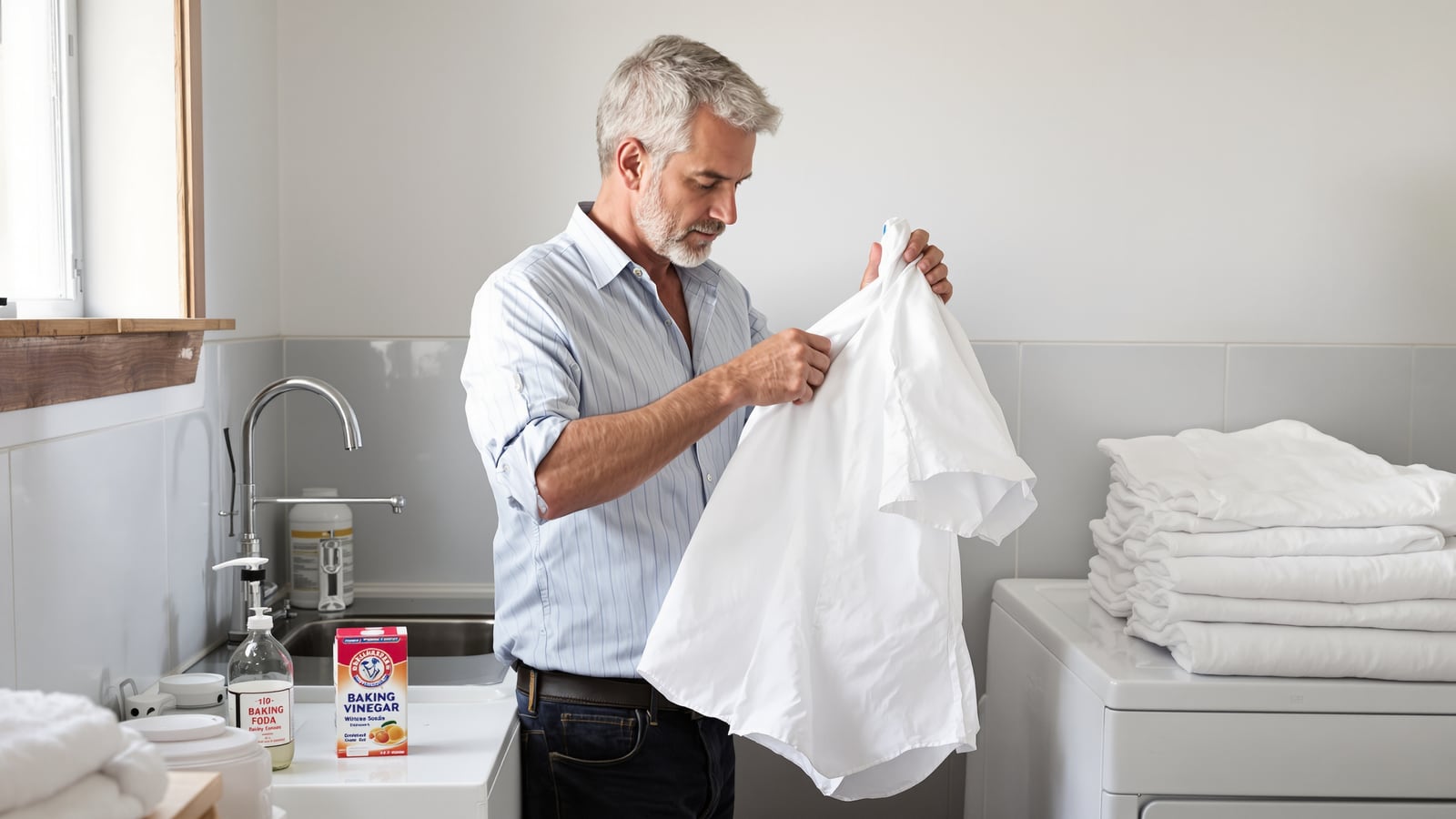
- Use oxygen bleach, the color-safe kind, and follow the package directions for a soak. OxiClean is the common one.
- Or make a paste of dish soap and baking soda. Work it in with an old toothbrush, let it sit about thirty minutes, then wash.
- Skip chlorine bleach on yellow underarm stains. It can react with the residue and turn it a deeper yellow.
- Wash in warm water, not hot. Hot water can lock in protein-based stains.
Be honest with yourself about a shirt that's been yellowing for three years. You may get it from bad to tolerable, not new. That's the day it becomes the shirt you mow the lawn in.
The layer your grandfather knew about
An undershirt takes the hit so your good shirt doesn't. A plain white crew-neck costs very little compared to the dress shirt it protects, and you can replace it when it yellows without feeling a thing. It also keeps sweat off the fabric you can't easily wash.
If you wear dress shirts to work, this alone can double their life.
What to do tomorrow morning
Dry your underarms properly. Two passes. Then do something else for a minute before you get dressed. If you use an antiperspirant, start moving it to bedtime tonight.
Small habits like this are the whole point of a routine that survives a real morning. The same logic runs through three ingredients do the work and the rest is packaging. Less product, used correctly, beats more product used in a hurry.
Your shirts are going to outlast the stick.
Dean Shaw
Gear & Garage
Reads the warranty, the parts list and the long-term owner reviews before anything else. Trucks, tools, watches, and the cheap version that costs more.

Watch
Worth an hour of your evening
More from Men's Grooming.
From channels we rate. Plays on YouTube.
Read next