

The Twitch That Won't Quit, and the Signs That Matter
Most muscle twitches are harmless. A few come with company that isn't. Know the difference before you spend another night searching symptoms.
Quick answer: A twitch with no weakness, no wasting and no numbness is usually benign, even when it lasts for weeks. A twitch that comes with any of those three needs a doctor's visit soon, not eventually.
The 11 p.m. calf
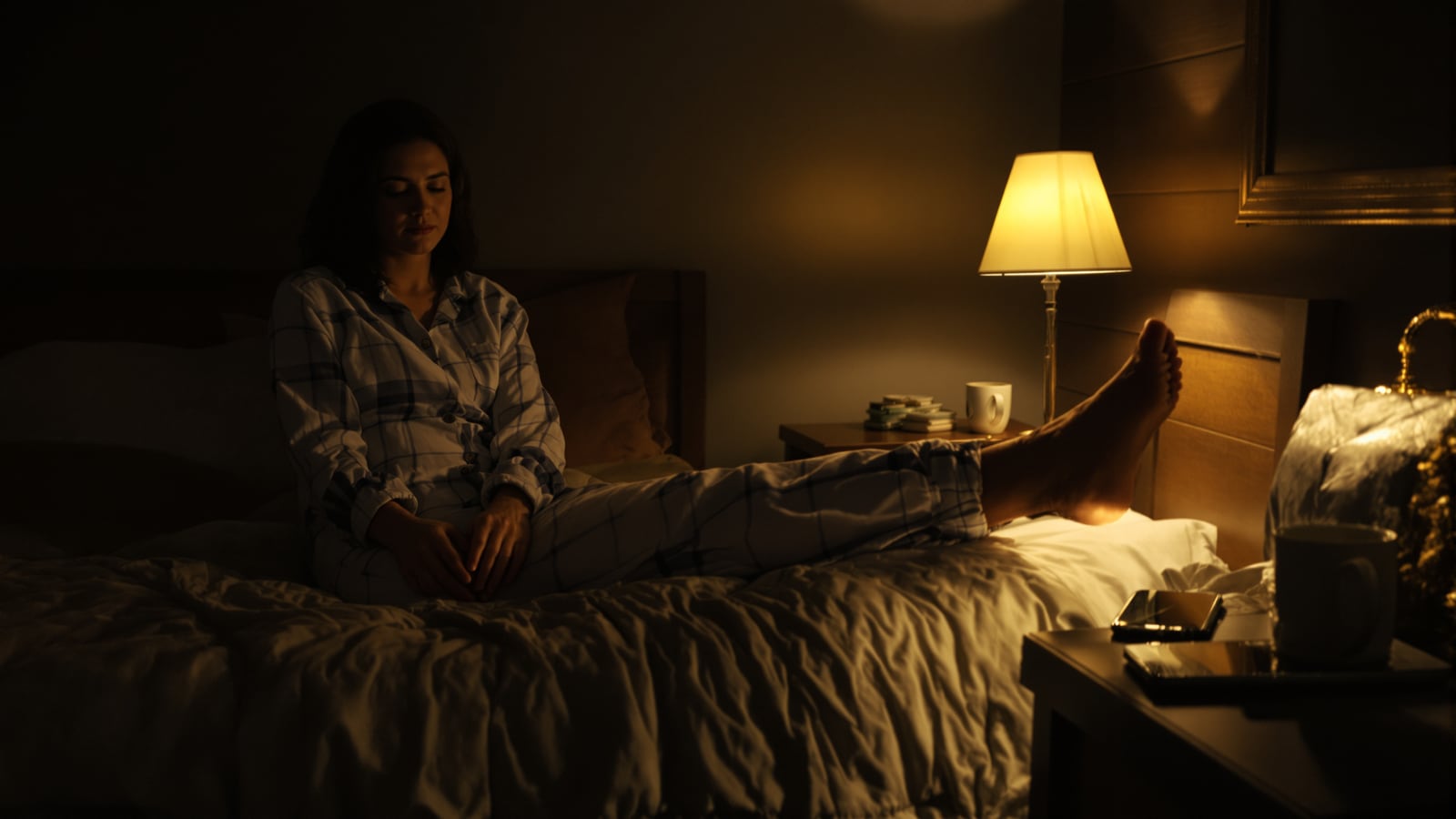
You're lying in bed. Your left calf starts flickering like a trapped moth under the skin. It stops. It starts again. By week three, you've read things on your phone that you shouldn't have, and you're not sleeping, which makes the twitching worse.
That loop is the most common story with this symptom. The medical term is fasciculation, a brief, involuntary firing of a small bundle of muscle fibers. You can sometimes see it, sometimes only feel it. Calves, thumbs, eyelids, thighs and the small muscles of the foot are the usual spots.
Everyone gets them. The ones that last for weeks are what send people to the internet, and then, with luck, to a doctor.
What usually causes it
The common culprits are dull, which is good news.
- Caffeine. The FDA puts the level most healthy adults tolerate at about 400 milligrams a day, roughly four cups of brewed coffee. Pre-workout powders and energy drinks can blow past that in a single serving.
- Short sleep and stress. Your nervous system runs hot when you're depleted. Twitching is one of the ways it shows. If that sounds familiar, stress doesn't stay in your head, and this is one of the places it lands.
- Hard training. Heavy legs on Monday often means a flickering calf on Tuesday. It tends to fade within days.
- Medications and stimulants. Decongestants, some asthma inhalers, ADHD medications and corticosteroids can all do it. Check the label, then ask your pharmacist.
- Low minerals. Magnesium, potassium and calcium all affect how muscles fire. Heavy sweating, a poor diet or certain prescriptions can drain them.
- Nicotine and alcohol. Both irritate nerves. Heavy drinking over years can damage them outright.
Cut the caffeine for two weeks and sleep seven or eight hours. Bring the nicotine down if you can, and quitting for good is worth the fight for a dozen other reasons. If the twitching fades, you have your answer. Don't expect it overnight. Irritated nerves can take a couple of weeks to settle after you take away the irritant.
The three things that change the picture
Here's the part most people skip past because they're fixated on the twitch itself. The twitch is rarely the main event. What travels with it is.
Weakness. Real weakness, not tiredness. You start tripping over a toe that catches the floor. Your grip loosens and you drop a coffee mug. You struggle with a jar lid you've opened for years. You can't get up from a chair the way you did last spring.
Wasting. One muscle or one limb looks smaller than its twin. A hollow shows up in the web of the hand between thumb and finger. One calf is visibly thinner than the other. Your wife might notice this before you do.
Numbness or changed sensation. Tingling, burning, patches that feel dull, or a foot that doesn't tell you where the floor is.
Add to that list: twitching that's spreading from one area to others, muscle cramps and stiffness that are new and persistent, or any change in speech or swallowing. Any of these, with or without a twitch, deserves a prompt appointment.
What it can mean
Twitching with these companions points a doctor toward the nerves, and there are a number of things it can be. A pinched nerve in the neck or lower back is among the more common. So is neuropathy, which can come from diabetes or prediabetes (if your last A1C came back borderline, mention it), heavy alcohol use or a vitamin B12 deficiency. An overactive thyroid can do it too, and so can other conditions I'm not going to try to diagnose from a magazine.
Then there's the one everybody searches. ALS, the motor neuron disease, makes people fear every twitch. Here's the honest picture: twitching alone is far, far more often benign. In ALS, the weakness is what leads, and twitching comes with it. A person with a flickering calf and full strength, a normal exam and normal reflexes is almost always in the benign group, and a doctor can tell you that after examining you. Fear without an exam is the worst of both worlds. Get the exam.
What to do before the appointment
Don't wait for a crisis to start gathering information. For a week or two, keep a simple log on your phone.
- Where the twitching happens, and whether it moves around
- What time of day it's worst
- Your coffee, energy drink and alcohol intake
- Any new medication or supplement, including pre-workout
- Any new weakness, clumsiness, numbness or visible change in a muscle's size
Then ask your family. A wife or a grown kid will often spot a limp, a thinner arm or a dropped fork that you've adapted to without noticing.
At the visit
Primary care is the right first stop. A good doctor will check your strength, reflexes and sensation, ask about medications and sleep, and often order basic blood work. That commonly means electrolytes, thyroid, blood sugar and B12. If something looks off, the next step is usually a neurologist, who may order a nerve conduction study or EMG. Those tests measure how your nerves and muscles carry signals. They're uncomfortable, not dangerous.
Don't be a pushover about it. If you've had a twitch for a month and you're losing sleep over it, say so. Ask directly: "Can you test my strength and reflexes?" A five-minute visit shouldn't end with a pat on the shoulder and no exam. You're a customer of your own health care, and a polite, firm question is fair.
And if your doctor finds nothing, take the win. It's a good outcome, and it doesn't mean you wasted the copay.
Go sooner if
Skip the log and make the call the same week if you have new weakness in a limb, trouble speaking or swallowing, a foot that drags, or a sudden change in how your hand grips. If weakness comes on suddenly, or comes with a severe headache, confusion or loss of balance, get medical help right away. Don't wait on an appointment.
For everyone else, the plan is simple and a little boring. Cut the stimulants, sleep like it's your job, and give it two weeks. If the twitch is still there, or the extras show up, let a doctor put hands on the problem. That's cheaper than another month of 2 a.m. searching, and it works better.
Cal Brennan
Fitness
Strength coach. Trains fathers, tradesmen and desk workers, which means programs that survive a bad week.

Watch
Worth an hour of your evening
More from Health.
From channels we rate. Plays on YouTube.
Read next