A Wire Crew Finished the Pony Express in 112 Days
In the summer of 1861, crews strung wire across roughly 2,000 miles of wilderness in the middle of a war. When they finished, ten days became minutes.
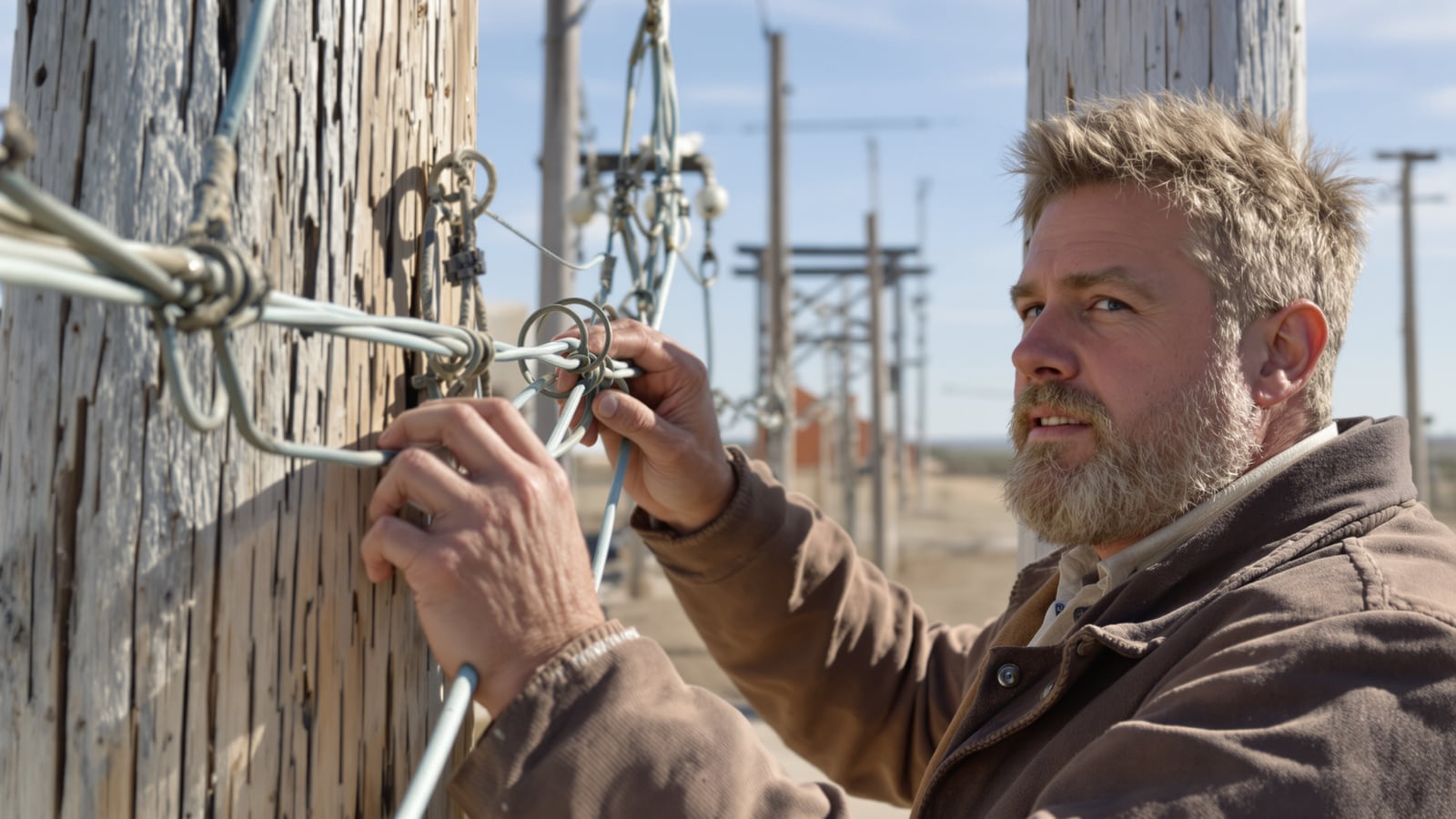
On October 24, 1861, Brigham Young handed a telegraph operator in Salt Lake City a message for the president of the Pacific Telegraph Company. It said, in part, that Utah "has not seceded, but is firm for the Constitution and laws of our once happy country."
Read that again with the date in mind. The Civil War was six months old. Three years earlier, President Buchanan had sent the Army toward Utah in what's called the Utah War. Now the territory's leader was wiring his loyalty, instantly, to men back East.
That was the point of the wire. For the first time, the country could say something to itself from coast to coast and be heard the same day.
What ten days looked like
Before the wire, the fastest news in America crossed the continent on horseback. The Pony Express launched in April 1860, running about 1,900 miles between St. Joseph, Missouri, and Sacramento. A good trip took ten days. When Lincoln's first inaugural address went west in March 1861, the riders carried it in a little over seven days and seventeen hours, and the whole West lined up to watch.
Ten days was a miracle. It was also a long time to wait for word on whether your country was still one piece.
Ships and stagecoaches took longer. Letters from California to Washington could take weeks. Imagine running a state, or a business, or a war on that clock.
112 days
Congress passed the Pacific Telegraph Act in June 1860 and put up a subsidy of $40,000 a year for ten years. Western Union, under Hiram Sibley, took the job. The two ends were built by two separate outfits. Edward Creighton ran the eastern crews out of Omaha. James Gamble handled California's end.
If you count from the Fourth of July, 1861, when Creighton's crew started out of Omaha, the job took 112 days. Roughly two thousand miles of new line, across plains, desert and mountains.
The plains were the first problem. Out there you can see to the horizon and not one tree worth cutting. Poles had to be found, cut and hauled in, wagon load after wagon load, and then every one of them stood up in a hole somebody dug. Then wire went on, mile after mile. Then somebody did it again.
The mountains and desert were next. The crews worked under summer sun and then the first hard weather, far from supply. And the Utah stretch only moved because local labor and supplies came through, which is why Young's message mattered more than it looks. His territory had a stake in the thing.
None of this was glamorous. Nobody's name went on a statue for setting pole 4,112. But the schedule was fast and the work held. Crews working from both directions met in Salt Lake City, and the line was live.
The first messages
Young's wire went east. Stephen Field, then California's chief justice, sent word to Lincoln pledging California's loyalty to the Union. (He'd go on to the U.S. Supreme Court two years later.) Those two messages tell you what the wire was for. In the middle of a war, the country could now check on itself.
California mattered. It had gold and ports, and its loyalty was not a thing the Union could afford to assume. A message from Sacramento to Washington no longer had to cross the country by horse and ship before anyone could answer it.
The riders
Two days after the line closed, the Pony Express announced it was finished. Riders already on the trail completed their runs. The whole venture had lasted about eighteen months and lost its backers a great deal of money.
It's easy to feel bad for the riders, and you should. They rode hard country on short sleep, and the work was dangerous. In 1860 the Paiute War in Nevada closed stretches of the route, and station keepers died. Nobody who ever sat a horse for ten hours would call it easy.
One note on the legend. You've probably seen the ad: "Wanted: young, skinny, wiry fellows... orphans preferred." Historians have never found a copy. It's a great line and it may be a later invention. The real riders don't need it.
But the Pony Express did exactly what it was built to do. It proved the need, and it filled the gap until the wire came through. Then the wire made it obsolete. That's not an insult. That's what good work does when it's finished.
The hard parts
Honest history includes the costs. The wire ran through the homelands of the Pawnee, Lakota, Cheyenne, Shoshone, Ute, Paiute and others, and those people hadn't been asked. During the conflicts of the 1860s, the line was cut again and again, and repair crews rode out to fix it. The same infrastructure that tied the country together also helped the Army move faster across ground that was being fought over.
And the wire didn't make anyone wiser. Faster news meant faster rumors, faster panics and faster arguments. That's still true. Speed carries whatever you put on it.
What to take from it
The men who built the transcontinental telegraph did a plain thing in a hard season: they showed up in July and kept going until October. If you want more of that kind of story, read The Men Who Built Your Ordinary Tuesday. And if you want to know what it was like on the other end of a slow letter, The Pioneer Women Who Wrote It All Down will show you how long families waited for word.
Next time a message crosses the country in a fraction of a second, remember it started with a man digging a hole for a pole somewhere in Nebraska, in July, with a long way still to go.
Marcus Vale
Editor-in-Chief
Twenty years in magazines, most of it deciding what to cut. Writes about work, discipline and the decisions that compound.

Watch
Worth an hour of your evening
More from History.
From channels we rate. Plays on YouTube.
Read next