Ten Miles of Track in One Day
On April 28, 1869, a crew in the Utah desert broke a record nobody has broken since. Getting there took seven years, a mountain of granite, and men who kept showing up.
The rails weighed about 560 pounds apiece. Thirty feet of iron, five men to a rail, dropped on the ties at a dead walk and never set down twice.
That was the plan Charles Crocker's Central Pacific crews executed on April 28, 1869, in the scrub west of Promontory Summit, Utah. Crocker had bet Thomas Durant of the Union Pacific ten thousand dollars that his men could lay ten miles of track between sunup and sundown. Durant took the bet. He should have watched the crews first.
Eight Irish rail handlers did the iron all day, spelling nobody, and the company wrote their names down: Michael Shay, Patrick Joyce, Thomas Daley, George Elliott, and four more. Ahead of them, Chinese crews graded and set ties. Behind them, spikers and bolters and tampers moved like a machine with a pulse. When the surveyors measured at the end of the day, the number was ten miles and fifty-six feet.
Nobody has done it since. Nobody has needed to. But the reason those men could do it at all was that they'd already spent four years doing something much worse.
A man called Crazy Judah
The route existed on paper before it existed anywhere else, and the paper belonged to Theodore Judah. He was a New England engineer who'd built a railroad in California's Sacramento Valley and then spent years telling anybody who'd listen that a line could be pushed over the Sierra Nevada. People called him Crazy Judah. Congress had been arguing about a Pacific railroad for a decade and couldn't agree on a route, because the North and the South each wanted it to start in their own territory.
Then the South left. In July 1862, with the war going badly and Richmond still standing, Abraham Lincoln signed the Pacific Railway Act. Two companies, building toward each other. The Union Pacific west from the Missouri River, the Central Pacific east from Sacramento. Federal land grants and government bonds per mile of track completed, with the highest rate for mountain miles.
Judah found his pass above Dutch Flat, along a ridge between two river canyons, and lined up four Sacramento merchants to fund it: Leland Stanford, Collis Huntington, Mark Hopkins, and Crocker. He then fell out with them over how the thing should be financed, sailed for New York to raise money to buy them out, caught yellow fever crossing Panama, and died in 1863. He was thirty-seven. He never saw a locomotive cross his mountain.
Granite that didn't care
The Central Pacific's problem was simple to state and nearly impossible to solve. Between Sacramento and the Nevada line stood seven thousand feet of Sierra granite, and fifteen tunnels had to go through it.
Crocker couldn't find enough men. White laborers signed on, drew a few paychecks, and walked off for the silver mines in Nevada. In 1865 he told his construction superintendent, James Harvey Strobridge, to hire Chinese workers. Strobridge said no. Crocker pointed out that the people in question had built the Great Wall. Strobridge took fifty on trial. Within two years the Central Pacific had something on the order of ten to twelve thousand Chinese men on the line, most of them recruited out of Guangdong province, and they were the reason the railroad got built at all.
At Cape Horn, a cliff above the American River, the grade had to be cut into a near-vertical face. The crews worked from above on ropes, chipping a ledge wide enough for a roadbed out of rock that dropped a thousand feet to the water.
At the summit, Tunnel No. 6 ran 1,659 feet through solid granite. Black powder barely scratched it. Hand drills, hammers, eight to twelve inches of progress on a good day. They sank a shaft down from the top of the ridge so four faces could be worked at once instead of two, and hauled the spoil out with a steam hoist. A chemist named James Howden began mixing nitroglycerin on site, because shipping the stuff was more dangerous than making it. It roughly doubled the daily advance. It also killed men.
Then came the winter of 1866 and 1867, one of the hardest on record in the Sierra. Snow buried the camps. Crews tunneled through drifts to reach the rock face and lived for weeks under the snowpack, working by lamplight in passages cut through ice. Avalanches took whole work parties off the mountain. Bodies weren't always found until spring.
In June 1867 the tunnel workers struck. They wanted forty dollars a month, an eight-hour day underground, and an end to overseers whipping men back to work. Crocker cut off their food and supplies and let the mountain do the negotiating. The strike collapsed in about a week. They got some of the money and none of the hours.
Hell on wheels
The Union Pacific had flat country and a different kind of trouble. Grenville Dodge, a Union general who'd rebuilt Confederate track under fire, became chief engineer. The track gangs were run by Jack Casement, another Union officer, and his brother Dan. Their workforce was Irish immigrants, Civil War veterans in both blue and gray coats, freedmen out of the South, and Mormon contractors in Utah. Casement ran a rolling boarding train of bunk cars, kitchen, and store, and pushed the rail head across Nebraska at a mile or two a day.
Trailing the rail head came the towns. Julesburg, Cheyenne, Laramie, Benton. Tents and plank saloons that went up in a week, took a month's wages off a man, and were gone by the time the grade moved on. The newspapers called them hell on wheels, and the name stuck because it was accurate. Dodge finally sent Jack Casement into Julesburg with an armed crew to restore order. Asked later what happened, Casement showed a visitor a hillside of fresh graves.
At Dale Creek in Wyoming they threw a timber trestle 650 feet across a gorge and 126 feet above the bottom. Men walked loaded wheelbarrows over it. Trains crossed at four miles an hour.
The part that doesn't flatter anybody
The financing was rotten. Union Pacific insiders ran construction through a company called Crédit Mobilier, billed the railroad at wild markups, and pocketed the difference. Oakes Ames, a congressman from Massachusetts and a stockholder, distributed shares to other members of Congress where, as he put it, they would do the most good. The whole thing blew open in 1872 and took reputations from the Speaker of the House down with it.
Nobody kept a reliable count of the dead. Company records on worker deaths are thin to nonexistent, and the figures that get repeated today mostly can't be traced back to a document. What we do know is that crews died in tunnel blasts, snowslides, trestle falls, and cholera camps, and that Chinese labor associations shipped bones home to China by the ton after the line was finished.
The railroad also ran straight through the hunting grounds of the Lakota, Cheyenne, and Arapaho, and everyone building it understood that. The buffalo herds split. The wars that followed were, in part, about the iron.
And in 1882, thirteen years after Chinese workers hung off a cliff at Cape Horn and laid the last rail at Promontory, Congress passed the Chinese Exclusion Act.
Done
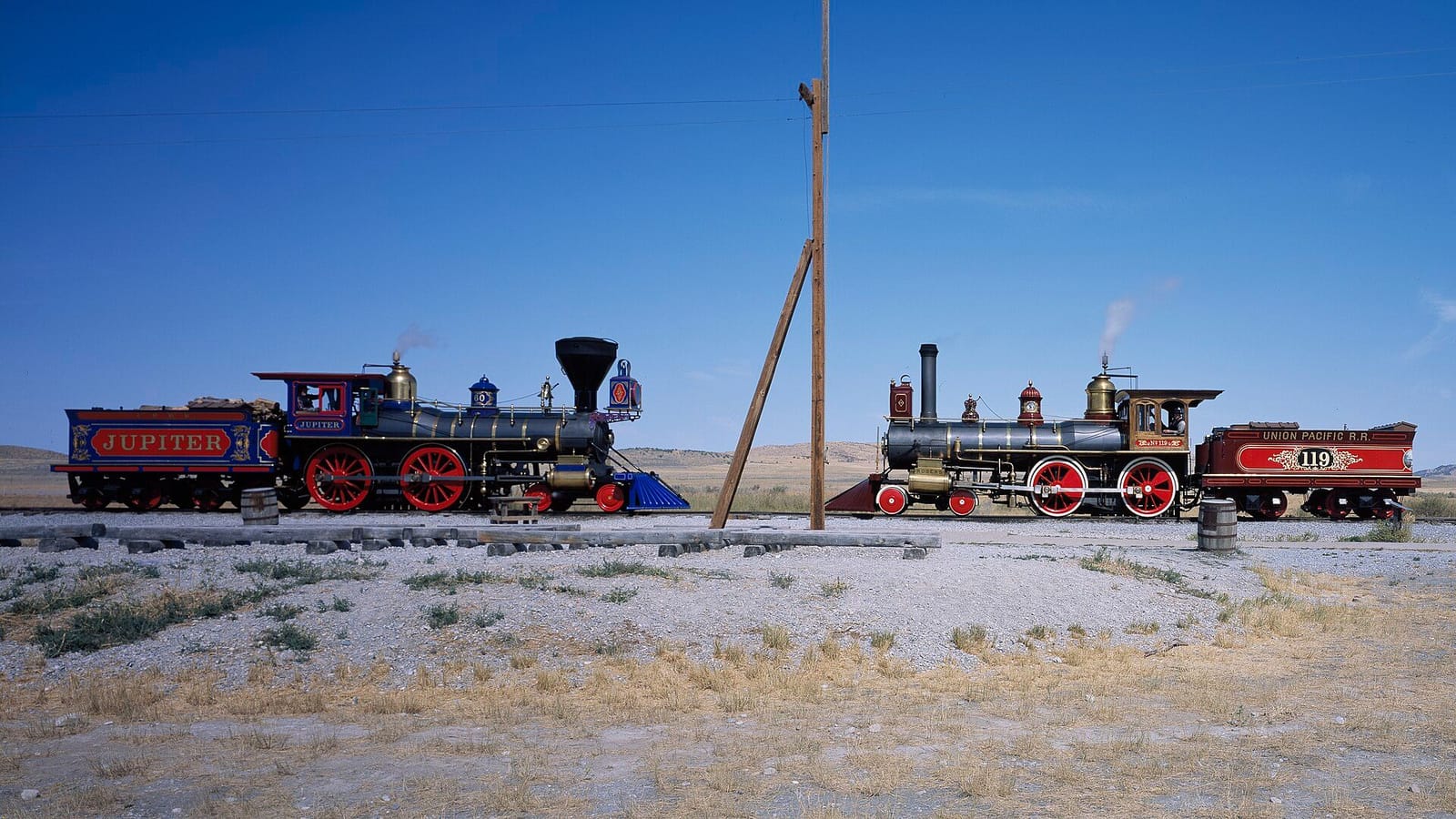
May 10, 1869. Stanford came out from California in a private car. Durant came west with a hangover and a silk cravat. A Chinese crew in blue cotton set the final rail, and somebody in the crowd shouted for a photographer to get them in the frame. Andrew J. Russell's famous plate, two locomotives nose to nose and men swarming the pilot beams, doesn't show them.
Stanford swung at the ceremonial spike and missed. Durant swung and missed too. A telegrapher had wired the hammer and the rail so the country could hear the blow. When the line finally went out, it was one word.
DONE.
Six months around Cape Horn became six days in a Pullman car. And the men who made that true mostly went back to camp, drew their pay, and looked for the next job down the line.
Wes Dunbar
Country & Skills
Grew up on an acreage and never quite left. Covers trucks, trades, land, and how to do the thing yourself.

Watch
Worth an hour of your evening
More from History.
From channels we rate. Plays on YouTube.
Read next