

Your First Ham Radio Contact Takes About Ten Seconds
The exam is 35 questions and the radio costs about thirty bucks. The hard part is pressing the button and saying your name out loud.
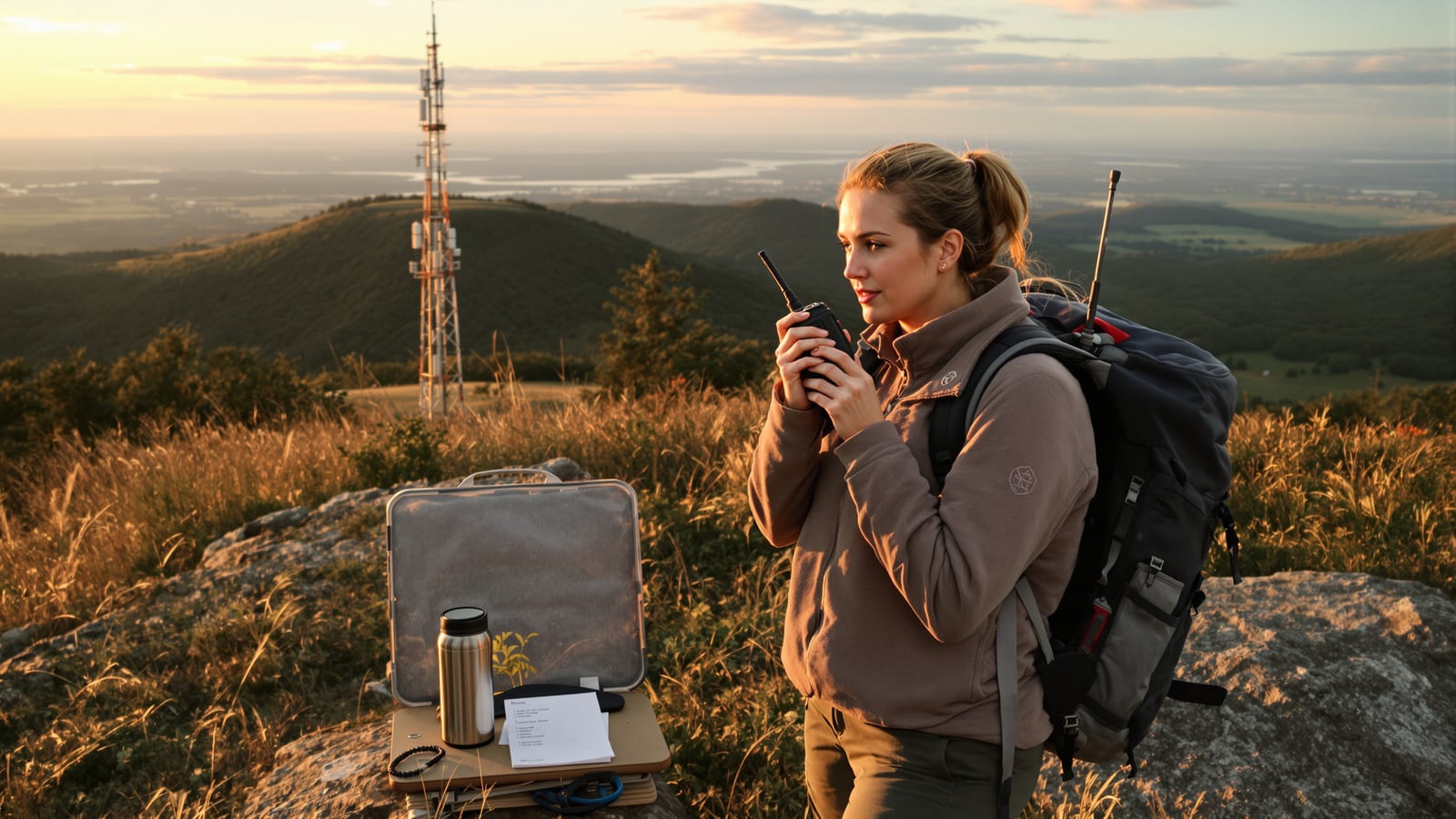
Quick answer: Pass a 35-question multiple-choice exam, get a call sign from the FCC, and a cheap handheld radio lets you talk to strangers across town with no cell tower, no subscription and no signal bars. Budget about $75 to $100 all in.
Most people who get the license never make a first call. They pass the test, buy the radio, and it sits in a drawer next to the good flashlight. The hobby is easy to get into and surprisingly easy to stall in.
This piece is about not stalling.
What it actually is
Amateur radio is two-way radio on frequencies the FCC sets aside for licensed hobbyists. You talk, other people answer, and none of it touches the internet or a phone carrier.
The entry license is the Technician. It covers VHF and UHF, which is where nearly all local talking happens. A handheld radio on those bands reaches a few miles on its own. Through a repeater, a tall antenna on a hill or a building that rebroadcasts your signal, you can cover a whole county or more.
Repeaters are the trick that makes a $30 radio feel like magic.
Why people get hooked
Three things, mostly.
First, it works when everything else doesn't. After a storm takes out the towers, hams are the people who still have a way to talk. That's self-reliance you can hold in one hand.
Second, there's a real community attached. Clubs run weekly on-air check-ins called nets, and the regulars are glad to hear a new voice. Retired linemen, a nurse on night shift, a teenager, somebody's grandmother with a sharper call sign than yours. Men and women both, and nobody cares what you do for a living.
Third, it goes as deep as you want. Some folks never leave the local repeater. Others build antennas in the backyard and talk to people on other continents.
What it really costs
The cheap path is cheaper than a night out.
- Study material: Free. The HamStudy.org site and app and the practice tests on HamExam.com cost nothing to use. If you like paper, the ARRL's license manual or Gordon West's Technician book runs roughly $30.
- Exam: Volunteer examiners charge a small fee, commonly around $15, and some clubs waive it. The FCC also now charges its own application fee. It was $35 when it started in 2025, so confirm the current number.
- Radio: The Baofeng UV-5R is the famous budget handheld, usually $25 to $35. It's not pretty, the menus are a puzzle, and it works. If you'd rather spend about $100 to $130 for something sturdier with friendlier controls, look at the Yaesu FT-65R. Street prices move, so check before you buy.
- Better antenna: The stock rubber antenna on a cheap radio is weak. A Nagoya NA-771 is a common swap for around $15 to $20, and it noticeably improves what you can hear and reach.
- Programming cable: About $10, if you want to load channels from free CHIRP software instead of thumbing them in with the keypad.
Add it up and the budget route lands under $100. You can also skip the cable and the antenna on day one. Start with the radio and the test.
The first three things to do this week
1. Take a practice exam tonight. Don't read a whole book first. Take one cold on HamStudy and see what you score. The Technician exam is 35 questions and you need 26 right. Most of the pool is rules, safety and basic electronics, and it's memorizable. Our walkthrough of the 35 questions covers how to study for it. One caution: make sure your study source matches the current question pool, because the pools get replaced every few years.
2. Find your exam session. Search for a local volunteer exam session through the ARRL's website or your nearest club. Many run walk-in sessions monthly, and some groups offer online exams. Put the date on the calendar now. A date does more for you than good intentions.
3. Look up your local repeaters. The RepeaterBook site and app lists every repeater near you, with the frequency and whether it's open to the public. Pick two. You'll need those numbers the day your call sign appears.
Your first contact, step by step
Once the FCC grants your license and your call sign shows up in its database, you're legal to transmit. Then:
- Program a local repeater into your radio.
- Go somewhere with a clear view, a driveway or a park. Not a basement.
- Listen first. Give it a few minutes. You'll hear the rhythm of how people talk.
- Wait for a pause. Press the push-to-talk button, wait a beat, and say it plainly: "This is K0XYZ, new to the hobby, just checking in. Anyone around for a radio check?" Use your own call sign, of course. That one's a placeholder.
- Let go of the button. Somebody will come back to you, usually within seconds.
Most people will say, "Welcome, new ham, you're coming in loud and clear," and ask your name. Then you're having a conversation with a stranger on a device you paid thirty dollars for.
You have to give your call sign at the end of a conversation and at least every ten minutes during one. Don't swear, don't sell anything, and don't talk politics on the repeater. It's a shared front porch.
Beginner mistakes
Buying the radio and skipping the license. Transmitting without one is illegal. Study first.
Talking from inside a concrete house. Walls eat signal. Step outside, or at least stand by a window.
Transmitting outside the ham bands. Cheap radios will let you key up on frequencies that belong to someone else, including public safety and business users. Stay in the amateur bands, 144 to 148 MHz and 420 to 450 MHz. Learn how your radio is programmed.
Waiting until you are "ready." You're ready when your call sign is live. Everybody on that repeater was nervous the first time, and they remember it.
Buying a pile of gear. One handheld teaches you more than a closet of accessories.
Finding your people
Start with the ARRL club finder on its website. Search your zip code, find the nearest club, and look for the monthly meeting or the weekly net. Most clubs post both online. Show up, say you're new, and ask who the volunteer examiners are. Somebody will take you under their wing within five minutes.
The other best day on the calendar is Field Day, held the fourth full weekend of June. Clubs set up stations outdoors and invite the public to stand around and try the microphone. Free, friendly, and you'll leave with names.
If you like hobbies where a club of patient old hands is waiting to help you, the model railroad crowd is much the same.
Tonight, take the practice exam, and give it a week. Then go stand in a parking lot with a radio and say your name out loud. The ten seconds will feel longer than they are, and somebody will answer.
Dean Shaw
Gear & Garage
Reads the warranty, the parts list and the long-term owner reviews before anything else. Trucks, tools, watches, and the cheap version that costs more.

Watch
Watch how it's done
Picked for this article.
From channels we rate. Plays on YouTube.
Ham Radio For Non-Techies
How To Talk On A Ham Radio - Making Your First Contact
DXCommander
Calling CQ for the FIRST TIME on Ham Radio
Read next