Find Your Shutoffs Tonight, Not At Two In The Morning
A burst supply line puts out hundreds of gallons an hour. The difference between a mop and a claim is whether you already know where the valve is.
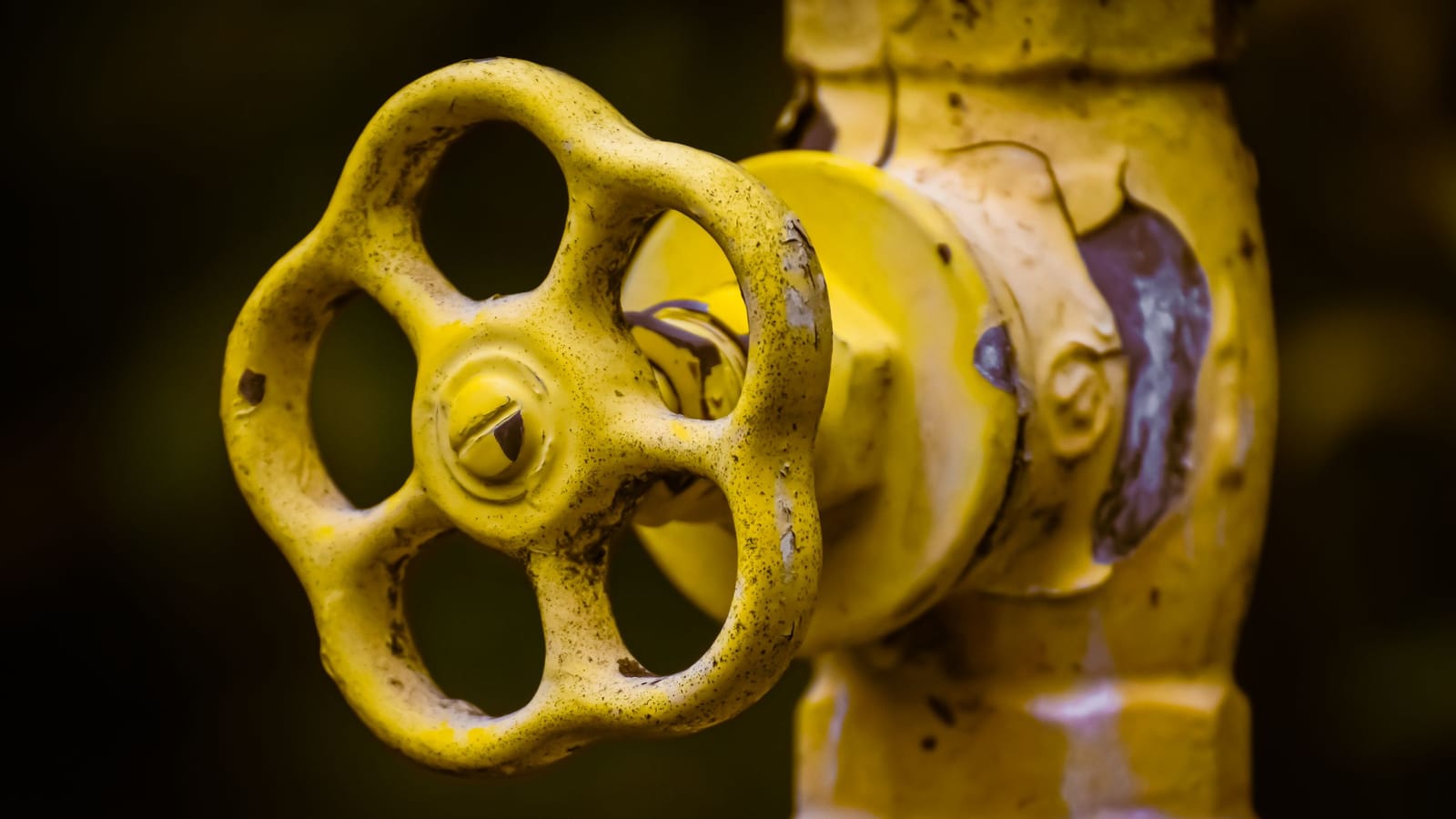
Go walk your house right now with a flashlight and a roll of painter's tape. You're looking for five things: the main water shutoff, the gas meter valve, the electrical panel's main breaker, the water heater's cold inlet valve, and the little chrome stops under every toilet and sink. Tag each one. Write on the tape what it does and which way turns it off.
That's the whole job. Forty minutes, maybe an hour if your basement is a maze. And it's the single highest-return hour of home maintenance you'll ever spend, because everything on that list is useless to you if you're learning it while standing in ankle-deep water in your socks.
Water first, because water is what actually gets you
Fires are louder. Water is more common. A half-inch supply line to a toilet, the braided one behind the tank, will move a serious volume of water once the fitting lets go. Nobody's home to hear it. You come back from a weekend to buckled floors and a ceiling on the dining table.
Your main shutoff is usually within a few feet of where the service line enters the house. Basement, crawlspace, garage wall, or a utility closet. In warm-climate slab homes it's often outside near a hose bib or at the meter box by the curb.
Two kinds of valve. A ball valve has a lever handle and turns a quarter turn. Handle in line with the pipe means open, handle crosswise means closed. A gate valve has a round wheel and takes many turns, clockwise to close. Ball valves are better and they almost never seize.
There's also a curb stop out at the street under a metal lid, usually the utility's side of the meter. It takes a long T-handled meter key. Know where the lid is even if you never touch it, because that's the valve the fire department or the water company will want.
Test the main. But understand what can go wrong
Turning your main off once a year keeps it from freezing up with mineral scale. That's the standard advice and it's right. The honest trade-off: an old gate valve that hasn't moved in fifteen years sometimes won't seal when you close it, or the stem packing starts weeping when you open it back up. You may have discovered a problem rather than caused one, but you discovered it at four on a Saturday afternoon.
So do it on a weekday morning, when a plumber can actually come out. Not on Christmas Eve.
Turn it off, then go open a faucet on the lowest floor and confirm the flow dies to a dribble. That's your proof. Turn it back on slowly, a bit at a time, and let the air burp out of the taps upstairs.
If the handle won't budge, don't put a cheater bar on it. Old brass snaps. Call a plumber and have the valve replaced with a full-port ball valve. You'll pay a couple hundred dollars and never think about it again.
The small valves nobody knows about
Under each sink and behind each toilet is an angle stop, sometimes an oval handle, sometimes a quarter-turn lever. These let you kill one fixture without shutting down the house, which matters when you've got a running toilet and a family that still needs to shower.
They also seize. The multi-turn ones with the oval handle are the worst offenders. Give each one a quarter turn and back, once a year, just to keep them honest.
Behind the washing machine you'll find two valves, hot and cold, sometimes a single lever that does both. Leave them off between loads if the machine sits idle for long stretches. Washing machine hoses are a top-tier flood source and the fix costs about thirty dollars: replace rubber hoses with braided stainless, every five years or so, regardless of how they look.
If your fridge has an ice maker fed by a saddle valve clamped onto a copper pipe, get rid of it. Those things are designed to fail. A plumber can put in a proper tee and a stop.
The water heater has its own valve
A cold water inlet valve sits on top of the tank. Tag it. If the tank itself starts leaking from the bottom, that valve plus the gas control or the breaker is what stops the situation from getting worse, and then you drain it with a hose off the bottom spigot.
Note the temperature and pressure relief valve too, the one with the lever and the pipe running down the side. It isn't a shutoff. It's a safety device, and if it's discharging water, that's a genuine problem that needs a professional the same day.
Gas, and the part where you don't be a hero
Every gas appliance has a shutoff within a few feet of it, usually a small yellow-handled valve on the flex line. Furnace, water heater, range, dryer, fireplace. Those you can close yourself, quarter turn, handle crosswise to the pipe.
The main gas valve is at the meter outside. It's a rectangular tab that takes an adjustable wrench, and it turns a quarter turn to sit perpendicular to the pipe. Keep a wrench near the meter, zip-tied to the pipe or in a box by the door. Not in the garage under a pile of extension cords.
If you smell gas faintly and the source is obvious, a burner left on, shut that appliance's valve and open windows.
If you smell gas strongly, hear hissing, or feel lightheaded: get everybody out of the house first. Don't flip a light switch. Don't open the garage door with the opener. Don't use your phone inside. Walk out, walk down the street, then call the gas utility's emergency line and 911. Shutting the meter off on the way out is fine if you're already passing it and you have the wrench in hand. It's not worth going back for.
And once gas is off at the meter, you don't turn it back on. The utility does that, and they relight and check every appliance. This isn't a place to save a service call.
The panel
Find the main breaker at the top of your electrical panel. It's the big one, usually double-width, usually marked with the service amperage. That's your whole-house off switch.
Label every other breaker while you're standing there. Get somebody to walk the house with a lamp and a phone call while you flip. It's tedious, it takes an hour, and you will thank yourself the first time a bathroom outlet dies.
Practical safety: stand on something dry, use one hand, keep the other in your pocket, and don't remove the panel cover. Flipping breakers is homeowner work. Anything behind that cover is an electrician's.
If water is coming through a ceiling near the panel, or if there's standing water on a floor with outlets, don't wade in to reach the breaker. Call the power company to kill it at the meter.
Make it survive you not being there
A tag on a valve only helps the person who finds it. So photograph every shutoff you tagged, put the photos in a shared album with your spouse, and walk the house together. Show your teenagers the main water valve and the panel. Ten minutes.
Then stage the tools where they belong: meter key by the curb box or in the garage on a hook, adjustable wrench at the gas meter, a headlamp in the same drawer as the flashlight you never find.
The failure at two in the morning is never really the pipe. It's the nine minutes you spend looking.
Wes Dunbar
Country & Skills
Grew up on an acreage and never quite left. Covers trucks, trades, land, and how to do the thing yourself.

Watch
Worth an hour of your evening
More from Home.
From channels we rate. Plays on YouTube.
Read next