

The Buck Grows Every Thanksgiving and Everybody Knows It
The shot gets longer, the rack gets wider, and your brother-in-law is taking notes. How to tell a hunting story that improves without getting you caught.
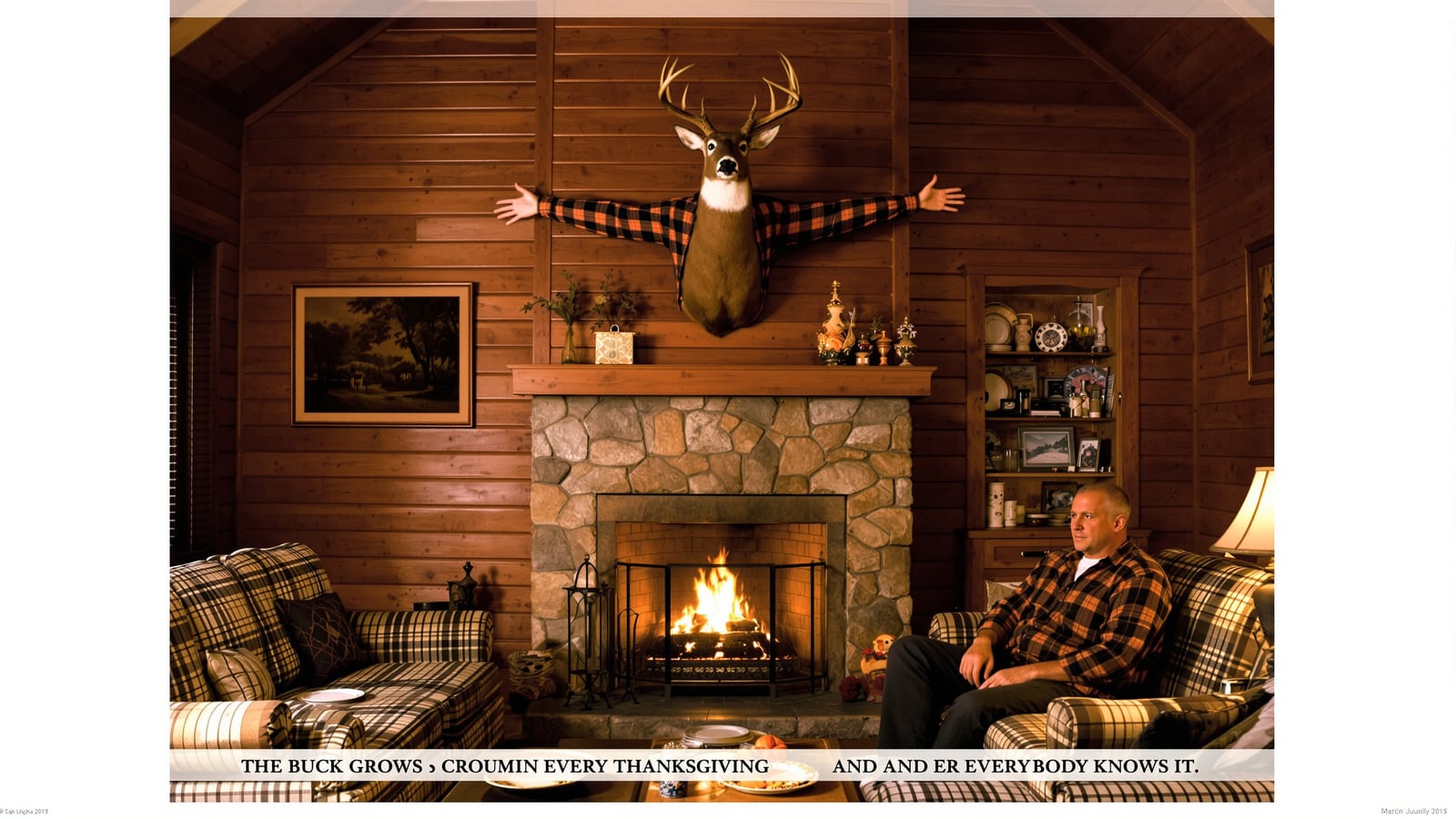
Quick answer: Inflate the trouble, never the trophy. And stop the moment someone who was actually there clears his throat.
The first time I told it, the shot was forty yards. That was true. I paced it off afterward, mostly to make sure I hadn't been lying to myself in the stand.
By the second Thanksgiving it was "a good sixty." By the fourth, "I had to hold over the top of a cedar." Somewhere around year six it crossed a creek, a fence line and, I think, a county road. The deer hadn't changed. The deer was a decent eight-point, and the deer is dead and has no say in any of this.
Why the story grows
It isn't dishonesty, at least not at first. It's physics. Every time you tell a story, you tell it to a slightly different room, and you keep whatever got a reaction.
Nobody laughs at "he stepped out and I shot him." Everybody leans in at "he stepped out and I shot him, and then I realized my thermos was still on the hood of the truck, a quarter mile away, with the coffee getting cold." So the story keeps the thermos and loses the boring parts. Fine. That's editing.
The trouble starts when the editing moves from the edges to the middle. The distance. The antlers. The weather. Those are the load-bearing numbers, and they're also the ones somebody can check.
Weather is the sneakiest. A drizzle becomes a downpour becomes "sideways sleet," and nobody in the family remembers sleet until you mention it, at which point your father-in-law says, "Was it sleeting? I thought it was sixty degrees." He wasn't there. He just knows the date.
The three things that always grow
Watch for these in your own telling. They inflate in the same order every time.
The distance. It adds ten yards a year, like a mortgage with a bad rate. The giveaway is when your story's shot is longer than anything you've ever made at the range. Your rifle remembers. So does the guy you sight in beside every September.
The rack. Points are the easy lie because the evidence is on the garage wall. If you've got the mount, you're a prisoner of it. Every guest who looks up at it is doing quiet arithmetic. If you gave the mount away, congratulations, you've got a lot more creative room and a lot less credibility.
The walk. Two hundred yards of dragging becomes "a mile and a half, uphill, in the dark." Sure. Maybe the deer was heavy. But your cousin hauled the same deer out the same trail and he remembers a fence and a snack.
The test for when to stop
Four checks. You can run them in your head before you open your mouth.
- The witness test. Is anyone at this table someone who was there? If yes, tell it true, or tell it with their name in it. A story gets better when the witness gets to add a line.
- The range test. Could you make that shot today, on paper, with the rifle you carried that day? If not, the shot is lying. Trim it.
- The kid test. If a ten-year-old at the table is going to repeat it at school on Monday, tell it the way you'd want it repeated. They will repeat the number. They will absolutely repeat the number.
- The groan test. Watch faces after the punchline. A laugh means you're fine. A polite smile means you've started stretching. A raised eyebrow from your wife means you're a sentence away from the correction, and she has the date, the weather and the name of the guy who helped you drag it.
I'd add a fifth, but it belongs to the pause that does more work than your punchline. If you have to rush the number, the number isn't earning its place.
What to inflate instead
The best hunting stories at any dinner table aren't about the animal. They're about the person holding the rifle, and how badly the morning went.
You were on stand at 5:40 and asleep by 6:15. A squirrel did more damage to your composure than any buck ever has. You wore the wrong boots, you knew they were the wrong boots, and you wore them anyway because the right ones were in the truck, and the truck was a long way off. You ate a granola bar so loudly that you personally ended a promising morning.
That's the stuff you can safely stretch, because the target of the joke is you, and nobody's going to correct you for being a worse hunter than you were. It also lasts. A deer story has a shelf life. A story about the time you sat down on your own hat and then spent twenty minutes trying to look like you'd planned it will be told at your funeral, probably by the same cousin.
The rule is simple. When the story needs a bigger deer, give it a bigger mistake instead. Make yourself the problem. People forgive a man for a lot of things at a dinner table, and "he'd tell you himself he was an idiot out there" is near the top of the list.
One line stays out of the telling no matter how funny it would be. Don't make careless gun handling the punchline. The kids at the table are listening, and the one thing a good hunting family never jokes about is the four rules. Keep the laughs on the thermos, the squirrel and the hat.
The graceful way out
Sooner or later someone catches you. It's usually your brother-in-law, and he does it by asking one quiet question: "How far was that, exactly?"
Don't argue. Don't produce a rangefinder you didn't have. Take it with a smile and say, "Forty. It was forty. It's been getting longer every year, hasn't it?"
That one move is worth more than any deer you'll ever shoot. You've conceded a point, kept the story and shown the whole table you're a man who knows he's been caught. It's the same trick behind the inside joke that's load-bearing. The next time anyone tells the story, they'll tell the forty and wink. Now the exaggeration belongs to the family, and everybody's in on it.
There's an honest tradition here, and the grandpa jokes that refuse to die come from the same place. The old-timers who told the best stories were never fooling anyone. They were inviting the table to play. The giant buck and the blizzard were a game everyone knew the rules to.
So here's the rule for yours. Let the deer stay the size it was. Let the shot stay the length it was. Spend your imagination on the coffee, the squirrel and the hat.
And when you're sixty and the grandkids ask how far the shot was, say forty yards, and let them wonder why you're grinning.
Marcus Vale
Editor-in-Chief
Twenty years in magazines, most of it deciding what to cut. Writes about work, discipline and the decisions that compound.

Watch
Worth an hour of your evening
More from Humor.
From channels we rate. Plays on YouTube.
Read next