

Nobody Asks You to Retell the Birdie
The drive down the middle is forgotten by the next tee. The shot that ricocheted into a cooler gets requested at every cookout for years.
Quick answer: A good shot is a result. A bad shot is a plot. People ask for plots, and they ask for them again because the teller is the underdog and everyone else got to watch.
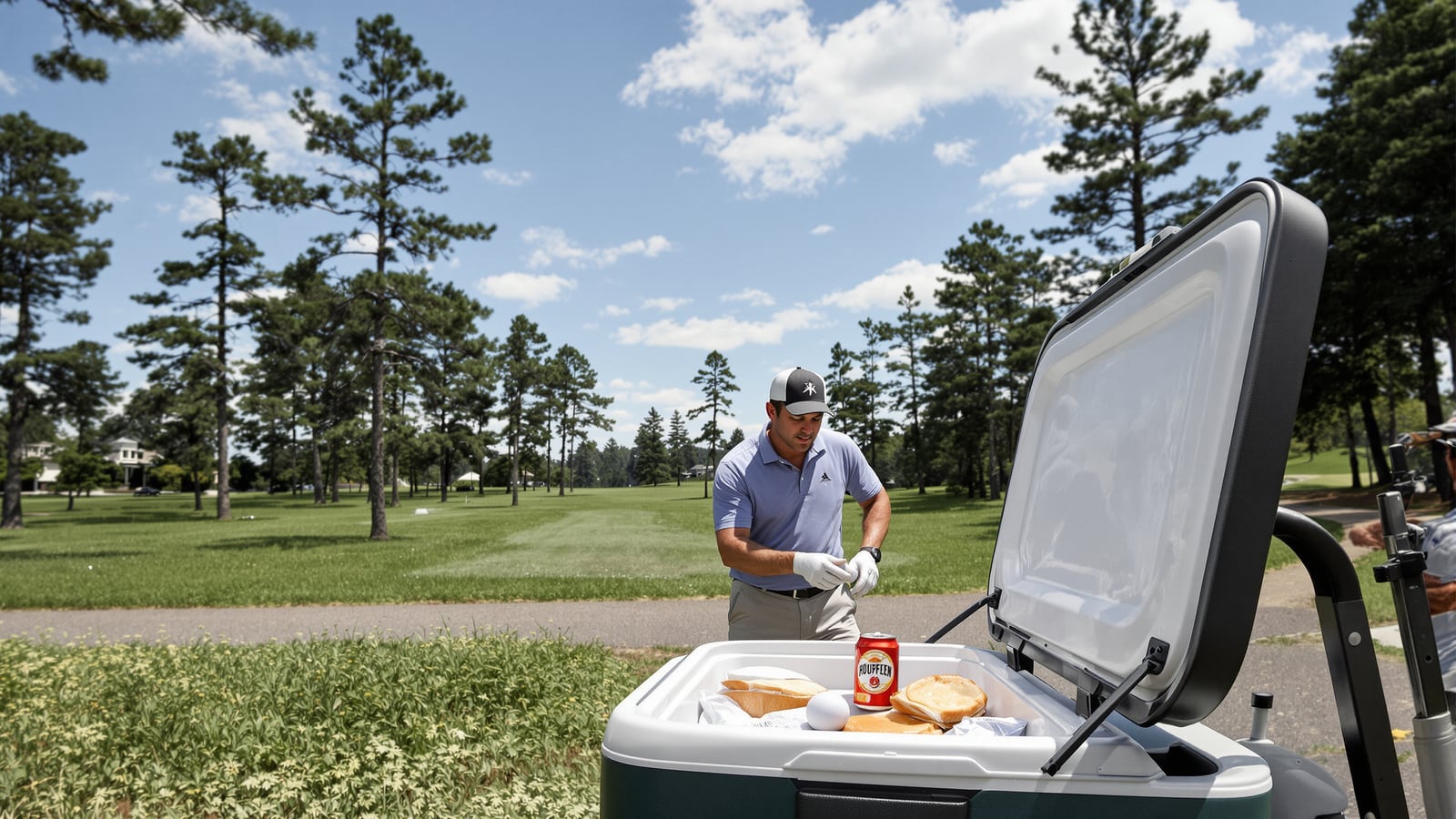
A buddy of mine stood on a 165-yard par three with a seven iron, a following breeze, and the kind of confidence that comes from one decent range session. He swung. The ball left the clubface at an angle that suggested it had somewhere else to be. It clipped a pine forty yards out, came back past his left shoulder, bounced off the cart path, and rolled to a stop in the open cooler on the back of the cart.
It landed between the sandwiches and a can of root beer. Nobody said anything for three full seconds.
That was eleven years ago. He has told that story at weddings, at a retirement party, and once to a man who was trying to sell him gutters. He has never, not one time, been asked to describe a birdie.
The good shot has no plot
Try telling the good one. "I hit a seven iron to eight feet and made the putt."
That's the whole story. It has a beginning and an ending, and the ending arrives in the first sentence. Nothing went wrong, so nothing can be retold. The listener nods, says "nice," and reaches for the potato salad.
A story needs trouble. It needs a moment where the audience thinks, surely not, followed by the moment when it turns out, yes, surely so. A pure strike has no surely not in it. A ball that finds the cooler is nothing but.
A bad shot comes with witnesses
Golf is the one pastime where you spend four hours with three people whose only job is to watch you. They didn't sign up for it. They just can't help it.
So when the ball goes sideways, the story arrives pre-corroborated. Somebody saw the tree. Somebody heard the clank off the cart path. Somebody, always one guy, has a slightly different version in which the ball took one more bounce than you remember. Now it's a shared event, and shared events get retold, argued over and improved at the expense of the guy who hit it.
That's what makes a repeat request possible. Nobody asks for a story they can't join. At the next cookout, your playing partner leans in and says, "Tell them about the cooler," and then he gets to supply the sound effect.
The underdog gets the room
There's a quieter reason, and it's worth a look. Telling a good shot makes you the hero of the story, and a table doesn't want a hero over dessert. It wants a guy it can root for.
The bad shot flips the arrangement. You're the one who was humbled, and a man laughing at himself is the most trusted person at any table. Everybody relaxes. The listener thinks, he's telling me this on purpose, so I'm safe. That's the whole social trick of self-deprecation, and golf hands you fresh material every Saturday for free.
It only works if you mean it, though. Fake modesty is easy to spot. If you tell the cooler story while visibly hoping somebody asks about your 74 last month, you'll lose the room by the second sentence.
How to tell it so they keep asking
A few rules, learned the slow way.
- Open with the club and the yardage. "Seven iron, 165, little breeze behind me." Specific numbers make the listener lean in because they know what should happen next.
- Play it straight. Don't wink. Say it the way you'd read a weather report. The dryer the delivery, the bigger the laugh.
- Respect the pause. The beat right before the ball lands in the cooler does more work than any adjective you could add. The Pause Is Doing More Work Than Your Punchline covers the mechanics.
- Give a witness a line. The best part of the cooler story is what the guy driving the cart said, which was "I'll take the sandwich." Quote somebody besides yourself.
- Keep the ending honest. Golf runs on a code about honest scorecards, and the story follows the same code. The day you add a second bounce for effect, somebody who was there will correct you, and the story gets worse for it. The true version is already funnier than the one you'd invent.
Let it become a family heirloom
A story told enough times stops being yours alone. That's when it gets good.
By year three, the cooler story had acquired a permanent phrase. Now when anyone on that course hits a ball into something that isn't supposed to hold a ball, somebody says, "Sandwich." Everyone knows what it means, and nobody outside the group does. That's how a single bad swing becomes load-bearing, a piece of the structure that holds a friendship up.
And when you've told it for a decade and the room starts to groan, don't retire it. Hand it off. Let somebody else tell it while you play the straight man. That's what the old grandpa jokes that refuse to die have always done. They outlive the guy who first told them because somebody else was willing to carry the punchline.
When to leave a shot alone
Not every disaster is a story yet.
If the ball hit a person, you're not telling anything until you've checked on them, apologized properly, and they're laughing about it too. Give that a few weeks. If it cost a friend a match that mattered to him, the story waits until he brings it up himself. And if you're still angry about it, you're not telling a story, you're venting. Wait until it's funny to you.
The rule of thumb is simple. A story is ready when you can tell it without needing anybody to feel sorry for you.
The shot you'll be asked for
Your best round will be forgotten by the time the cart is back at the barn. Your 280-yard drive will last until the next tee box. But the one that bounced off the tree, the path, and into the cooler is going to be requested at your daughter's rehearsal dinner.
So next Saturday, when the ball does something that no instruction book anticipated, resist the urge to curse, throw the club, or pretend it didn't happen. Stand there and take it in. Count the witnesses. Notice the sound.
You're about to be asked to tell this for years. Might as well enjoy the first telling.
Marcus Vale
Editor-in-Chief
Twenty years in magazines, most of it deciding what to cut. Writes about work, discipline and the decisions that compound.

Watch
Worth an hour of your evening
More from Humor.
From channels we rate. Plays on YouTube.
Read next