Mount the scope for the shot you'll actually take
Scope bite happens in the field, not at the bench. Set your eye relief in your hunting coat and your worst position, then sight in again.
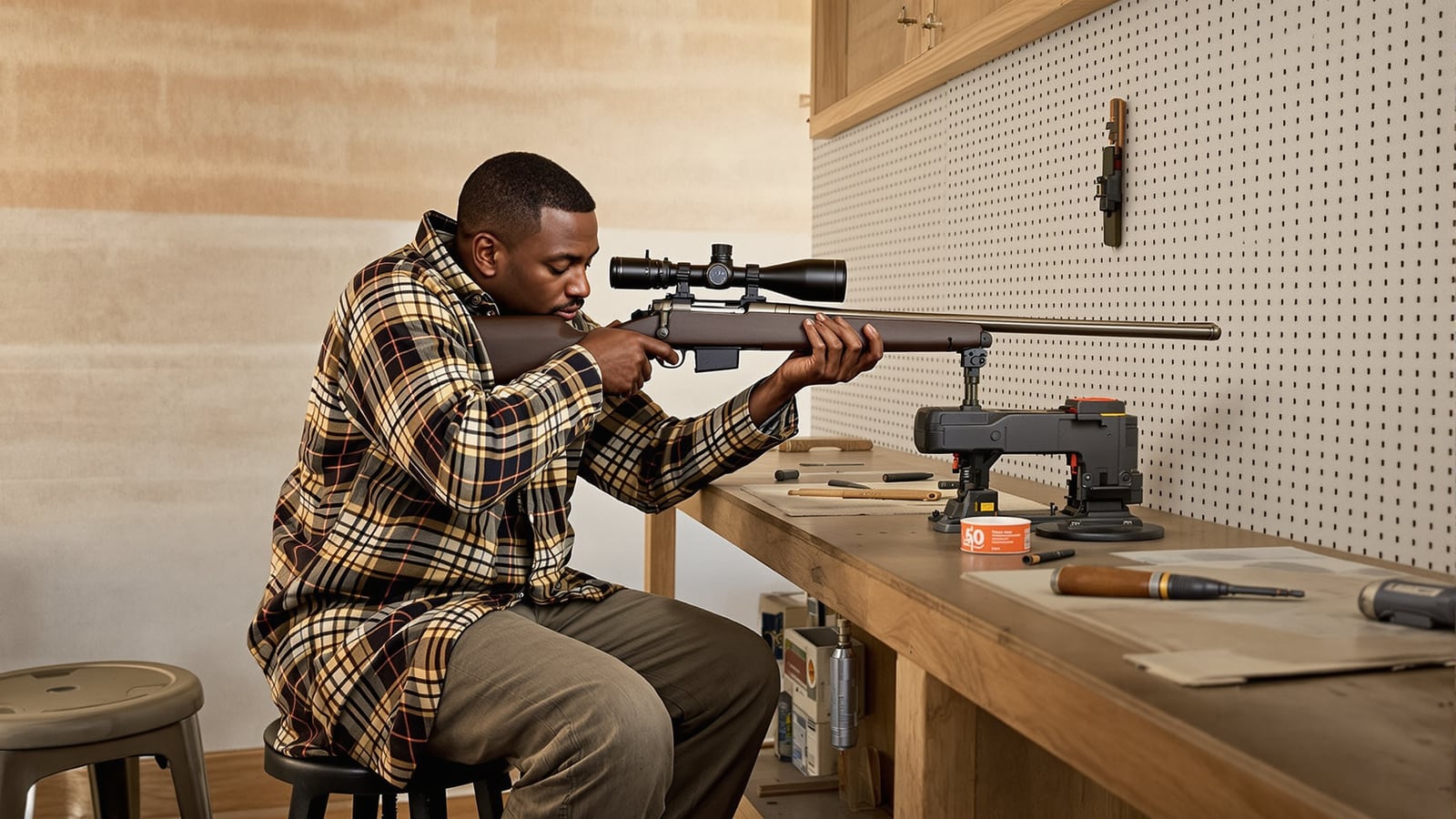
Quick answer: Mount the scope while wearing your hunting coat, with the rifle shouldered in your most cramped field position. Set it so the picture is full when you're comfortable and still full when you lean in. Torque the screws to the maker's spec, then sight in again.
The cut above the eyebrow
Scope bite is the half-moon gash that comes when the rifle recoils back and the rim of the scope meets your brow. It bleeds a lot and it leaves a scar. You get one story out of it, and you'll tell that story for the rest of your life.
It almost never happens at the bench. At the bench you sit upright, the rifle is braced, and you've set the scope by looking through it a hundred times. It happens when a buck steps out at eighty yards and you're leaning forward out of a stand, chin out, neck craned over the stock. Your head sits two inches closer than it ever did at the range. The rifle does what it always does, and you take the hit.
So the bench is where you mount the scope. The field is where you use it. Mount for the field.
Know what the spec sheet says
Eye relief is the distance from the eyepiece lens to your eye where you see the full, clear picture. Most hunting scopes list somewhere around three to four inches, but read the number for your scope. Some variables lose a little at the top of the power range, so check the spec at the power you'll actually use.
That number is the middle of a window. Closer than the window and you're in recoil's path. Farther and the picture shrinks into a dark ring, the tunnel look that tells you your head is too far back.
A fixed number doesn't fix a bad mount. Your stock length, your build, your coat and your position decide where your eye lands. The scope has to be set to you.
How to set it
Start with an unloaded rifle. Open the action and look into the chamber and the magazine. Keep the muzzle in a safe direction the whole time, and keep it that way even when you're sure.
- Put on the coat you hunt in. A heavy canvas or insulated coat adds real length of pull. A scope set in a T-shirt in July will be wrong in November.
- Loosely snug the rings with the scope slid well forward. Don't tighten anything yet.
- Close your eyes. Shoulder the rifle the way you naturally would, with your cheek on the stock and your head upright. Open your eyes and look through the scope.
- Slide the scope until the picture is full, with no black ring or crescent at the edges.
- Now move it forward until the edges just start to shadow, then back a hair. That puts your comfortable head position at the far side of the window.
Step five surprises people. You want your natural position to sit slightly back in the window. When you lean into a shot, your eye moves toward the scope and the picture stays full. Mount it the other way, with your natural position right at the near edge, and any lean puts the rim at your eyebrow.
Test the worst positions
Still unloaded, run through everything you'll do in the field.
- Standing, as you'd shoot offhand.
- Kneeling, with your elbow on your knee.
- Leaning into a tree or a fence post.
- Seated, as from a ground blind or a stand.
- Prone, if your terrain calls for it.
- A downhill shot, where your head pitches forward over the stock.
In each one, check for a full picture and for room between your brow and the eyepiece. Go through it at your lowest and highest power. If any position leaves your brow within an inch or so of the rim, move the scope forward and test again.
Have a friend watch from the side. Distance is hard to judge from behind the scope, and a second set of eyes sees things you won't.
The trade-offs
Mounting forward costs you something. A short stock or a short neck may keep the scope from reaching the spot you want. Longer-reach rings or a mount that extends forward can help. So can a scope designed with generous eye relief, and so can adjusting the stock length. Ask the shop or a gunsmith before you start drilling or buying.
Lightweight rifles and harder-kicking cartridges are the worst combination for scope bite. A light rifle moves more under recoil, and the added margin matters most there. If you shoot one, give yourself a little extra room.
And some shooters will say eye relief is a beginner's problem, that experienced hunters get used to it. That's what you hear before the stitches. You can't build a habit that holds when you're startled, winded and leaning over a ledge.
Level it, torque it, don't skip this part
A scope with a tilted reticle makes the bullet drift left or right at distance, and the error grows the farther you shoot. Hold the rifle steady in a vise or rest. Use a level on the rifle, and a plumb line or a level on the scope's turret, so the vertical crosshair really is vertical.
Degrease the ring and base surfaces with a solvent so the metal holds. Tighten the ring screws evenly, in small increments and in a cross pattern, to the torque listed in the instructions that came with your rings and bases. Don't guess it. Overtightening can dent the scope tube, and undertightening lets it shift under recoil. A torque driver costs about what a box of premium ammunition does, and it's worth owning.
Then sight it in again
Moving a scope moves your zero, even when the move was only half an inch. Treat it as a new scope. Our piece on sighting in six weeks early covers the schedule. After the bench groups, shoot a few rounds from the positions you tested so the mount gets proven under recoil the way you'll use it. If you're still choosing the optic, your first hunting rifle and the optic that earns its keep walks through what to look for.
Rules on optics, seasons and equipment vary by state, province and even by season type. Some jurisdictions restrict scopes during primitive-weapon seasons, for instance. Check your wildlife agency's current regulations before the season, and take hunter education if you haven't.
If you do get cut, treat it like any head injury and get medical help right away. A deep brow cut needs stitches. A shot that doesn't feel like much can still leave you dazed. Don't keep hunting on a bleeding face.
The last thing on the list
Before the season, spend ten minutes in the coat you'll hunt in, mounting the rifle to your shoulder from every position you expect to use. It's boring. It's also the cheapest scar you'll ever avoid.
Wes Dunbar
Country & Skills
Grew up on an acreage and never quite left. Covers trucks, trades, land, and how to do the thing yourself.

Watch
Worth an hour of your evening
More from Hunting & Shooting.
From channels we rate. Plays on YouTube.
Read next