

Your Kid Isn't Deaf. He's Waiting for Number Three.
Kids learn the real instruction is the third one. Here's how to make the first one count, calmly, without raising your voice.
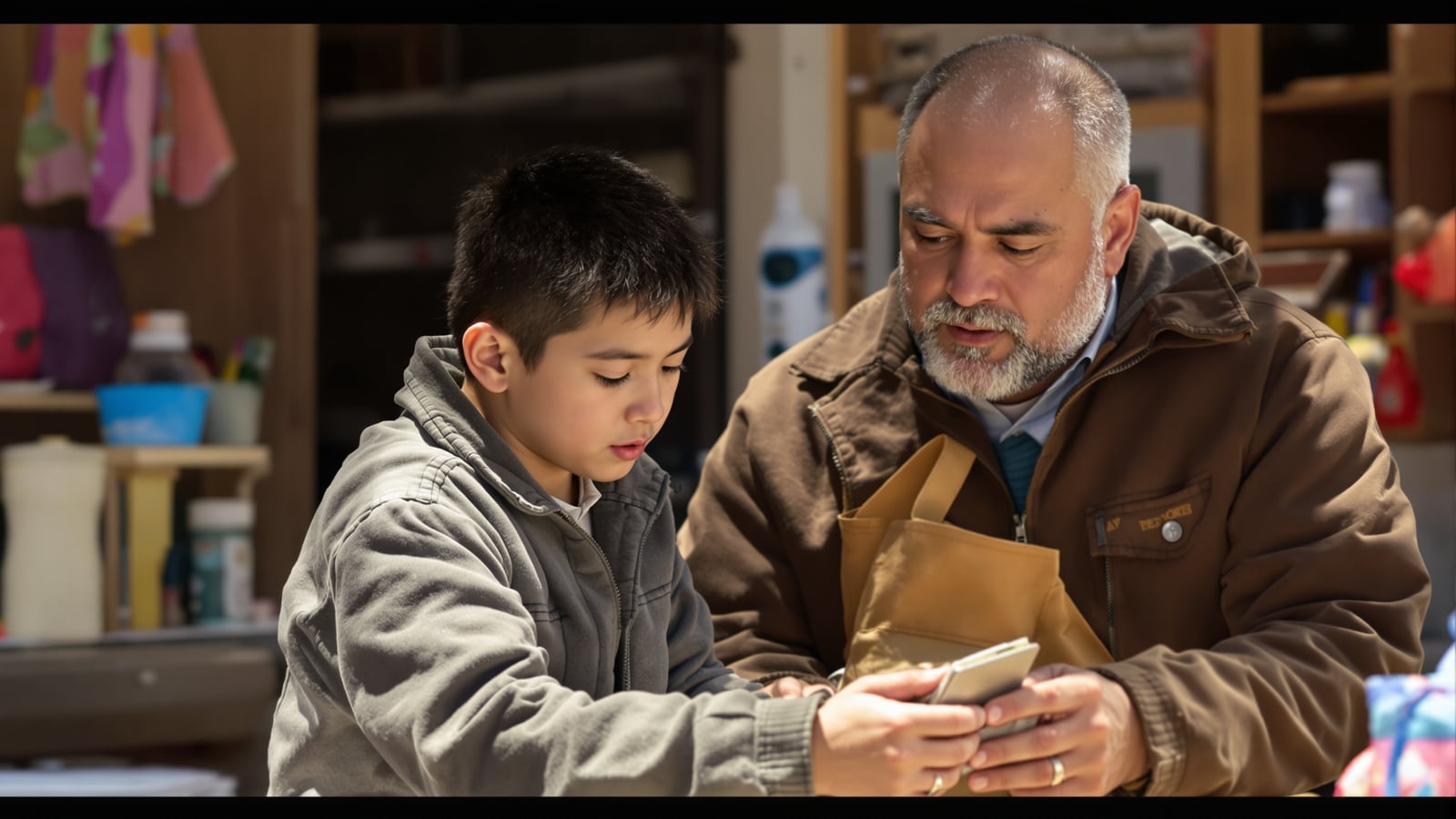
Quick answer: Walk over, get eye contact, say it once in a short sentence, then wait. If nothing happens, a small and boring consequence follows every time. Kids stop ignoring instruction number one when number one is the one that counts.
It's 7:40 on a school morning. "Shoes." Nothing. "Shoes, please." Nothing. "I said SHOES." He gets up, finds one, and starts hunting for the other.
He didn't miss the first two. He heard both. He also learned something over the last few years that you taught him without meaning to: nothing happens until the volume goes up. The first request is a warning. The second is a bigger warning. The third is the real one.
You can't fix that by yelling sooner. You fix it by making the first one the real one.
Count your own repeats first
For two days, notice how many times you say a thing before you act on it. Most parents land on three or four. Some hit six.
Whatever your number is, that's the number your kid has memorized. He isn't being sneaky. Kids are excellent at figuring out the actual rules of a house, and the actual rule here is "Dad means it on the third time."
So the job is a retraining job, and the first person who needs retraining is you.
Walk over, then say it once
Calling instructions down a hallway or across a living room is a request to a background noise. A kid in the middle of a game, a book or a Lego build has most of his attention somewhere else. You're competing with that from twenty feet away.
Go to him. Stand close. Get down to his level with a younger kid, or at least into his line of sight with an older one. Wait for his eyes. Then say the thing.
- Use one sentence. "Shoes on, we leave in five minutes."
- Use a verb he can act on. "Pick up the blocks" works. "Be more responsible" doesn't.
- Don't pad it with a question. "Could you maybe get your shoes?" invites a "no."
- Ask him to say it back. "What are you doing next?" takes four seconds and it works on a nine-year-old and a five-year-old alike.
That last one feels silly the first week. By the third week it's habit, and he's answering before you finish asking.
Say it once, then stop talking
This is the hard part, and it's where most parents quietly fold. You've said it. He hasn't moved. Every instinct says to say it again, a little louder.
Don't. Say nothing. Count to five in your head, look at him, and wait. If he's moving, even slowly, let him.
If he isn't, name what's about to happen, calmly and once. "If your shoes aren't on by the time I've got the keys, you'll carry them to the car." Then get the keys.
The point isn't punishment. The point is that the sentence you said is the sentence that governs the morning. When it turns out you meant it, the first sentence starts to carry weight.
Pick consequences that are small, dull and certain
A consequence that happens every time beats a harsh one that happens when you're fed up. Kids can live with a mild result. What confuses them is a result that depends on your mood.
A few that work without a speech:
- Shoes: He goes out in socks and carries the shoes. It's a thirty-second embarrassment in the driveway, and he'll remember it.
- Screens off: "When I say dinner, the tablet goes off. If it takes more than a minute, it stays off tomorrow." No lecture. Tomorrow, it stays off. (If screens are a daily fight, this piece on phones and rules covers setting the terms ahead of time.)
- Toys on the floor: What's left out when you've finished the last-call walkthrough goes in a bin on top of the fridge until Saturday.
Notice what's missing: anger. You can be completely calm and completely immovable at once. That's the target. Serve your kid, feed him, drive him, love him, and still don't let him run the house. A father who's warm and unmovable gives a child something solid to lean on.
Match it to the age
Toddlers (two to four). A toddler's attention doesn't hold an instruction for long, and some repeating is just reality. Skip the long explanation. Get down, say one short thing, and help his hands do it. "Shoes on" plus guiding the foot. Following through is physical at this age, and it counts as the same lesson.
Five to eight. This is the sweet spot. They understand the rule and they love testing it. Short instruction, brief wait, calm follow-through. Give them jobs with a clear finish line. If you aren't sure what's reasonable to expect, what a four, eight and twelve year old can actually do is a useful gut check before you decide he's being defiant.
Nine to twelve. Now you're negotiating a little, and that's fine. Give him the "when" but not the "how." "Room cleaned before dinner" lets him choose the order. The rule stays firm, and the freedom inside it grows. Preteens also hear tone better than words, so a flat, level voice beats a sharp one every time.
Be a man (or woman) whose first word is good
Kids copy what they see far more than they follow what they're told. If you say "five more minutes" and mean twenty, he learns that time words are soft. If you say you're coming to the game and you're there early, he learns the opposite.
Do what you say the first time. Answer him when he talks to you the first time. Put your phone down when he's explaining the dinosaur he drew. That respect is what you're asking for back, and it's a lot easier to collect it from a kid who's been getting it.
Also, noise helps nobody. A quiet house with a clear routine does more than any speech. If mornings and evenings are the wreck, the bedtime routine that ends the fourth trip downstairs applies the same principle at night.
When it isn't defiance
Sometimes a kid really isn't hearing you. If he seems not to register his name, regularly misses spoken instructions in a quiet room, or can't hold even simple two-step directions at an age where other kids can, don't assume it's attitude. Mention it to your pediatrician. A hearing check is quick and ordinary, and the doctor can sort out whether anything else needs a look. That's a medical question, and it's not one to answer from the kitchen.
If a kid's listening was fine and changed suddenly, same advice. Ask the doctor.
The first week is the worst one
Expect it to get worse before it gets better. For about a week, he'll test you to see whether the new rule is real. He'll wait for number two. You won't give it. He'll be late, he'll be in socks, he'll complain.
Hold the line anyway. By the second week, you'll catch him moving on the first word, a little surprised at himself. Don't make a big deal of it. A nod and "thanks, that was quick" is plenty.
Then keep it up. You've spent years teaching him that number three is the real one. It takes a few weeks to teach him that number one is.
Sam Ortiz
Dads & Family
Father of three. Writes about presence, discipline and the long game, without pretending any of it's tidy.

Watch
Watch how it's done
Picked for this article.
From channels we rate. Plays on YouTube.
Nicholeen Peck - Teaching Self Government
How To Get Kids To Listen The First Time
Live On Purpose TV
How To Get Your Kids To Listen The First Time