

What you do with nobody watching is who you're becoming
Character gets built in small, unwitnessed reps, and so does the lack of it. Pick one habit nobody will ever see and keep it for thirty days.
Quick answer: Pick one small thing you'll do every day with no witness. Tie it to something you already do, keep it quiet, and never skip it twice in a row. The habit matters less than the man who keeps it.
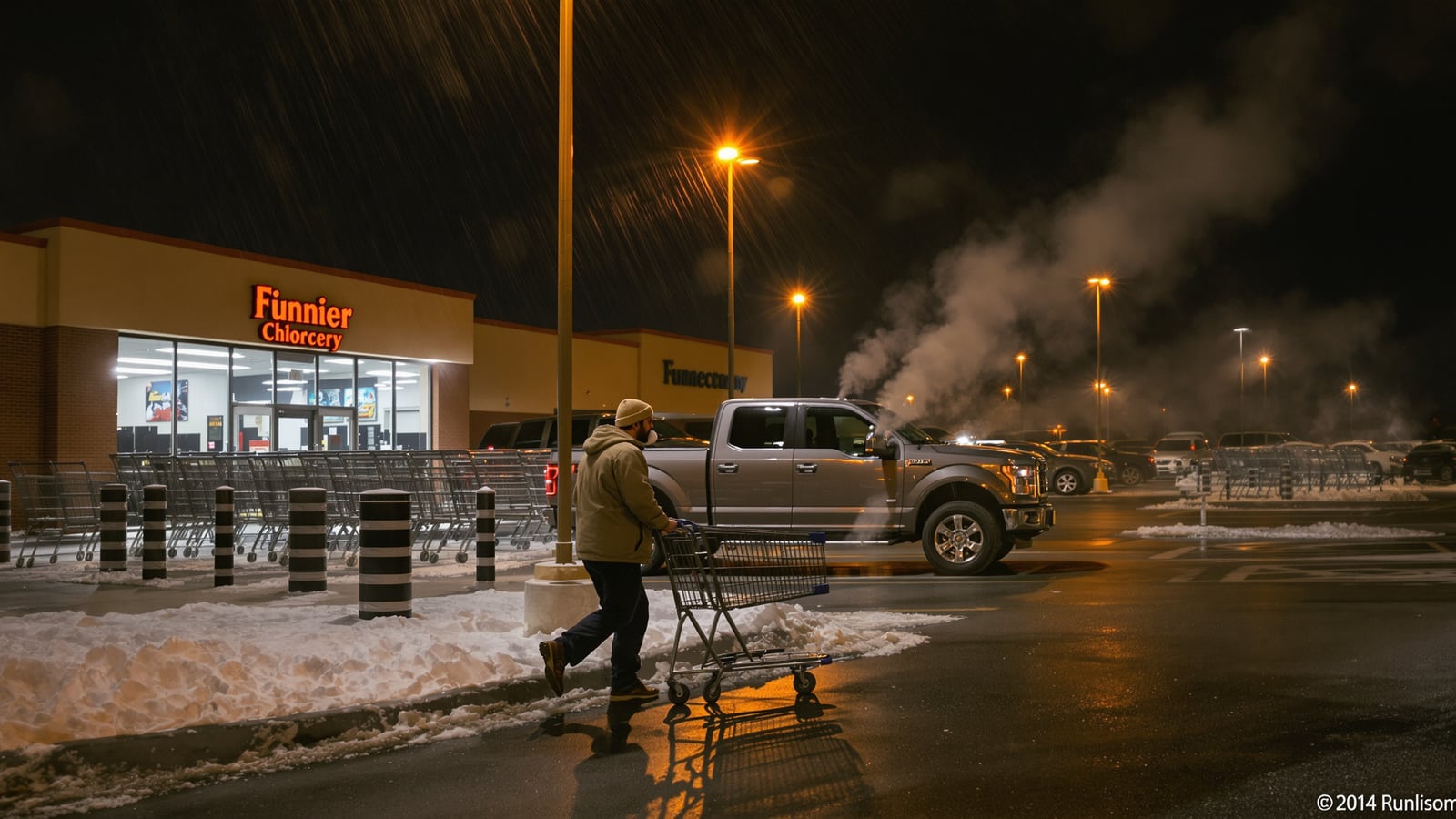
The cart corral at nine o'clock on a February night is the best character test in America. It's nineteen degrees. The corral is forty feet from your truck, and the heater's still warm. Nobody's checking.
One guy walks the cart over. The other wedges it against a curb and calls that close enough.
Neither will ever be thanked or caught. That's exactly why it counts.
You're the one audience that never leaves
Everything you do in public gets graded by other people, and other people grade on a curve. They're tired, distracted, and mostly thinking about themselves. Applause is cheap and so is criticism.
The unwatched act gets graded by one judge who sees all of it. You. And that judge keeps a ledger.
Every time you say you'll do something and then do it with no one checking, you make a small deposit of self-trust. Every time you skip the thing nobody would know about, you make a withdrawal. You'll know. That's the whole mechanism.
This is where real confidence comes from. It isn't a feeling you manufacture in the mirror or a posture you borrow from a podcast. It's a record. A man who has kept a hundred small promises to himself doesn't need to announce anything. He walks into a room with receipts.
The reverse is just as true, and it's quieter. Nobody wakes up one day as a man who can't be trusted with his own word. He gets there by a thousand rounded-off corners.
A fair concession: unwatched doesn't mean virtuous. Plenty of private habits tear a man down, and they compound exactly as fast. The hour of scrolling nobody sees is a habit too. So is the second drink poured alone. The question isn't whether you have private habits. You do. It's whether you picked them.
Pick the smallest version
Most men blow this at the start by choosing something heroic. Up at 4:30, cold shower, ten miles, journal, no sugar. It lasts nine days, then one bad night ends it, and the quitting teaches you the wrong lesson about yourself.
Choose a habit you could still do on your worst day. Sick, late, and annoyed, with the kids up. Under ten minutes. A few that qualify:
- The last ten minutes of the evening: dishes done, counter wiped, boots by the door, tomorrow's clothes out.
- Ten pushups on the days you can't get to the gym.
- The one email or phone call you've been dodging, handled before nine.
- Ten pages of a real book before the phone comes out.
Boring on purpose. If it feels almost too small, you've sized it right. That's also the reason your last time management system probably quit on you. It asked for a new life on Monday when what you needed was one new minute.
Four rules that keep it honest
Tie it to something you already do. After the coffee is poured. When the truck's in the driveway. When you take your boots off. A habit with no anchor floats away, and a habit hooked to an existing one rides along without much effort.
Don't announce it. Tell people and you get the credit up front, and that little hit of approval quietly drains the motivation. Plenty of men do well with a training partner for a lift or a run. This is a different animal. The point is that no one's keeping score but you.
Never miss twice. Missing once is a bad day. Missing twice is the beginning of a new habit, and it's the one you didn't pick.
Do it badly before you skip it. Three pushups count. A wiped half of the counter counts. The streak is made of showing up, not of quality, and you can raise the standard in a month.
Give it thirty days. By the end the habit will cost you almost nothing, and the evidence of who you are will have changed a little.
Leave it better than you found it
The old code is mostly a code of unwatched acts. Return the borrowed truck with a full tank, even if it came to you near empty. Wash it, even if it came dirty. Strip the bed and take the trash out before you leave the rental. Leave the campsite cleaner than you found it. Sharpen the tool before it goes back to your neighbor's garage.
Nobody audits any of it. The man who does it anyway isn't doing it for the neighbor, though the neighbor will notice eventually. He's doing it because he has decided what kind of man returns a truck.
That decision gets made in the parking lot, not at the dinner table.
Somebody's always watching anyway
There's a catch to the idea that nobody sees. Somebody usually does. Your kids don't absorb your speeches. They absorb the sight of you wiping the counter at 10 p.m. when you're tired, or putting the phone in a drawer, or paying back the twenty before you were asked. Values pass down through exactly that kind of repetition, and your wife notices more than you think.
So even your private habits have an audience, just a quiet one that's taking notes for decades.
Which brings up the biggest competitor for your unwatched hours. It's in your pocket. The default settings on your phone will happily fill every gap in your day, and the gaps are where these habits live. Protect one. Fifteen minutes in the evening with the phone in another room is enough to start.
The ledger doesn't close
Nobody hands out a trophy for a clean kitchen at ten at night, a set finished alone, or a call returned that you could have ignored. That's the deal. The reward is delayed, private, and enormous: you stop wondering whether you can count on yourself.
Somewhere tonight there's a cart sitting in a parking space in the cold, and nobody will ever know who left it there.
You will, if it's you.
Cal Brennan
Fitness
Strength coach. Trains fathers, tradesmen and desk workers, which means programs that survive a bad week.

Watch
Worth an hour of your evening
More from Life.
From channels we rate. Plays on YouTube.