

When the room panics, lower your voice
Steady isn't a personality. It's a few small habits you build on quiet days, so they're there when the water heater lets go.
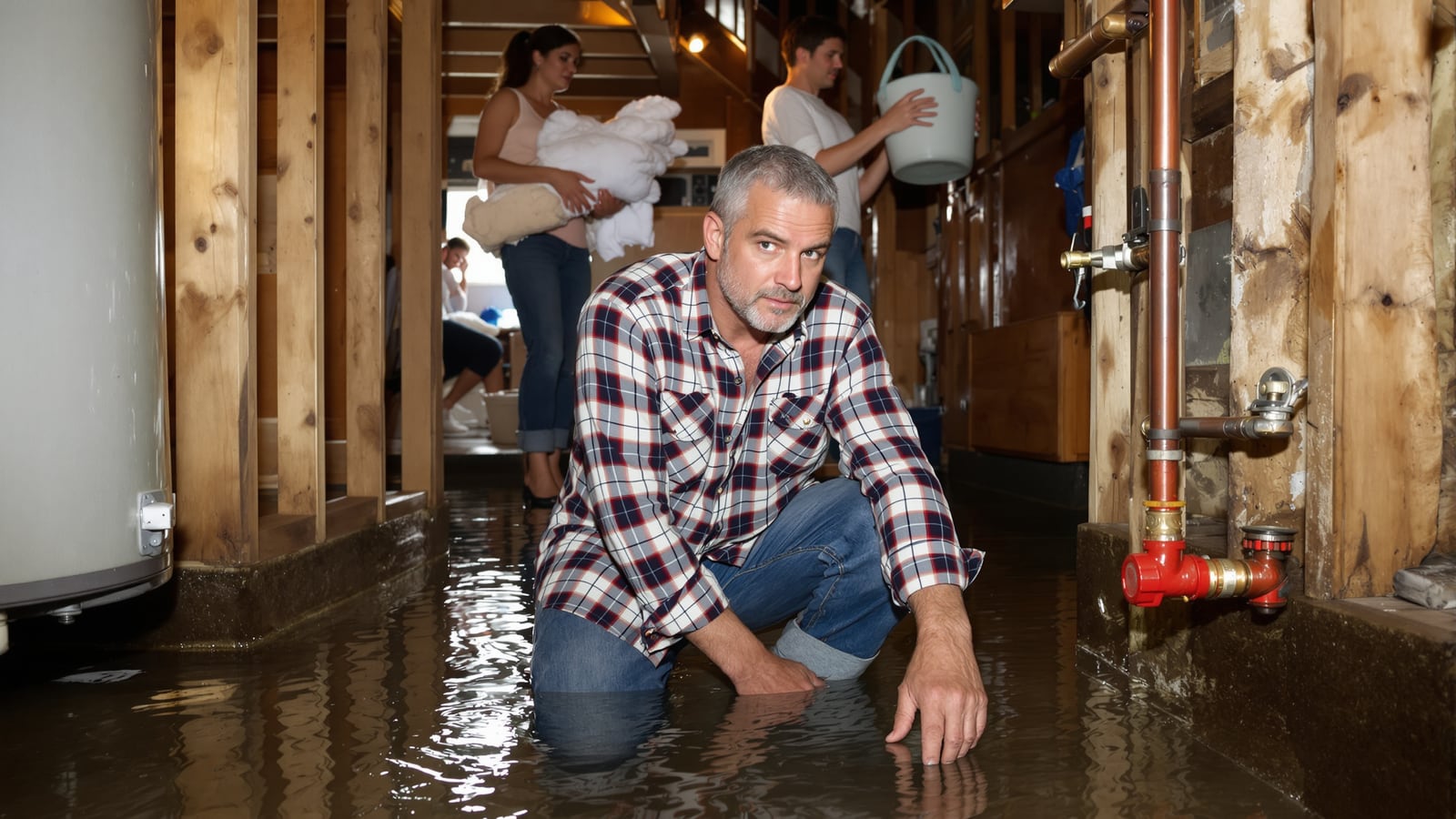
Quick answer: Slow your breathing, lower your voice, and ask what the next physical step is. Don't tell panicking people to calm down. Give them a job.
The water heater let go at 6:40 on a Sunday morning. By 6:45, four adults were standing in an inch of water, all talking at once, and one of them was holding a phone and reading the warranty aloud like it was going to help.
Nobody was stupid. Everybody was loud. And the water kept coming.
Then somebody walked past them, went down the basement stairs, found the shutoff valve, and turned it. He didn't say anything dramatic. He said, "Okay. Towels. Somebody get towels." Within ten minutes the room had a plan and everyone had a task.
That guy wasn't fearless. His heart was going like everybody else's. He just did a few things in the right order, and you can learn them.
Your body goes first
You can't talk yourself calm while your chest is tight. So fix the chest.
Breathe in through your nose for about four seconds, then let it out slowly through your mouth for six or eight. The longer exhale is the whole trick. Do it three times before you say a word. Nobody notices you doing it, which is the point.
Then drop your voice. Not a whisper, just lower and slower than the room. People match what they hear. If you're the only one speaking at half speed, a surprising number of them will drift down to meet you.
And if everyone's standing, sit down. It's hard to keep shouting at a man who's sitting at the kitchen table with a pen.
Shrink the problem to the next ten minutes
A crisis feels enormous because everyone's looking at all of it at once. The basement is ruined, the insurance won't cover it, the whole house is cursed.
You can't solve that. You can turn off a valve.
Ask one question: what's the next physical thing that needs doing? Not what went wrong, not whose fault it is, not what it'll cost. The next thing your hands can do. Shut the valve, move the car, put the kids in front of a movie, write down the phone number you need.
Do that, then ask again. A disaster is only a long list of small tasks that nobody's started yet.
If someone's hurt or in danger, the next physical thing is getting medical help right away or getting to a safe place. Steady doesn't mean slow. It means you don't flail.
Give panicking people a job
"Calm down" has never calmed down a single person in recorded history. It sounds like an accusation, and now they're upset about the crisis and about you.
Hand them something instead. "Can you grab every towel in the hall closet?" "Can you keep an eye on the kids and keep them dry?" "Write down what you remember about when it started."
A job gives frightened energy somewhere to go. It also makes people feel useful, which is the opposite of what panic feels like. You're not managing them. You're pointing them at the work.
Don't decide anything big in the first hour
Panic is bad at math. It wants an answer now, usually the most drastic one: sell the house, quit the job, tell him exactly what you think of him.
Almost none of it needs to be settled before lunch. When someone pushes for a big decision in the middle of the storm, say: "Let's make that call tomorrow morning." Say it kindly and say it twice if you have to. If you're stuck between two real options, this piece on deciding when both roads look right is worth ten minutes later, once the water's out of the basement.
Steady gets built on a Tuesday
Nobody rises to the occasion. You fall to the level of your routine, and the guy who found the valve knew where it was because he'd looked once, on a boring afternoon, and never forgot.
So build the boring part now.
- Sleep like it matters. A tired man is a short-fused man. Everything below depends on this one.
- Move your body most days. Walking counts. Lifting counts more. You're storing up reserves.
- Know your own shutoff valves. Where's the water main, the breaker box, the spare key, the folder with the insurance papers? Know before you need it.
- Keep an emergency number list on paper. Phones die and screens crack.
Routines aren't glamorous, but they're what's left when your mind goes blank. If your last system collapsed after a week, this one on why time management systems quit explains why and how to build one that sticks.
Watch what you soak in
Steady also means being careful about what you take in. If you spend four hours a day scrolling other people's outrage, you're rehearsing panic. You'll walk into a real emergency with your nerves already worn thin.
Take back the two hours your phone is quietly taking is a decent place to start. Calm is contagious, but so is the other thing, and the other thing is faster.
Steady isn't a doormat
Here's where a lot of decent men go wrong. They get known as the calm one, and suddenly every emergency in the extended family lands on their doorstep. Dad's truck, your cousin's rent, the neighbor's fence, all of it, forever.
Serve first. That's right and it's what a good man does. But keep a backbone. You can carry a load for someone without taking over their life. You can say, "I'll help you tonight, and tomorrow we sit down and talk about how this doesn't happen again." You can say no, and sometimes you should.
Helping once is generous. Becoming someone's permanent safety net with no say in the matter isn't steady, it's a slow leak.
When you do help, leave it better than you found it. Stay and mop the floor. Bring coffee. Come back Tuesday and ask how it went. People remember who showed up at 6:45 on a Sunday, and they remember even better who was still there at noon.
What it looks like afterward
The basement dried out. The insurance took three weeks, and the water heater was replaced for less than anyone feared. Nobody remembers most of what was said that morning.
They remember the guy who spoke quietly, turned off the valve, and asked for towels.
Be that guy. Not because it's easy, but because someone in your house is watching to see what a man does when everything goes wrong. Show them.
Cal Brennan
Fitness
Strength coach. Trains fathers, tradesmen and desk workers, which means programs that survive a bad week.

Watch
Worth an hour of your evening
More from Life.
From channels we rate. Plays on YouTube.