Was that expert picked for knowing or for nodding?
Every story needs sources. The tell is whether they were chosen for what they know or for what they'd say anyway. Here's how to check in five minutes.
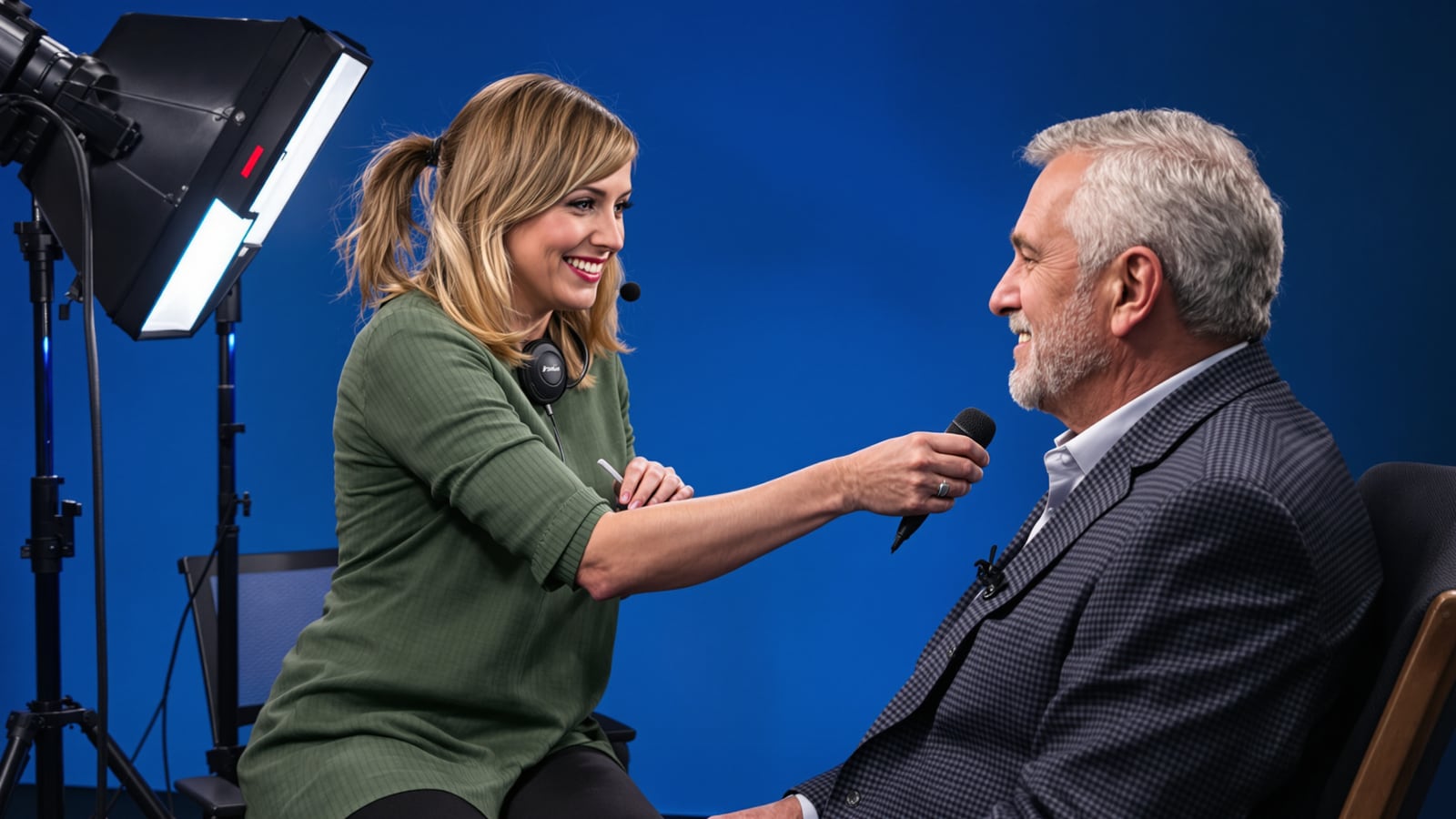
Quick answer: Ask whether the source's credential matches the exact claim they're making, and whether you could have guessed their quote before reading it. If both answers go the wrong way, you're reading a decoration, not a witness.
Every reporter needs a quote. Nobody has time to learn a subject cold, so they call somebody who has. That's honest work. The trouble starts when the call list is built around one question: who will say what the story already says?
You can catch that. You don't need a journalism degree, and it works on a story you love as well as one you hate. That second part matters.
Match the credential to the claim
Start with the label under the name. "A professor." "A former official." "A senior fellow." "An analyst." Those are job descriptions, not areas of knowledge.
Now ask what, exactly, the person is being quoted on, and whether that's the thing they know.
Here's a made-up example. It isn't a real story. A piece on a proposed tariff quotes a retired Army colonel, and the colonel says it will wreck the supply chain. He may be a fine man with real service behind him. But supply-chain economics isn't logistics for a brigade, and the story never says what, if anything, he's studied about trade. Flip it. A piece on a new defense budget quotes a trade economist on whether the ships will work. Same problem, opposite team.
The question is narrow. Does this person's training or work cover the specific claim? A cardiologist on heart disease, yes. The same cardiologist on monetary policy, no, and a good one will tell you so.
Watch for the vague adjective doing the heavy lifting. "A leading expert." Leading by whose measure? "A prominent scholar." Prominent where? If the story can't name the field, the reader is being asked to trust the title instead of the person.
Run the swap test
This is the best tool you have, and it takes ten seconds.
Swap the sides. Take the same sourcing, the same kind of quote and the same strength of language, and imagine it supporting the position you dislike. Would you accept it?
Another made-up case. A story on school choice quotes three people. All three run organizations built to expand it. Another story on the same subject quotes three people from groups built to oppose it. If the first one bugs you and the second one doesn't, or the other way round, you've just found your own thumb on the scale. That's useful information, and you didn't need anybody's help to get it.
A source with a stake isn't automatically wrong. People who spend their lives on a subject usually do know it. But an interested party is a party. A fair story says so, and says it near the quote, not in paragraph twenty.
Predict the quote
Read the headline and the first paragraph. Stop. Write down in your head what the expert will say.
Then read it. If you nailed it word for word, ask why. Real expertise surprises people regularly. It comes with "it depends," "the data's messy here," and "my own side gets this wrong." A source who has never once said anything inconvenient to their own camp isn't giving you analysis. They're giving you a position, with credentials attached.
Search the person's name along with the topic. Don't go deep. Look for any sign they've ever disagreed with the people who'd usually cheer for them. A conservative economist who has criticized a Republican policy, or a liberal one who has criticized a Democratic one, has shown you something. Willingness to cost yourself is the cheapest proof of independence there is.
Count the rolodex
One quote tells you little. Watch the pattern over a month.
If an outlet reaches for the same six names every time a subject comes up, they're not sources, they're a bench. You see it on every side. Some conservative outlets have their go-to voices on immigration and taxes. Some liberal ones do on climate and policing. Pick any outlet you read and tally the names for a few weeks. Three or four repeats will tell you who's really driving the coverage.
Notice also who never appears. If a story on a contested question includes no qualified person who disagrees, ask whether such a person doesn't exist or just wasn't called. Often the answer is the second. The story on how an editor decides what runs covers the questions that should have been asked before it went out.
The missing chair
Good sourcing has an empty chair in mind. Who would object? Is that person in the story, quoted fairly and in their own words, or only described by the other side?
Be especially suspicious of this construction: "Critics say..." with no critic named. Or its mirror, "Experts agree," with no expert named. Unnamed agreement is cheap. If you want to weigh anonymous voices properly, this piece on anonymous sources gives you the test.
Where this advice runs out
Be fair about the limits, because the method cuts both ways.
Sometimes the truth really does sit on one side, and a story with five qualified voices that agree is accurate. Forcing a "balancing" quote from a crank isn't rigor, it's theater. And an advocate can be the best-informed person available. A gun-range owner may know more about a state permit process than a professor does. A union steward may know more about a contract than any academic.
So don't throw out a source for having a view. Throw out the source whose view is the only reason they're there. The distinction is whether you can point to something they know that the rest of us don't.
The five-minute check
Next time a quote carries the argument in a story, do this:
- Find the exact claim the source is making.
- Find the exact thing they're qualified in. Do the two overlap?
- Run the swap test. Would you accept this sourcing for the other side?
- Search their name plus the topic. Any record of disagreeing with their own camp?
- Check whether the story names anyone qualified who disagrees.
If it fails two or more, don't throw the story out. Downgrade it. Treat the quote as an opinion, not as evidence, and go find the claim in a primary source, such as the actual report, ruling or data table.
Your feed makes this harder, since it keeps feeding you voices you already like. How Your Feed Decides What You See explains why, and how to push back.
One last habit. Do the check hardest on the stories you want to be true. Anybody can spot a weak source when it's attacking their team. The test of a clear thinker is the nod you almost gave without looking.
Marcus Vale
Editor-in-Chief
Twenty years in magazines, most of it deciding what to cut. Writes about work, discipline and the decisions that compound.

Watch
Worth an hour of your evening
More from Media Literacy.
From channels we rate. Plays on YouTube.
Read next