Pick one sentence and build the family song around it
A life won't fit in three minutes. One porch, one saying and three chords will, and that's the song your grandkids will still be singing.
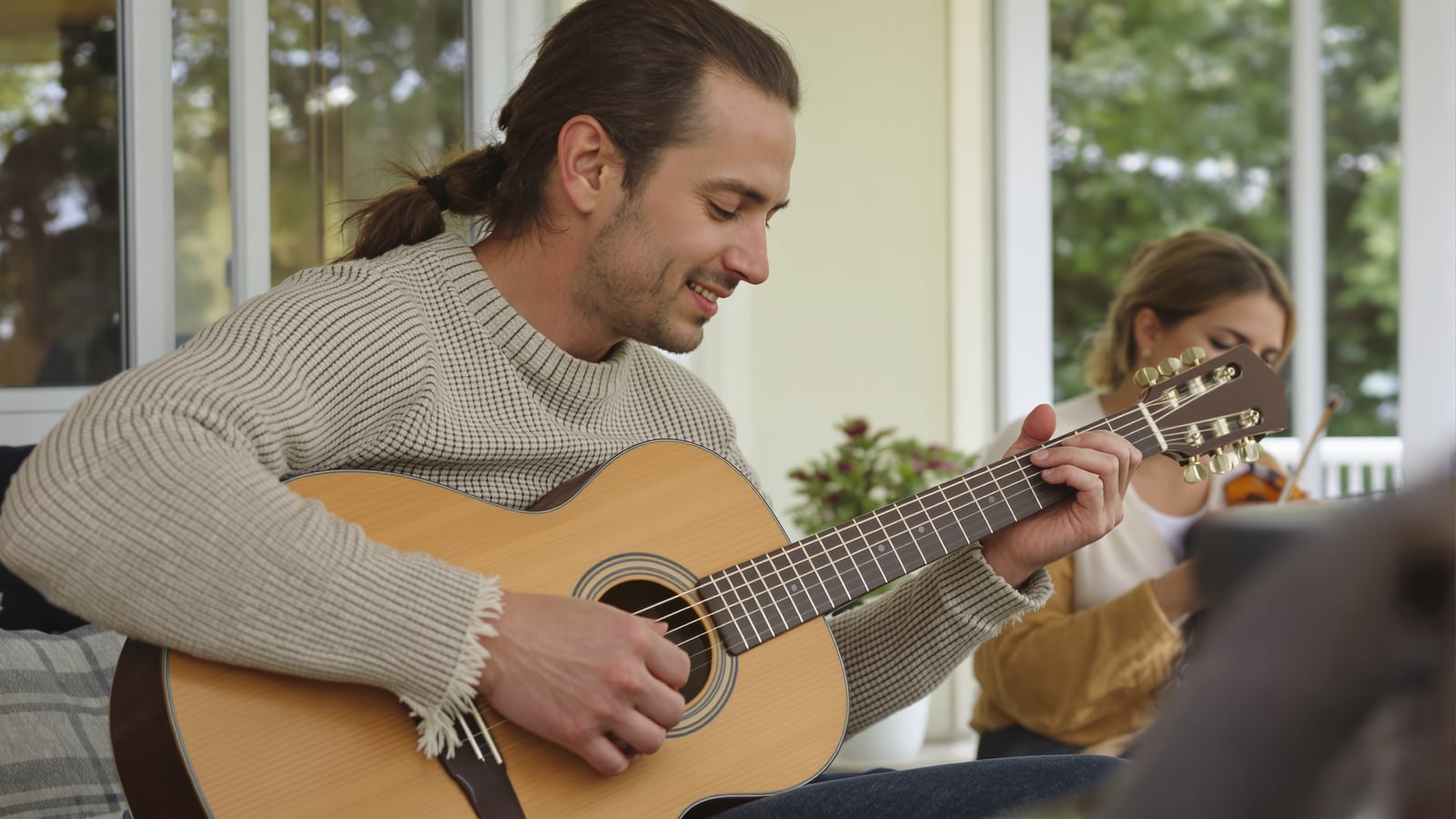
Quick answer: Don't write the life story. Write one scene, build the chorus on a saying your family already repeats, and keep it to three chords a twelve-year-old can strum.
Your grandfather's life won't fit in a song. Neither will your mother's, or the farm's, or the forty years your folks spent in the same house on the same street. A song runs about three minutes. Try to cram a whole life into that and you get a résumé with a melody, and nobody sings a résumé.
Kids sing the small stuff. They sing the line they've heard fifty times, the one with a face attached.
Go collect it before you write it
Start with a visit, not a pen. Bring something, like coffee and a pie from the good bakery, and bring the old photo album if you can borrow it. Put your phone on the table and hit record.
Skip "tell me about your life." Nobody can answer that. Ask small:
- What did the kitchen smell like on Sunday?
- What did your dad say when he came in from work?
- What was the first car you bought, and what did it cost?
- What's the phrase everybody in this family says and nobody remembers starting?
That last question is the one you're after. Every family has a saying. "Leave the porch light on." "We'll make do." "Eat first, argue later." Somebody's grandmother said it, and now the whole clan says it without thinking. That's your chorus, already written and already loved.
Some older folks clam up when a recorder appears. Fair enough. Open the photo album instead and let them talk to the pictures. The phone can sit there quietly and catch it.
Choose the one scene
A song holds one scene well. Pick it the way you'd pick a single photo for the mantel.
Say your grandmother kept the porch light on every night until the last of her six kids was home, long after they'd all grown up and moved to different towns. She did it until the day she died. That's your scene. Skip the move from Ohio and the job at the mill. Skip the year the roof leaked. Those are good stories and they'll get their own songs.
A simple build that works:
- Verse one: the place. The porch, the screen door, the smell of the kitchen.
- Verse two: what happened. The kids leaving, the light staying on.
- Verse three: what it left behind. Who keeps the light on now.
- Chorus: the saying.
If you want a deeper walkthrough on keeping a true story intact while you shape it, Turn a Story Into a Song Without Losing the Story covers it well.
Write the chorus first
Most beginners write verses first and then hunt for a chorus that never arrives. Flip it.
Take the saying and make it five or six words that sing easily. Say it out loud until it falls into a rhythm on its own. Then repeat it. A chorus that a four-year-old can join by the second time through is doing its job.
A rough example, and it's only an example, so write your own:
Leave the porch light on, Grandma said, somebody's always coming home.
It isn't Nashville poetry. It doesn't need to be. It needs to be true, easy to sing and hers.
Then give the kids a job. A one-word echo after each line works. So does a stomp, or a clap on the last beat. Children remember what they get to do far better than what they're made to listen to.
Keep it to three chords
You don't need a clever progression. G, C and D will carry nearly any family song ever written, and the grandkids can learn them in a week. Capo up a few frets if the key sits too low for little voices. Kids sing comfortably in a range most grown men find a bit high, so pitch it where they can reach.
Don't copy a melody you love. Borrow the shape, the way old folk songs borrowed from each other, and let your own tune settle in over a few tries.
Still waiting on your first guitar, or fighting one that won't stay in tune? Start with What Actually Matters When You Buy Your First Acoustic. And if you're new to chords, The First Ninety Days of Learning Guitar as a Grown Man will get you to three chords faster than you'd guess.
Tell the truth, but pick your truths
Keep the real details: the street name, the color of the truck, the exact thing she said. Specifics are what make a song feel like it belongs to one family and no other.
Compression is fine. Two Sunday dinners can become one. You're writing a song, not testifying under oath.
But think about who's in the room. A song outlives arguments. If there's an old feud, a hard divorce or a brother who isn't speaking to anybody, leave it out. Show the song to the oldest person it's about before anybody else hears it. If they wince at a line, change the line. You're building something your family will hold for sixty years, and it should be something they're glad to hold.
Teach it, don't just perform it
The first time you play it shouldn't be at a formal gathering with everyone staring. Play it at the kitchen table after supper, with dishes still out. Sing the chorus twice and then stop and say, "Okay, you do it."
Then do the things that make it stick:
- Type the lyrics and chords on one page and print copies. Tape one inside the guitar case.
- Record it on your phone, rough as it is, and send the file to every cousin. Name it something obvious, like the title and the year.
- Sing it again at the next holiday, and the one after. Songs become traditions through repetition, not brilliance.
- Hand it off. When a grandchild can strum it, let them lead it, even if they stumble.
When it comes out rough
It will. The rhyme will clunk and your voice will crack on the high note. Your nephew will giggle through verse two.
Sing it anyway. A rough song that got sung at the table beats a polished one that stayed in your head. Nobody in that kitchen is grading you. They're just glad somebody wrote their grandmother down.
Someday a kid will be driving a road you've never seen, humming a line about a porch light, and won't be able to say where she learned it. You'll know.
Dean Shaw
Gear & Garage
Reads the warranty, the parts list and the long-term owner reviews before anything else. Trucks, tools, watches, and the cheap version that costs more.

Watch
Worth an hour of your evening
More from Music.
From channels we rate. Plays on YouTube.
Read next