The four-sentence thank-you note that still does the job
My grandmother wrote three notes every Sunday after dinner, and she was never the person anyone forgot. The method takes about four minutes.
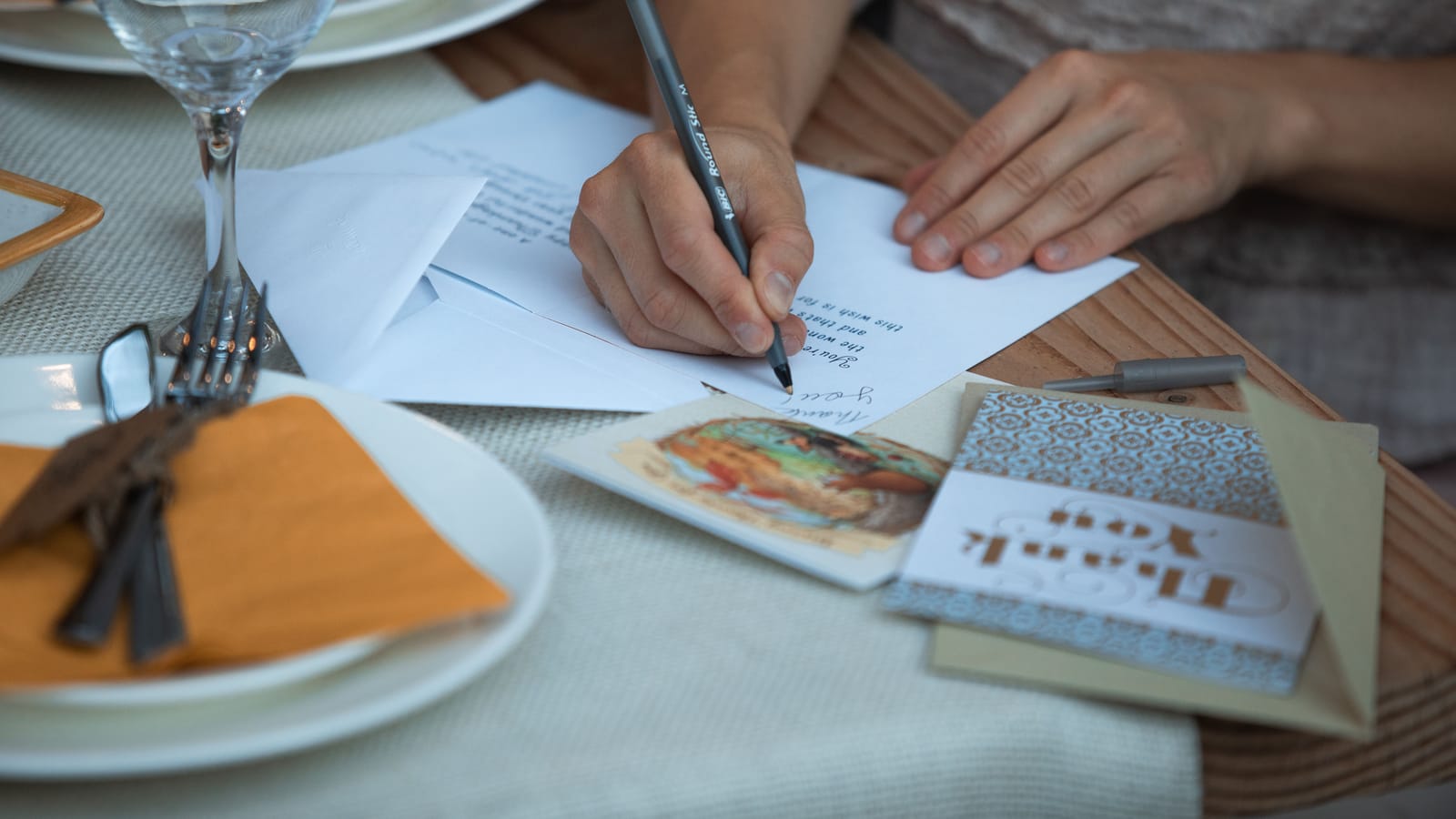
Four sentences. That's the whole thank-you note, and my grandmother could finish one before the percolator was done.
She kept a cigar box in the kitchen drawer with a dozen plain fold-over cards, a roll of stamps, a felt-tip pen, and a little spiral address book held together with a rubber band. After Sunday dinner, while everyone else argued about the game, she'd write three. Not big letters. Notes. Thirty seconds of thought, ninety seconds of writing, done.
Here's what that habit bought her: for about fifty years, she was the person everybody in three counties felt close to. Not because she was the most interesting woman alive. Because she was the only one who wrote back.
The four sentences, in order
One: name the thing. Specifically. Not "thank you for the gift." Thank you for the green wool blanket, the twenty dollars, the ride to the airport at five in the morning.
Two: say what you did with it, or will do with it. "It lives on the back of the couch and my wife has claimed it." "It went straight into the brake job fund." This is the sentence that proves you're a real person and not a form letter.
Three: say something about them. Not about the gift. "You've been doing this since I was seven and I've never once had to ask." "Dad still tells the story about you and the tractor."
Four: point forward. "See you at Thanksgiving." "I'll call you Sunday." Then sign it.
That's it. Read it out loud once in your head. If it sounds like you talking, mail it.
The trap people fall into is trying to write something beautiful. Nobody's grading you. A note that says "Thank you for the blanket, it's on the couch and the dog has already claimed it, you've spoiled us since we got married, see you in November" is a perfect note. The beautiful ones never get written because they're still being composed in somebody's head six weeks later.
Kill the friction before you need it
You will never write a note you have to go shopping for.
Build the box. A pack of blank fold-over cards from the drugstore runs a few dollars and holds ten or twelve. A roll of Forever stamps costs less than a nice lunch and never expires when the rate goes up. One pen that doesn't skip. A list of addresses, written down somewhere that isn't a phone you'll drop in a parking lot.
Put all of it in one container in one drawer. Not the junk drawer. A drawer you open.
My grandfather's trick was addressing and stamping the envelope first, before writing a word. Once there's a stamped envelope with somebody's name on it sitting on the counter, the note gets written. Human nature hates an unfinished job in plain sight.
And get the addresses now, while people are alive to give them to you. The single most common reason a thank-you note doesn't get sent in this country is that somebody didn't know the street number and figured they'd look it up later.
Late is fine. Never is the problem.
Somewhere around week three, the note stops feeling overdue and starts feeling impossible. You tell yourself it's too late, so now you'd be admitting you forgot, so now you'd better not.
Wrong. Write it late. Open with the truth and get it over with.
"This is nine months late and you should have had it back in March. I still have the toolbox and I've used it every weekend since."
Nobody has ever thrown away a late thank-you note. I've watched people get one, laugh, and stick it on the refrigerator for a year. The lateness becomes part of the charm. The silence never does.
The phone call is shorter than you think
Ten minutes. That's the whole thing.
We've convinced ourselves that calling somebody is an imposition, like we're demanding an hour of their afternoon. So we text, and the text says "thinking of you," and they text back a thumbs up, and nobody's day changed at all.
Pick a standing time and defend it. My uncle called his mother every Sunday at four o'clock for twenty-two years. Neither of them ever had to wonder. Some weeks they talked about nothing, which is the entire point. The good conversations don't happen on schedule, they happen because you were already on the phone about the weather when something real came up.
The drive home works too, hands free, seven minutes of open road. Call a cousin. Call the friend you keep meaning to call.
Now the concession, because it's real: some people genuinely hate the phone, and forcing a call on them isn't good manners, it's just your preference wearing a bow tie. Text first. "Got ten minutes sometime this week?" Costs you nothing and it lets them say when.
And leave an actual voicemail. Not "call me back." Say why you called, say one specific thing, say you'll try again. Plenty of people save those.
The hard ones
Condolence notes. You're not there to fix anything. You're there to say the name out loud. One specific memory beats a page of sentiment: "Your dad let me borrow his post hole digger in 1998 and never once asked for it back, and I think about that man constantly."
Never write "let me know if you need anything." It puts the work on the grieving. Write "I'm bringing dinner Thursday at six, leave the porch light on." Then show up Thursday at six.
Apologies. No "if." No "but." "I was wrong about the money and I'm sorry" is a complete sentence and it ends the argument. The word "if" in an apology has started more feuds than land disputes.
Congratulations for things nobody congratulates. Thirty years at the same plant. A kid who rode the bench all season and didn't quit. Somebody's first month sober. These notes land harder than any wedding card you'll ever send, because the person isn't expecting one.
Teaching a kid without making it a punishment
Sit down with them and write yours at the same time. That's the whole method. A kid who watches his father write a note learns that men do this. A kid sent to his room with a pen learns that this is a sentence.
One line per year of age is a fair rule. A six-year-old writes six sentences, which for a six-year-old is roughly a novel. Let the little ones draw the picture and dictate the words to you. Let them lick the stamp. The stamp is the part they remember.
And don't let them send a group text instead. That's not modernizing the tradition. That's skipping it.
The January hour
First week of the year, sit down with a calendar and a cup of coffee and write in every birthday and anniversary you're responsible for. Then buy the cards. All of them, at once, and stick them in the box with the stamps.
You'll spend maybe forty-five minutes and you won't miss a birthday for twelve months. My grandmother did this every January 2nd, and the woman never once said "oh shoot, was that yesterday?"
When she died, we found a shoebox under her bed with about four hundred letters in it. Notes from grandkids, from neighbors, from a woman she'd written to since high school and met in person twice.
Nobody's going to find your group chat.
Nina Castellan
BRO for Her
Runs the women-facing desk. Same standard, same tools, written for a different reader — not a softer one.

Watch
Worth an hour of your evening
More from Old School.
From channels we rate. Plays on YouTube.
Read next