Ten men, one Saturday, no invoice
Before contractors and apps, neighbors built each other's sheds and fences in a day. The system was simple, and you can start one this month.
There's a four-foot level hanging on a nail in my grandfather's garage that isn't his. Someone else's initials are burned into the handle. It's hung there longer than I've been alive.
I asked him once why he never gave it back. He said the man had died, and the family didn't want it. "So it stays where it can still work," he said. "And I still owe him a Saturday."
That was how it ran. Nobody sent a bill. Everybody owed somebody a Saturday, and everybody was owed a few.
What a Saturday looked like
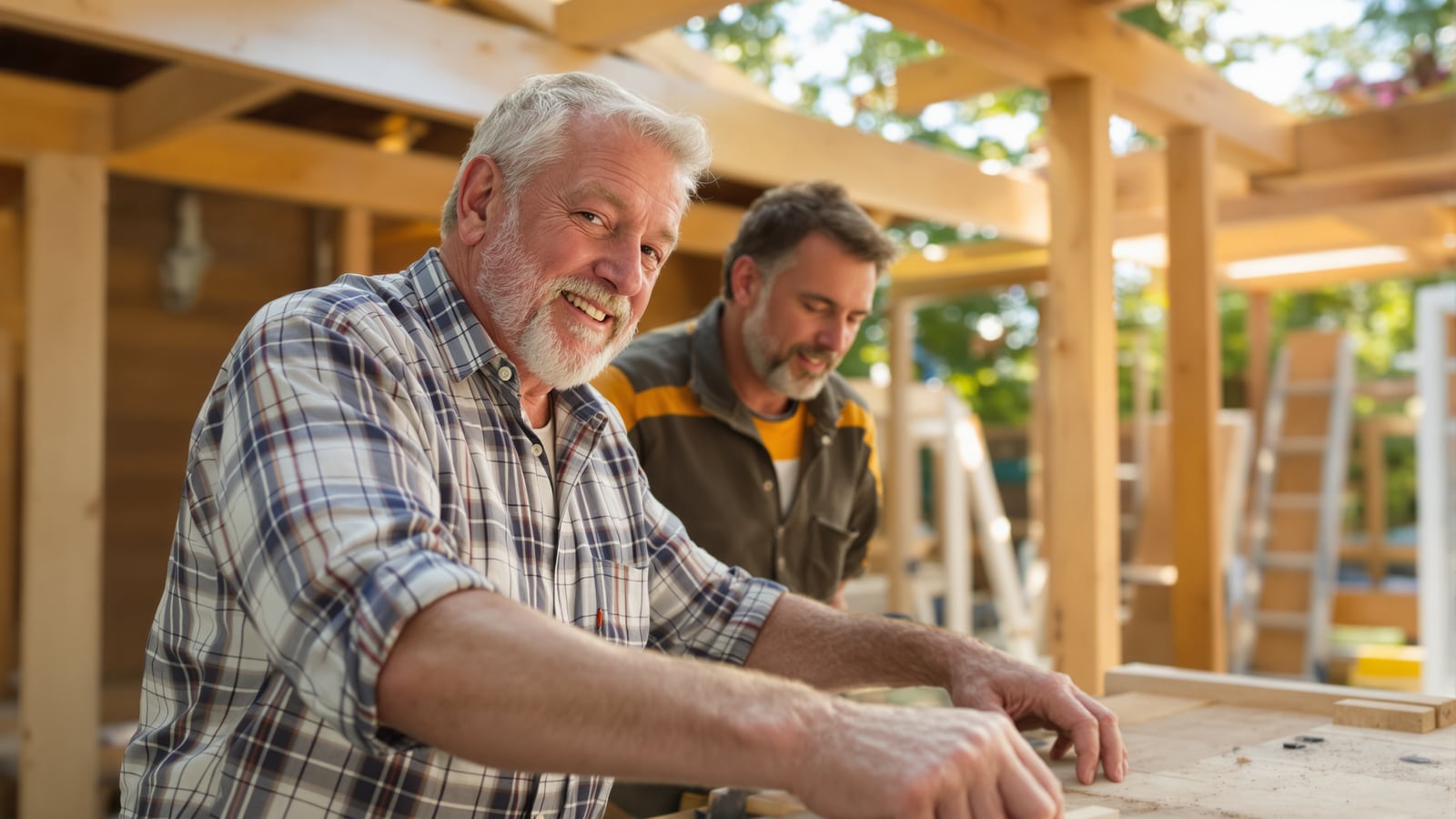
A man needed a roof on the new shed, or a fence line set, or a barn wall stood up before the weather turned. He'd say so at church parking lots, feed stores, and over the back fence. Six or eight men would show up at seven in the morning with their own tools in the bed of a truck.
By dark the wall was up. The host's wife had fed everybody at noon, usually a pot of something and a pan of cornbread, and somebody's teenage son had hauled about four tons of lumber without being thanked for it. Then everyone went home. Nobody tallied it.
It looks like charity, but it was closer to insurance. Every man on that crew knew his own Saturday was coming. A house, a barn, or a hay crop gets away from one pair of hands every so often, and the crew was the fix.
The rules nobody wrote down
The system lasted because it had rules. My grandfather could recite them without ever having said them aloud.
Show up early. If the call time was seven, you were in the driveway at 6:50 with the truck already pointed the right way. Late men got a look. They got one look, and that was enough.
Bring your own tools, and mark them. A dab of orange paint on the handles and your name in marker. Twelve men's hammers get mixed up fast. Marked tools go home with the right man. Then bring them back sharper than they left, because the old code says so.
The host has a plan before anybody arrives. Lumber on site. Materials counted. A rough drawing on a piece of plywood. A crew will forgive a bad day, but it won't forgive standing around while the host drives to the lumberyard for the third time.
The host feeds everyone. This isn't optional. Hungry men get slow and cranky. Lunch is also where the real value of the day happens, when the shed is half done and you're sitting on a tailgate with a paper plate. The best advice I ever got on a mortgage came from a man holding a sandwich. (The waste-nothing, feed-everyone kitchen is the other half of this rule.)
One man runs the job. Usually it's whoever has built the most of whatever you're building. Everybody else takes direction and keeps the commentary to themselves. If you think the rafter is wrong, say it once, quietly, to the man in charge. Then do what he says.
Everybody gets a job. The seventy-five-year-old with a bad knee sat on an upturned bucket and straightened used nails on a block of wood. That's an actual Depression-era habit. Nails cost money, and a bent one hammered flat again is a free one. The old man felt useful and the crew saved a few dollars. The twelve-year-old carried boards and learned what a day's work was.
Pay it back in kind. Never with cash, never with a gift card. If he raised your fence, you show up when his washes out. Whoever can't do the work, say a widow or a man laid up with his back, gets the crew sent to her anyway. Nobody runs a ledger on that one.
Rebuilding one this week
You don't need a barn. You need three or four guys and a short list.
- Pick the crew. A brother-in-law, a neighbor, a guy from work, a friend from the gym. Four is plenty. Eight is a party.
- Set the rotation. One Saturday a month, one man's house. Put it on the calendar before the enthusiasm fades, because it will.
- Host properly. Buy the materials the week before. Write the jobs on a sheet of paper. Make lunch, or order it, but have it ready at noon and have enough.
- Pick jobs that suit a crew. A fence run, deck boards, a hung door, a painted room, a woodpile moved, a garage cleared and shelved, a truck bed of gravel spread. Anything that takes one man two weekends and four men one morning.
- Mark your tools. Orange paint. Your name. Done.
- Leave it cleaner than you found it. Sweep the garage. Haul the scraps. The host shouldn't spend Sunday cleaning up after his own help.
Where the old way needs a caveat
A few jobs aren't for friends and a Saturday. Gas lines, the main electrical panel, anything structural that carries weight overhead: hire a licensed pro, and check your local permit rules before you start. The old crews built to the standards of their day and with men who'd done it for decades. A crew of four guys who've watched videos isn't the same thing.
Insurance is another one. If a friend gets hurt on your property, your homeowner's policy may or may not cover it. A short call to your agent beforehand is cheap. Ask what applies when unpaid help is on site.
And be honest about this: it's slower than hiring it out. Somebody will be bad at it. Somebody will cut the board an inch short, and you'll eat a gas-station sandwich once or twice before you get the lunch right. That's the price of the thing. The price of not doing it's a street where you know nobody's last name.
That's what the old crews really built. The shed was the excuse. Years later you still knew whose truck was in the driveway at a quarter to seven and whose kid had grown three inches. A front porch did some of that work, and we've written about what it did. The work crew did the rest. It also explains why the man whose truck was first in the lot got called first for everything else.
Start with one Saturday. Ask a neighbor if you can help him with something he's been putting off, and bring your own gloves. Stay to sweep up.
Then, somewhere in your garage, find a tool that isn't yours, and think about who you owe.
Nina Castellan
BRO for Her
Runs the women-facing desk. Same standard, same tools, written for a different reader — not a softer one.

Watch
Worth an hour of your evening
More from Old School.
From channels we rate. Plays on YouTube.
Read next