The front porch did a job the group chat can't do
My grandmother sat outside every evening after supper on purpose, and you can copy the whole system this week with a folding chair and half an hour.
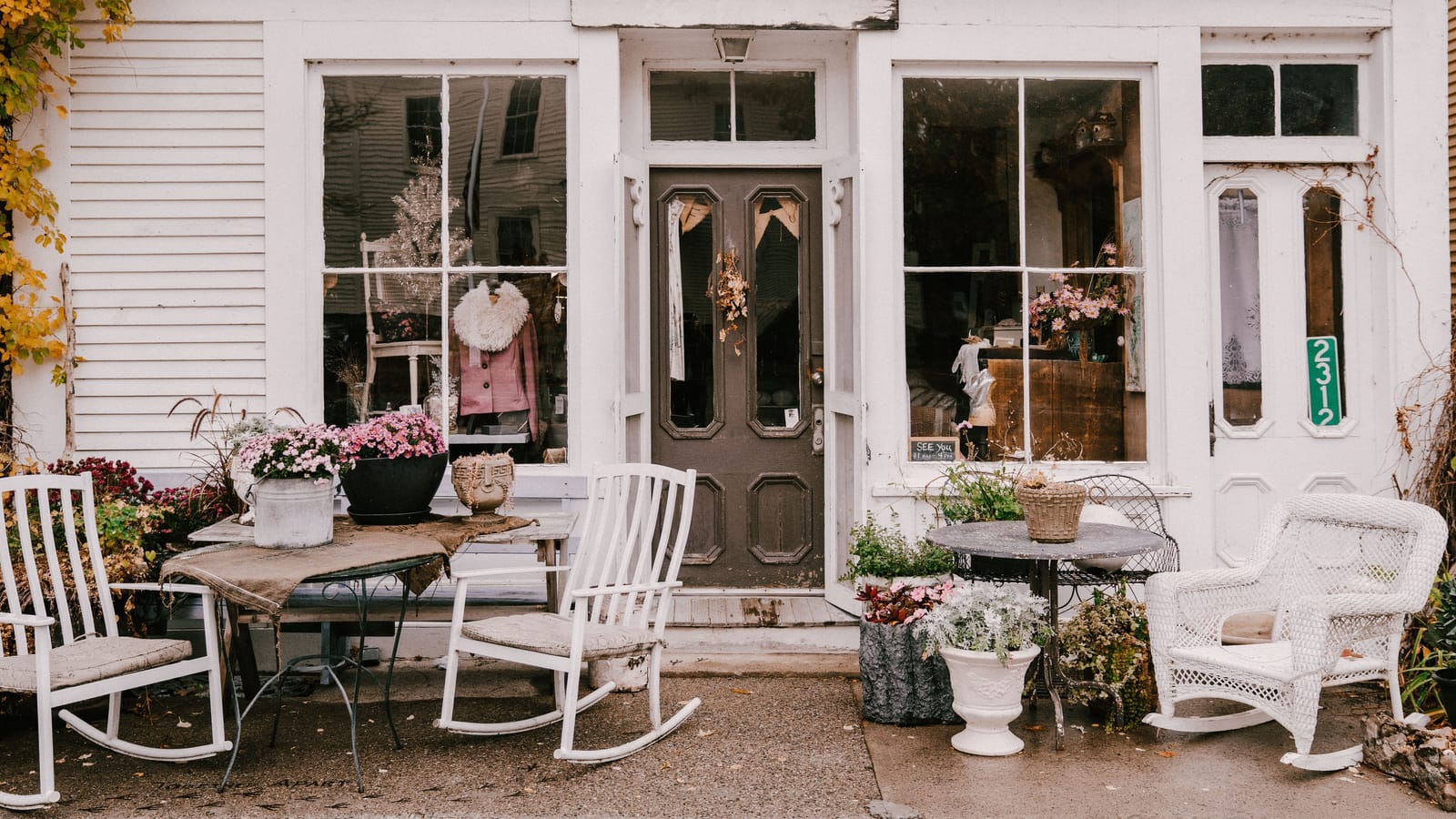
The chair faced the street. That was the entire design.
My grandmother's porch had a metal glider that squeaked like a barn door, two wicker chairs nobody trusted, and a coffee can of cigarette butts that belonged to a neighbor who had quit three times. From about 6:45 to dark, April through October, she was out there. Not waiting for anything. Not doing anything, either, unless you count snapping beans. She sat where people walking by could see her face, and she said hello to every single one of them.
That's the trick. The whole neighborly world that people now get misty about was built on one boring habit: being visible to your neighbors at a predictable time, over and over, for years.
You can rebuild it. You don't need a porch.
Visibility is the whole mechanism
Trust doesn't come from one big conversation. It comes from forty small ones that each lasted nine seconds. "Evening." "That your boy on the bike?" "Supposed to storm Thursday."
Nobody remembers any of those. But after two summers of them, you'll loan that man your truck.
The modern house is built to prevent this. Garage in front, door on the side, six-foot fence, and a back deck facing away from everybody. You drive in, the door comes down, and you have successfully avoided every human being on your street. My grandfather called the attached garage the end of the neighborhood, and he wasn't entirely joking.
So do the deliberate version. Pick thirty minutes, most evenings, and be outside where the street can see you. Front steps. Driveway. Garage with the door up while you sort a toolbox. Walk the dog on the same loop at the same time instead of a different one every night. Sameness is the point. Neighbors need to be able to predict where you'll be, because that's what makes stopping to talk feel casual instead of like an appointment.
Bring something to do with your hands. Sharpening a mower blade, cleaning a grill, oiling a glove. It gives the other person an excuse to wander over and an easy exit.
Learn the names, then write them down
Eight houses. Four across, two on each side of you. That was my grandfather's radius. He knew every name in those eight houses, including the dogs, and he knew which ones traveled in the summer.
Most people can't name three. Fix it with an index card in the kitchen drawer: address, names, kids' names, cell number if you've got it. Add the useful detail. Retired nurse. Works nights. Has a chainsaw. Has a truck and will say yes. Elderly and lives alone.
That card is worth more in an ice storm than anything you'll buy at the hardware store in a panic on Tuesday.
Getting the number is easier than you think. The move isn't "we should exchange numbers sometime." It's handing them yours with a reason attached. "We're out of town the 14th through the 18th. Here's my cell if anything looks off." Now they've got yours, and nine times out of ten you'll get theirs back without asking.
Borrow something small
Old trick, and it works on people who don't like small talk, which is most men.
Ask to borrow something minor. A socket you're missing, a cup of flour, a post-hole digger. Return it the next day, cleaned, with something small. My grandfather returned a borrowed extension ladder with the loose step tightened. He never mentioned it. The guy noticed.
Borrowing puts you in the other person's debt in a way that's cheap for them and flattering. It says you noticed they were the kind of man who owns a torque wrench. And it opens the door to the actual economy of a good street, which is tools, trailers, ladders, jumper cables, and a second set of hands on the heavy end of a couch.
One rule, though, and it's absolute. Return it better than you got it, and return it before they think about it. Every neighborhood has one guy whose garage is full of other people's stuff. Don't be the reason a street stops lending.
Never say "let me know if you need anything"
That sentence has never produced a single pot of soup.
When somebody's had surgery, had a baby, buried a parent, or lost a job, they don't have the energy to assign you a task. So don't hand them a menu. Show up with a specific thing and make it easy to say yes.
"I'm running to the store at four, I'm getting you milk and bread, leave the cooler on the porch."
"I'm mowing Saturday morning, I'm doing your strip too, don't fight me on it."
"We made too much chili. I'm leaving it on the step at six, the container's yours to keep."
That last part matters more than people realize. The old rule was you return a dish full, which meant the exchange never quite ended, which meant it turned into a relationship. If you want to shut a food chain down politely, return the dish full one last time and say thank you. Everybody used to know what that meant.
What to do about the neighbor you don't like
Here's the concession the nostalgia crowd skips. Some neighbors are genuinely difficult. The porch era had them too. My grandmother had a woman two doors down who went through her recycling and reported her findings to the street.
The old answer wasn't confrontation and it wasn't a passive-aggressive note. It was a fence, a wave, and a clean conscience. Good fences make good neighbors isn't a line about coldness. It's a line about clarity. Put the property line where it actually is, keep your dog on your side of it, and greet the woman every single time. You owe your neighbors courtesy and honesty. You don't owe them friendship.
And when something does need saying, say it to their face, kindly, once. Not to the street, not online, not through their spouse. The fastest way to become the problem on your block is to be the person who discusses everybody but never talks to anybody.
The street is your first responder
When the power goes out at two in the morning and a limb is across the road, nobody official is coming for a while. Your neighbors are the emergency services for the first twelve hours, every time.
So build the list before you need it. Who's got a generator. Who's got a chainsaw and knows how to use it without hurting himself. Who's got a truck, a well, a woodstove, a ladder tall enough. Who's home all day, who's gone all week. Which house has an old man who won't call for help and must be checked on.
And be somebody's answer to that question. Own the thing your street doesn't have. My grandfather's contribution was a chainsaw, a pickup, and the willingness to be awake at odd hours. The man across from him kept himself trained, armed and level-headed, and on a street where everybody knew everybody, that was simply another good thing to have close by.
Self-reliance was never one family alone on a hill. It was eight houses that didn't have to call anybody.
My grandmother left the porch light on until the last car on the street pulled in for the night. Nobody asked her to do it. Nobody thanked her for it, either. But every kid who grew up on that block knew which house to run to.
Dean Shaw
Gear & Garage
Reads the warranty, the parts list and the long-term owner reviews before anything else. Trucks, tools, watches, and the cheap version that costs more.

Watch
Watch how it's done
Picked for this article.
From channels we rate. Plays on YouTube.
TEDx Talks
Why You Should Get to Know Your Neighbors: Heather Bowman-Cutway at TEDxMacon
Read next