

A Dog Jumps Because It Works, So Make It Stop Working
Yelling, kneeing and pushing all feed the habit. Pay the dog for keeping four paws down and the jumping fades without a fight.
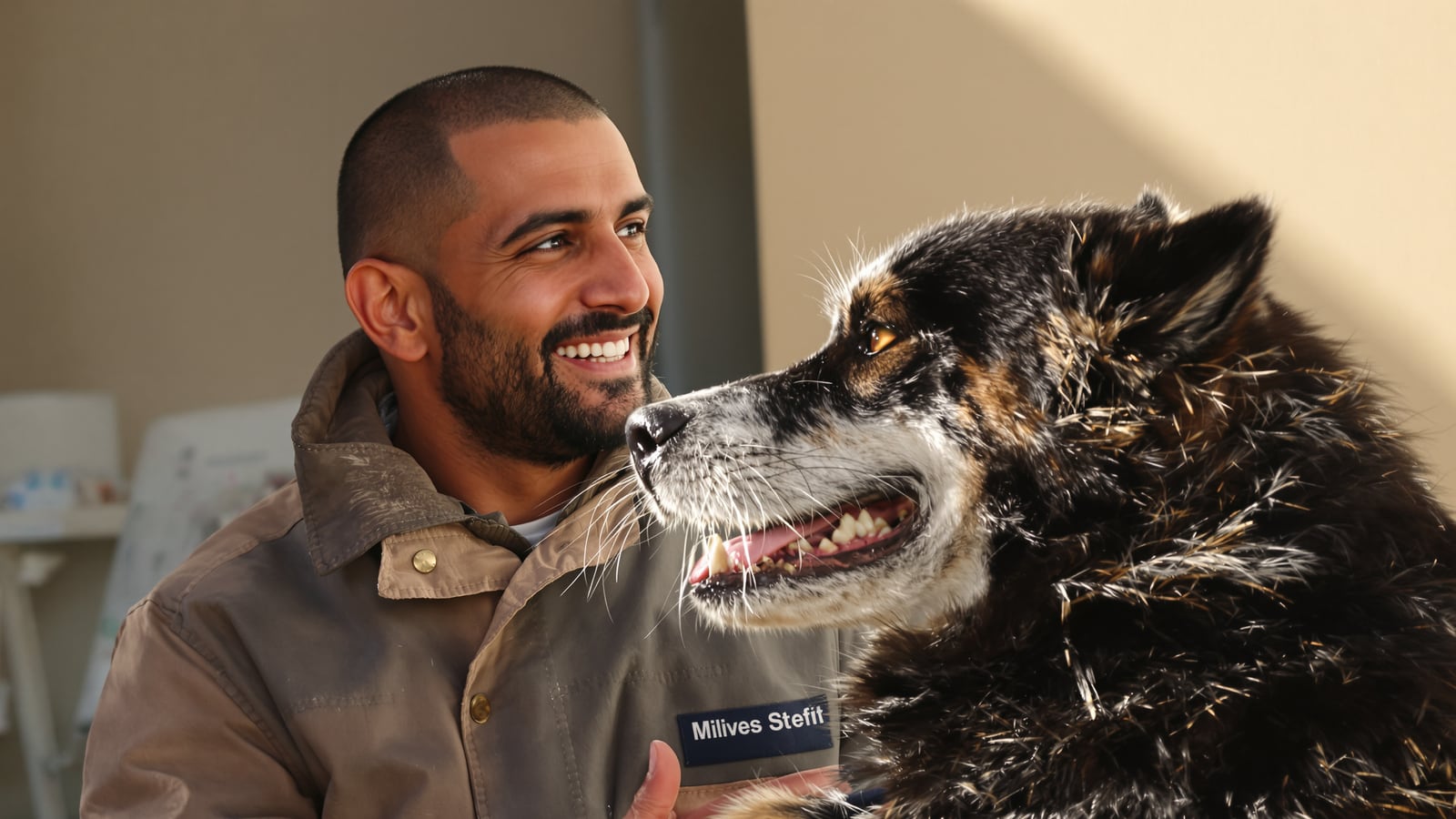
Quick answer: Your dog jumps because jumping gets him what he wants, which is your face, your hands and your voice. Stop paying for it. Pay lavishly for paws on the floor, and set up the front door so he can't practice the old habit while he's learning the new one. Most dogs get reliable in two to four weeks of short, boring sessions.
Why "Off!" makes it worse
Picture a guy walking in with two bags of groceries. The dog launches. The guy says "Off!" and shoves the dog's chest with a knee. The dog got touched, spoken to and looked at, all inside two seconds.
To a dog, that's a win. Pushing him away feels like roughhousing. A scolding is still attention. Even a bad payoff, delivered every third time, keeps a habit alive longer than a good payoff delivered every time. That's why the dog who "just won't learn" has often been taught, very thoroughly, that jumping works.
Punishment has a second cost. Stepping on back paws, grabbing the front ones or snapping the leash can hurt the dog. It also teaches him that people arriving is unpleasant, and some dogs respond by getting more frantic, not calmer. You don't need it.
Step one: stop paying for the jump
The rule is simple and the execution is annoying. When the dog jumps, he gets nothing.
- Fold your arms and turn your side or back to him.
- Say nothing. No "off," no "no," no "down."
- Look at the ceiling if you have to. Eye contact counts as payment.
- The instant all four paws touch the floor, turn back and reward.
Expect it to get worse before it gets better. Trainers call this an extinction burst. The dog has always cashed in with a jump, so when it stops working he'll try it harder, faster and higher. That's the week most people quit and decide the method failed. It didn't. Hold the line for the same reason you'd hold it with a toddler at the grocery store checkout. Giving in once teaches him that a bigger tantrum pays.
Step two: make the floor the best place in the house
Ignoring is only half the job. A dog needs to know what does work.
Get a pouch of pea-sized treats, something soft he'll eat in half a second. Stand in the kitchen, no distractions. Every time he stands or sits with paws down, say "yes" and drop a treat on the floor between his feet. The floor delivery matters. A treat held up high pulls his head and body upward, and you've just built a jump into the reward.
Do ten rounds, a couple of times a day. That's it. Two minutes.
Then add the greeting. Walk toward him. If he stays down, treat on the floor. If he bounces up, stop moving and turn away. Walk toward him again. He'll work out the rule fast: my feet on the floor makes the person come closer, my feet in the air makes the person leave.
Once that holds, ask for a sit as the greeting. If he already knows one, Sit, Stay and Come in Fifteen Minutes a Day covers it. A dog can't sit and jump at the same time, so a solid sit is the cleanest replacement behavior you can teach.
Step three: control the doorway
This is where most plans collapse. The kitchen drill works, then the doorbell rings and the dog forgets everything he knows. Real arrivals are the hardest exam he'll face, and you shouldn't give him the final on day three.
Management makes the training possible:
- Leash on before the door opens. A six-foot leash attached to him (or tied to a heavy piece of furniture) keeps him from reaching a guest at all.
- Baby gate or closed door for the first minute of visits. Let people get their coat off and sit down.
- A stash of treats by the door in a jar or a pocket, so you're never fumbling.
- A mat or rug he can be sent to while people come in.
The leash isn't punishment. It's a seat belt. Every time he rehearses jumping on a guest, that rep strengthens the habit, and every time he physically can't, you've protected the training.
Step four: recruit your helpers
Practice the arrival on purpose. Ask a friend or a neighbor to ring the bell, walk in and ignore the dog entirely until all four paws are down. Then they can say hello and hand over a treat, or you reward from your pocket.
Tell guests the rule before they arrive. A short text works: "We're teaching the dog to greet politely. Skip the eye contact and the baby talk until he's calm." Most people are glad to help.
Leave a visitor's clothes cleaner than you found them. If your dog is a big one or it's muddy season, keep him leashed until the paws are wiped. A good host doesn't make a friend in a clean shirt pay for the dog's education.
The cheater problem
One person in every house undoes the work. Grandpa laughs and says, "Oh, I don't mind," then pets the dog when he jumps. Or a kid squeals and flaps when the dog leaps, which is the best payoff in the world.
Be a servant with a backbone about it. You're not trying to embarrass anybody. Sit down with the family and settle one rule: nobody touches, talks to or looks at the dog until he's on the floor. Walk Grandpa through it once. If somebody can't comply, the leash or the gate handles that person too. Your guests and your small children deserve not being knocked over, and the dog deserves a consistent answer.
Where it goes wrong
- Treating once a day. Short sessions daily beat one long Sunday session.
- Rewarding late. The treat has to arrive while his paws are on the ground, not after he's already coiling to spring.
- Skipping exercise. A dog who has been cooped up all day will jump out of pure leftover energy. A hard walk before company arrives does more than any command. The same principle runs through The Boring Fix for a Dog That Pulls on the Leash.
- Expecting a switch. Puppies and teenage dogs under about two years old are wired to greet up high. It takes weeks of repetition.
If you've just brought home a young one, the habits you start in week one count. What To Do The First Seven Days With A New Puppy is a good place to set the greeting rule from the beginning, before he's seventy pounds.
When to call a professional
Jumping that comes on suddenly in an older dog, jumping paired with limping or yelping, or frantic greeting that seems more anxious than excited can have a physical cause. Call your veterinarian first. They can also tell you how much jumping is safe for a growing large-breed puppy's joints. If the dog is big, strong and reacting to people with real intensity, a certified trainer can watch him in person and adjust the plan.
Otherwise, the whole program fits on an index card. Never reward the jump. Always reward the floor. Keep him on a leash until he's earned the freedom. Do that for a month, and the next time somebody walks in with groceries, the only thing on him will be a wagging tail, and his paws will still be on the ground.
Wes Dunbar
Country & Skills
Grew up on an acreage and never quite left. Covers trucks, trades, land, and how to do the thing yourself.

Watch
Worth an hour of your evening
More from Dogs & Pets.
From channels we rate. Plays on YouTube.
Read next