What Actually Works on a Long Road Trip With Your Dog
Crate or harness, how often to stop, and the hotel call that saves you a $150 cleaning fee and an argument at the front desk.
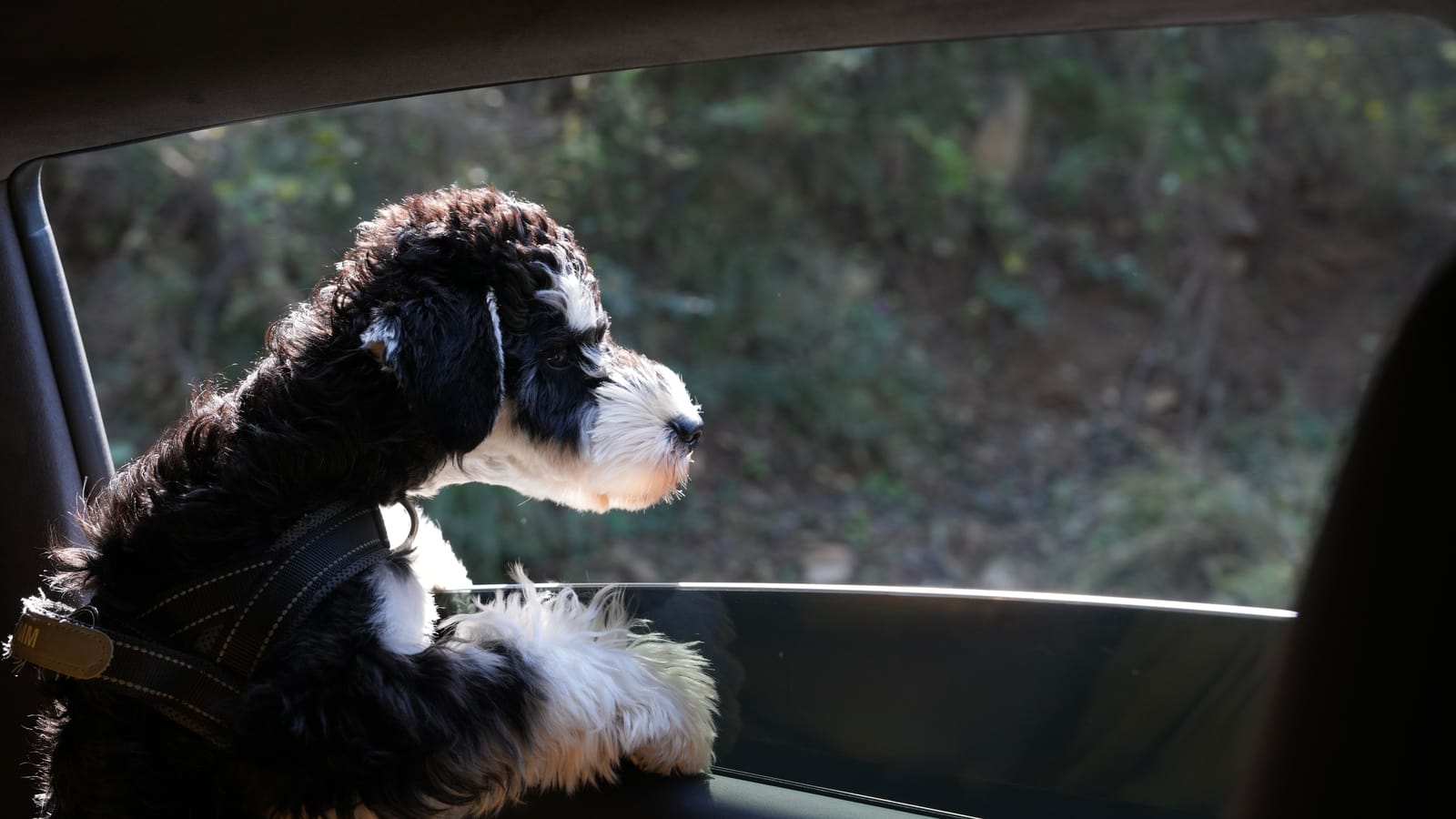
Start with the crate, because everything else on the trip is downstream of it. A hard-sided, crash-rated crate is the single most expensive line item and the one that matters most. Gunner, Ruff Land and Impact all build them, they're bolted or strapped to the vehicle, and the good ones start somewhere around five hundred dollars and climb from there. The wire crate in your laundry room isn't that. In a 35 mph stop it's a cage of flying metal.
If that number makes you wince, fair. Plenty of people drive fifteen hours with a dog on a blanket in the back seat and arrive fine. But the crate isn't only about the wreck you probably won't have. It's about the dog who can't climb into your lap at mile 400, can't bolt out of an open door at a gas station in Amarillo, and can't leave a trench in your upholstery when a semi air-horns past. A dog with a defined space settles. A dog with the run of the cabin stays on duty the whole drive.
Where the thing goes
Cargo area, back against the seats, strapped down. That's the answer for most SUVs and every wagon. Second-best is on the back seat floor if the crate fits, which it usually doesn't for anything over forty pounds.
Front passenger seat is out. Airbags are designed for a 160-pound adult, not a crate, and not a beagle.
If you drive a sedan and a crate isn't happening, the fallback is a proper safety harness that anchors to the seat belt. Sleepypod's Clickit Sport is certified by the Center for Pet Safety and it's the one I'd buy. Note what it's and isn't: it keeps the dog off the floor and out of the windshield. It doesn't stop a dog from barking at motorcycles. Nothing does.
Whatever you pick, put it in the car a week before you leave. Feed the dog in it. Drive to the hardware store in it. A dog who meets his crate for the first time in a hotel parking lot at 9 p.m. in Oklahoma is going to tell you about it all night.
The stop schedule, and why yours is probably wrong
Every three hours, minimum. Fifteen minutes on the ground, not three.
Most people stop when they need to, which means coffee-sized intervals for the driver and bladder-sized problems for the dog. Set a timer. Three hours, pull off, leash on before the door opens, walk him on grass for a solid ten minutes. Not a lap around the parking island. A real walk, enough that he sniffs something and empties out completely.
Puppies and senior dogs go every two hours. A twelve-week-old is a two-hour dog no matter how good he looks in the mirror.
Here's the part nobody tells you: rest stop grass is a biohazard buffet. Thousands of dogs a week use those strips. If your dog is behind on vaccines or your vet has flagged anything, walk him at the far edge of the lot instead, and don't let him graze.
Water, food, and the mess you're trying to avoid
Offer water at every stop. Small amounts, a cup or so, out of a collapsible bowl. Dogs dehydrate in a warm car faster than you'd think, and the instinct to ration water so he doesn't need to pee is backwards.
Food is the opposite. Feed a light breakfast three hours before you leave, then nothing until you stop for the night. A full stomach plus highway motion is how you end up scrubbing a crate mat in a Love's parking lot with a roll of paper towels and a bad attitude.
If your dog has a history of car sickness, talk to your veterinarian before the trip, not during it. There are prescription options for nausea and they need to be in the house before departure day. Same goes for anxiety. Ask the vet what's appropriate for your dog's age, weight and health, and don't borrow a friend's leftover pills. That's a real way to hurt a dog.
Never, ever the parked car
Not for ten minutes. Not with the windows cracked. Not on a 70-degree day with the sun behind a cloud.
A closed car turns into an oven fast, and cracked windows do almost nothing. This is the one rule on the list with no exceptions and no clever workaround. If you're traveling solo and you need to eat, use the drive-through or eat outside where the dog can be at your feet. If you're traveling with your wife or a kid old enough to sit in a running car, one person stays.
Plan the whole trip around this and you'll find it barely costs you anything. Plan around it badly and it costs you everything.
Booking the hotel
Call the property directly. Not the 800 number, not the app. The desk at that specific location.
Ask four things: Is there a pet fee and is it per night or per stay? Is there a weight limit? Can the dog be left alone in the room? Which door is closest to grass?
That third question is where people get burned. A lot of chains that advertise as pet-friendly still prohibit leaving a dog unattended in the room, which torpedoes your dinner plans. Fees vary wildly. Kimpton properties famously charge nothing and don't care how big your dog is. Motel 6 and Red Roof have long been friendly and cheap on pets. Full-service chains often land in the seventy-five to a hundred fifty dollar range per stay, and a few quietly add a cleaning charge on top if they find hair. Get the number confirmed at booking so it isn't a surprise on checkout.
Ground floor, near an exterior door, away from the elevator and the ice machine. That's the request. Say it when you book and say it again at check-in.
The first twenty minutes in the room
Walk the dog hard before you go in, not after. Then bring the crate up before the dog, set it up, throw in the blanket from home that smells right.
Pull back the bedspread and check the floor along the baseboards for anything chewable. Housekeeping misses things. Chicken bones under a bed are a real emergency vet bill.
Put the crate where the dog can see the door but isn't right against it, because hallway footsteps are a barking machine. Leave the TV on low if you step out. And if the dog does bark while you're gone, you'll hear about it, so make the first night an easy one. Order in. Eat in the room. Everybody sleeps.
The boring paperwork
Keep a current rabies certificate in the glove box. If you're crossing into Canada, you need proof of rabies vaccination, and requirements change, so check the current rules with the Canadian Food Inspection Agency before you roll. Have your vet's number in your phone and look up one emergency clinic near your overnight stop. Takes ninety seconds and you will never regret it.
Microchip registration should list a phone number you actually answer. Most chips that fail to reunite a dog aren't broken. They're registered to a landline from 2016.
What lives in the dog bag: food measured into daily bags, a gallon jug of water from home, collapsible bowls, two leashes, a spare collar with tags, a towel, waste bags, the blanket, and whatever medication your vet sent along.
Ten hours in, somewhere past the state line, the dog stops shifting and lets out that long sigh through the nose. That's the sound of a dog who's decided the car is just the house now, moving. You built that with a crate, a timer and a couple of boring walks on wet grass. Worth every mile.
Dean Shaw
Gear & Garage
Reads the warranty, the parts list and the long-term owner reviews before anything else. Trucks, tools, watches, and the cheap version that costs more.

Watch
Watch how it's done
Picked for this article.
From channels we rate. Plays on YouTube.
Diamond Dog Training
How To Travel With Dog In Car For Long Distance Travel Tips
Micol And Other Animals
SAFE ROAD TRIPS with your dog » aka MISTAKES I've made
Read next