
Quick answer: In five minutes, grab people, pets, phone, wallet, keys and medications, then go. With thirty, add documents, chargers, clothes and food. With an hour, secure the house and check on a neighbor. If officials say leave now, skip straight to the first list and leave.
Read the order before you plan around it
Local governments use different words. Some counties say "evacuation warning" for get ready and "evacuation order" for go now. Others use "voluntary" and "mandatory." Your county emergency management office will tell you which terms it uses, and most have a free alert sign-up. Do it tonight. Phones also get Wireless Emergency Alerts automatically, but a text from the county tells you the specifics, like which zone and which roads.
An order is not a suggestion to wait and see. Wildfires and fast floods don't give second chances, and the people who stay behind end up pulling rescuers away from everyone else. Go when you're told.
The five-minute pass
You may get exactly this much time. Wildfire evacuations can come with very little notice, so treat this list as the one that matters most.
Grab in this order:
- People. Everybody in the vehicle, shoes on. Kids' shoes live by the door in a bad season.
- Pets. Leashes, carriers, any medication. Most emergency shelters don't take animals, so the plan needs to be yours.
- Phone and charger. The cord, the brick and a battery pack.
- Wallet, keys, cash. Small bills. Card readers go down with the power.
- Medications and glasses. Prescriptions, an inhaler, a spare pair of glasses. A pharmacy visit in a strange town is a bad day on top of a bad day.
- The go-bag, if you built one.
That's it. Don't go room to room admiring what you'd hate to lose. The couch is replaceable. You aren't.
If you do one thing this week, build that bag. The seventy-two hour kit your family will actually use covers what goes in it, and a bag that's already packed turns a five-minute scramble into a one-minute walk.
The thirty-minute pass
Half an hour feels generous until you start. It goes fast. Work from a list taped inside a closet door, not from memory, because memory is the first thing adrenaline takes.
- Documents. Photo IDs, passports, birth certificates, Social Security cards, insurance policies, deeds or leases, vehicle titles. Keep them in one folder or fireproof pouch so you pick up one object, not twelve.
- Money and accounts. Checkbook, a list of account numbers, whatever cash is in the house. If you haven't thought about where your cash lives, your emergency fund and the cash you can actually reach is worth ten minutes.
- Three days of clothes for each person, plus a coat and rain gear.
- Food and water. Shelf-stable food, a case of water, a manual can opener, baby formula and diapers if you've got a little one.
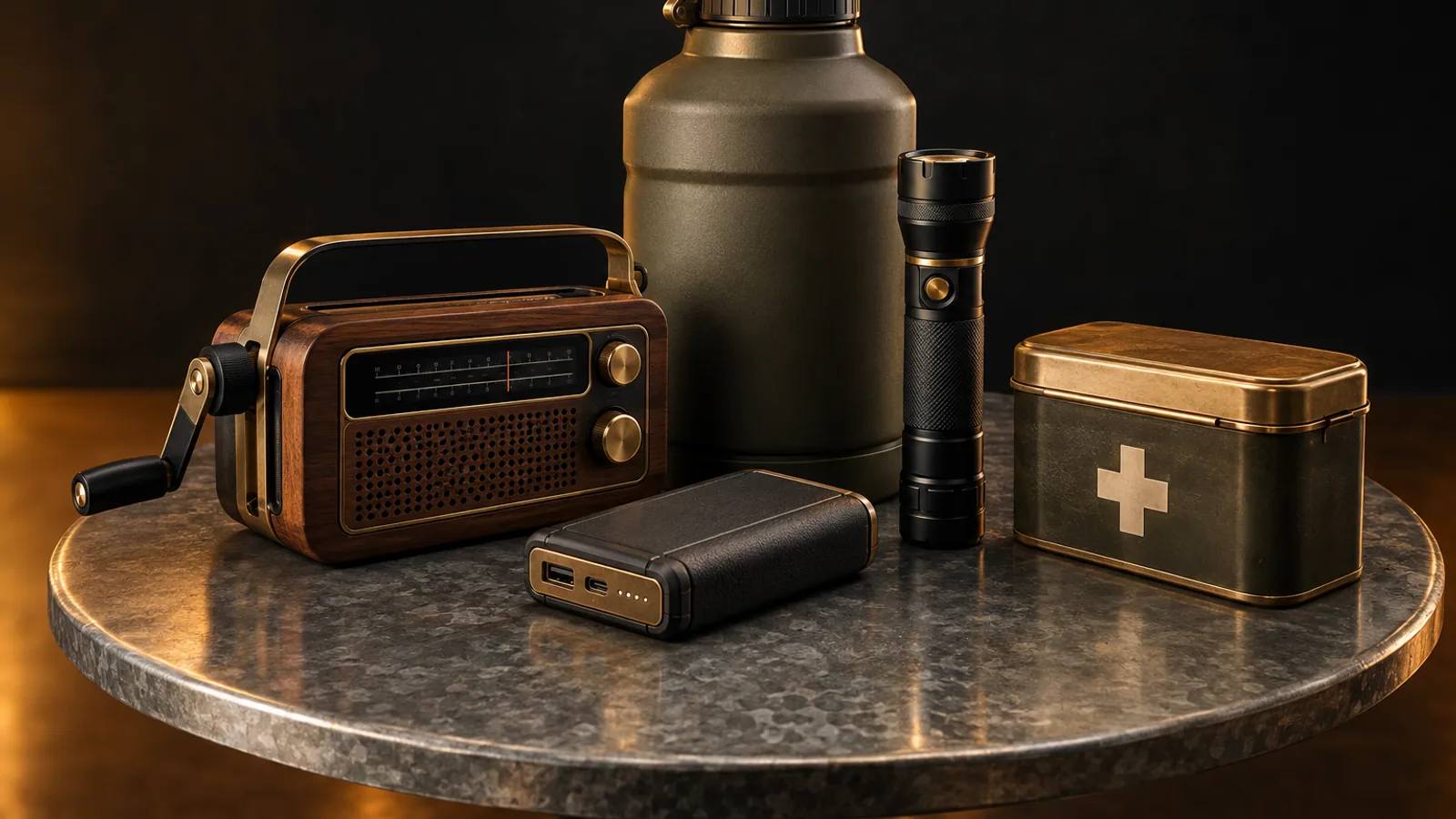
- Chargers, a laptop or external drive, and a battery or hand-crank radio. If you want the case for the radio, when the internet goes down, the radio still works.
- Firearms. If you own them, take them. A house you've left empty is the wrong place for them. Transport them unloaded and locked, with ammunition stored separately, and know the rules in the state you're driving through. That varies, so check with your state attorney general's office or a local range before you need to.
- Bedding, if you're headed to a shelter or a relative's floor.
- Sentimental items, limited to what fits in one box. One box. Pick it now, not in the moment.
Put the bags in the trunk or cargo area. Don't pile loose gear where it can slide into the kids.
The sixty-minute pass
An hour is a luxury, and it's the usual window for hurricanes and some floods. Spend it carefully. Do these only if you've got the time and the order says it's safe.
Protect the house. Bring in or tie down outdoor furniture, grills and anything that can become a projectile. Close and lock windows and doors. Move valuables up off the floor if flooding is expected. Shut off utilities only if local officials tell you to, since the instructions differ by hazard and by utility.
Document it. A slow video walk through every room, opening closets and cabinets, makes an insurance claim far easier later. Better still, do this on a calm Saturday and keep the file in cloud storage.
Tell somebody. Text a relative outside the area with your route and destination. Out-of-area contacts are often easier to reach than local ones when networks jam.
Check the neighbor. The widow two doors down who doesn't drive. The older couple who never answers texts. Knock, ask if they've got a ride, offer a seat. Serve people first.
And hold your line. If somebody in your own household says they'll ride it out, say it once, plainly, and then load the car anyway. You can't drag a grown man out of his recliner, but you can refuse to let his stubbornness set the family's schedule. Leave him the number, the address you're going to and a reason to follow.
Fuel up. A half tank is the minimum to carry in a season of storms, and stations get slammed fast once an order drops. Keep the habit all year. Fill the tank every time it hits half.
What to do before any of it
Most of this is decided on a calm afternoon.
- Choose two routes out and a meeting place outside your area.
- Park the car nose-out in the driveway.
- Keep the go-bag by the door.
- Put copies of your documents on a thumb drive in that bag.
- Practice once, with a timer. Nobody loves it. Everybody finds out what's missing.
Don't go back
Once you're out, stay out until officials say it's safe. Roads that look fine can be undercut. Fire lines move. Going back for the dog bowl is how a family of four becomes a rescue call.
When you do return, leave the house better than you found it. Clean out the fridge, check on the neighbor's place, and bring a case of water to whoever stayed with you.
The order is one text on a screen. The five minutes after it are the ones you've already prepared for, or haven't.
Dean Shaw
Gear & Garage
Reads the warranty, the parts list and the long-term owner reviews before anything else. Trucks, tools, watches, and the cheap version that costs more.

Watch
Worth an hour of your evening
More from Preparedness.
From channels we rate. Plays on YouTube.
Read next