Stay With the Car, Clear the Exhaust, Wait It Out
The blizzard doesn't kill you in the driver's seat. It kills you two hundred yards from the door, walking toward a light that was three miles off.
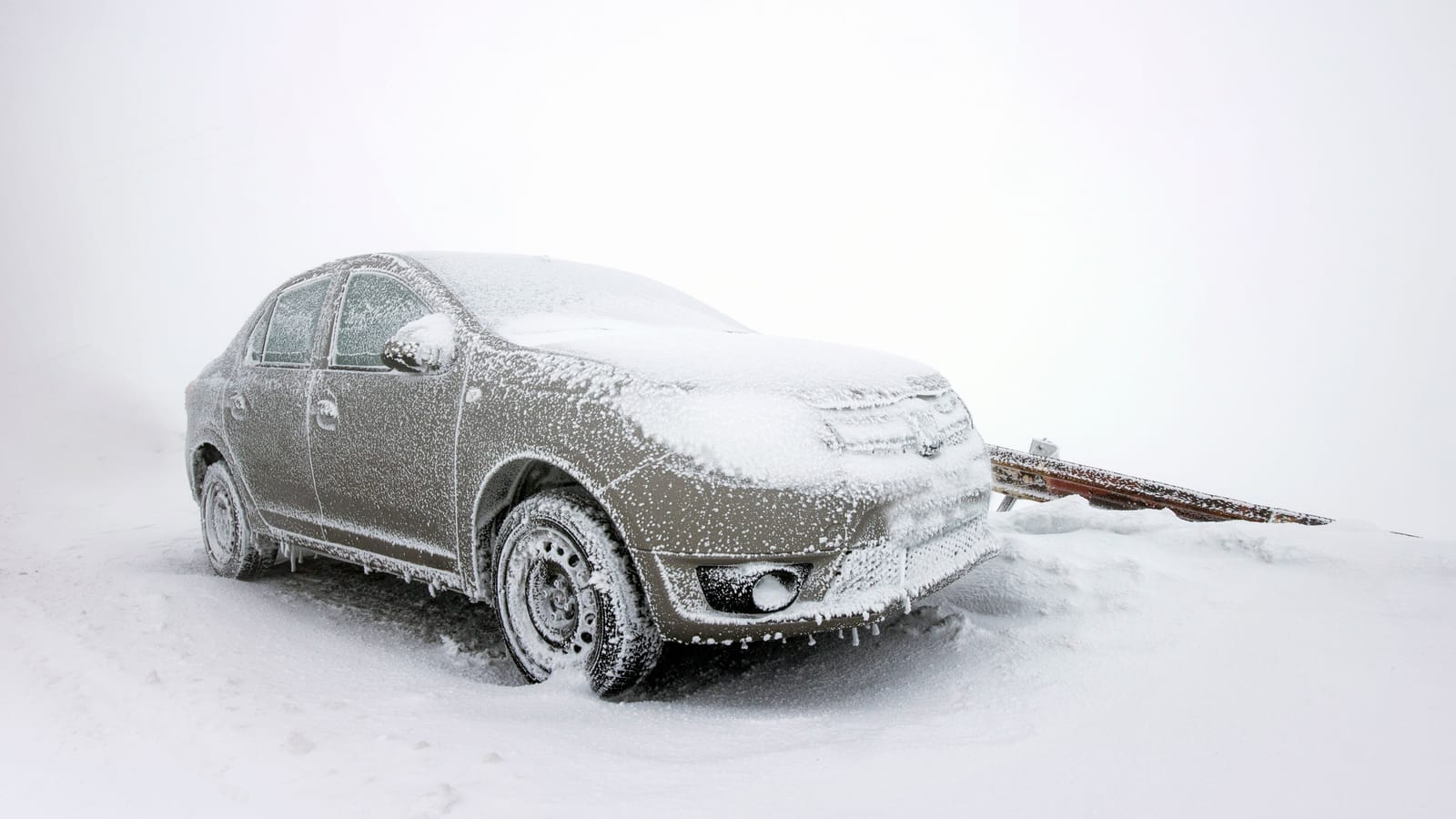
Stay in the car.
That's the whole thing. Every piece of official winter guidance, from the National Weather Service to the Red Cross, lands on the same first instruction, because the deaths in a blizzard usually start with a door opening and a man deciding he can make it.
He can't. Not in a whiteout, where the world is the inside of a ping-pong ball and the plowed road disappears under blowing snow in ten minutes. Your car is a big metal object with reflective glass, a horn, and a color. You, in a gray jacket, walking bent into 40 mph wind, are nothing. Searchers find vehicles. They find people much later.
So you're in the ditch. The drift built across the county road while you were watching for the turn, and now the front end is buried to the grille and the back wheels are spinning on glass. Engine still runs. Here's the order of operations.
Call 911 first, and tell them where you actually are
Do it before you try anything clever with the gas pedal, while you still have battery and before you've burned an hour convincing yourself you can rock it out.
Signal in open country is thin. If a voice call won't go through, try a text. Text-to-911 works in a lot of the country now, and a text will sometimes squeeze through when a call won't. Say what you're driving, its color, how many people are with you, and the best location you can give: last mile marker, last town you passed, direction you were traveling, the county road number on the last green sign. "About four miles west of the interstate exit on the two-lane" is far better than "somewhere near" a town. Most phones will also let you send your location as a pin. Send it.
Then start rationing the phone. Screen brightness down. Stop scrolling. Charge it only while the engine is running, and keep the cord plugged in so nobody has to hunt for it at 3 a.m.
The one reason to get out is the tailpipe
Carbon monoxide has no smell, no color, and no warning shot. Blowing snow will pack a tailpipe shut faster than you'd guess, and a car buried on the downwind side can seal itself while you sit there feeling fine and getting sleepy.
Get out, get to the back of the vehicle, and dig the exhaust clear by hand, boot, or ice scraper. Give yourself two or three feet of open space behind the pipe, and knock the drift down from around the rear bumper. Check it again every single time before you restart. Every time, not when you remember.
While the engine runs, crack a window about an inch on the downwind side. It feels wrong. Do it anyway.
Ten minutes an hour, not all night
Standard guidance is to run the engine roughly ten minutes out of every hour for heat, then shut it down. The cabin holds warmth better than you'd think once the seats and your clothing have soaked it up, and a half tank of gas run that way will outlast a long night by a wide margin.
The sensible objection: if you've got three-quarters of a tank and a clear tailpipe, why not just run it? Because the drift keeps building, because you don't know if the night is six hours or twenty-six, and because running out of fuel at 4 a.m. leaves you with nothing but the blanket. Ten and fifty is the discipline. Set a phone alarm so you don't nod off through the shutdown.
That's also the argument for a real habit: from November to March, keep the tank above half. Nobody has ever regretted stopping for gas in Grand Forks.
You're the heat source
Cold gets into you through the metal, the glass, and your own sweat. So work the layers you've got. Hat first, because bare heads leak heat fast. Hands into the coat, not into the vents.
Move, but move small. Clench and release your hands, roll your shoulders, flex your calves, wiggle toes in the boots. Slow and steady, enough to keep blood going, never enough to break a sweat. Damp clothing next to your skin is the fastest way to lose the fight.
The same rule kills the urge to dig the truck out at midnight. Overexertion in cold air is how ordinary healthy men end up having cardiac events in a ditch with a shovel in their hands. If you're going to dig, dig in daylight, slowly, and stop long before you're winded.
If somebody starts shivering hard, slurring words, fumbling simple tasks, or acting strangely calm about all of it, that's cold winning. Get them together with another body under a blanket, keep them awake, and tell 911 on the next call.
Make the car impossible to miss
Turn the dome light on while the engine runs. A lit interior shows up in a plow's headlights when a snow-caked white sedan doesn't.
Tie something bright and obvious to the antenna, the mirror, or a door handle where the wind can flag it. An orange shop rag, a kid's hat, a strip off a hi-vis vest. Hazard flashers work, but they pull off the battery, so save them for when you hear a truck or see a glow.
And stay buckled in, or at least stay put in the seats. Vehicles get hit in the ditch by other drivers who are just as blind as you were.
Melt the snow before you drink it
Eating snow straight costs you body heat you can't spare, and dehydration makes hypothermia worse. Fill a bottle or a cup with snow and wedge it near a heater vent while the engine's running. It takes a surprising amount of snow to make a little water. Fine. You've got time.
Food matters less than people think on a one-night stand-off, but it matters for morale and for kids. Whatever's in the glovebox works. A sleeve of crackers, a couple of granola bars, the beef sticks from the last gas station.
The narrow exception, and the kids
The one official carve-out for leaving: a building you can see, that stays visible, within about a hundred yards. Not a light in the distance. Not a farmstead you're pretty sure is over the rise. Visible, close, and reachable without losing sight of the car. Anything else and you sit.
If your kids are in the back, give each one a job. One watches the clock for the ten-minute engine runs. One is in charge of the flashlight. One keeps the blanket over both of them. Jobs beat fear every time, and a six-year-old who's been told he's the timekeeper is a six-year-old who isn't crying.
The part that happens before you turn the key
Tell somebody your route and your arrival time, by text, so there's a record. Check your state's 511 road report before you pull out. If the highway patrol has pulled the plows off the road, the answer is no. Not "carefully." No.
There's no trophy for making it to the family dinner through a ground blizzard. The best blizzard story you'll ever tell is the one where you stayed at the motel in Bismarck and watched it on the news.
And if you do end up nose-down in a drift, remember that the bravest thing you'll do all night is sit still.
Wes Dunbar
Country & Skills
Grew up on an acreage and never quite left. Covers trucks, trades, land, and how to do the thing yourself.

Watch
Watch how it's done
Picked for this article.
From channels we rate. Plays on YouTube.
Fox Business
This is how to survive in a stranded vehicle: Survival expert
13 ON YOUR SIDE
Survival tips should you become stranded in your car during a snowstorm
Read next