The bank lends on the appraisal, not on your offer
When the appraisal comes in under your price, someone has to cover the difference. Decide who it is before you write the offer, not after.
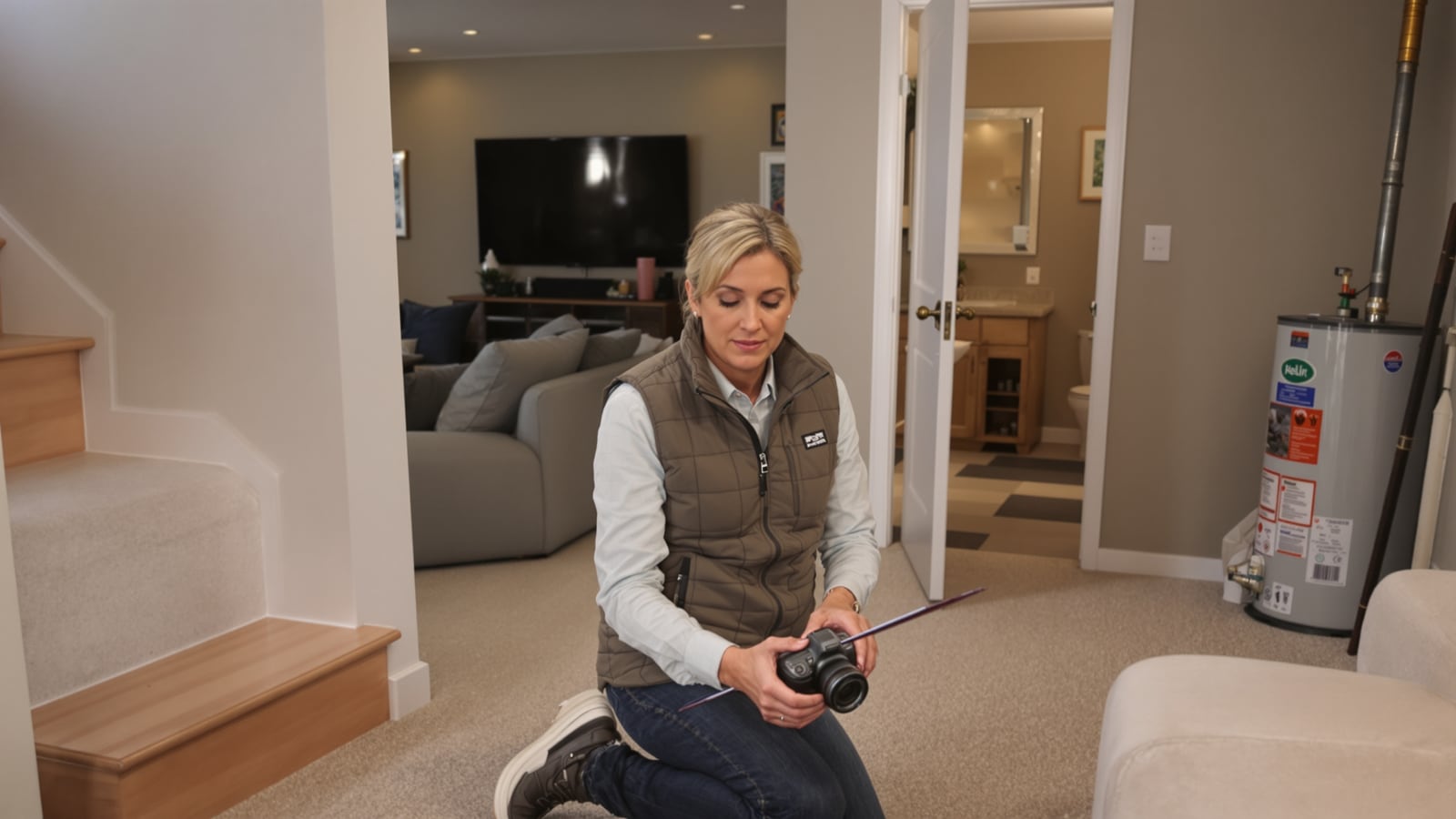
Quick answer: Your lender will lend a percentage of the appraised value or the price, whichever is lower. If the appraisal comes in short, the difference falls on you, the seller, or the deal. Pick your maximum gap before you make the offer.
An appraisal doesn't tell you what a house is worth to you. It tells the bank what it could recover if you stopped paying. That's a narrower question than the one you're asking, and it's why a house can feel like a bargain and still appraise low.
What the appraiser does
A state-licensed or certified appraiser visits the house, usually for 30 to 60 minutes. They measure, photograph, note the condition, and write up the Uniform Residential Appraisal Report. Then they find comparable sales, called comps. These are similar homes nearby that actually closed, usually recently. Pending listings and asking prices don't count. Only closed sales do.
The appraiser adjusts for differences. A finished basement, an extra bath, a bigger lot and a new roof all move the number up or down. The result is an opinion of value, backed by those comps.
You don't pick the appraiser. In most loans the lender orders the appraisal, often through an appraisal management company, specifically so nobody can lean on the result. You pay the fee, commonly a few hundred dollars and more for large or rural properties. It's usually due up front, and it's gone whether the deal closes or not.
The appraiser sees your purchase contract. So your price is on the table before the first comp is chosen.
Why it comes in low
Usually it's one of a few things.
- A hot market that outran the comps. Homes sold last month at lower prices, and the appraiser can only use what has closed.
- A bidding war. You and four other buyers pushed the price past anything nearby.
- Condition. The listing photos were flattering, and the kitchen isn't.
- Thin comps. Rural land, unusual homes and one-of-a-kind properties are harder to match.
- Plain error. Appraisers miss things. It's less common than sellers claim, but it happens.
Sometimes a low appraisal is the system doing its job. You were about to pay $20,000 more than the neighborhood has ever paid. The bank noticed before you did.
The math, with a worked example
This is an illustration, not a market figure. Say you offer $400,000 with 10 percent down.
- Down payment: $40,000
- Loan: $360,000
The appraisal comes back at $380,000. The lender still lends 90 percent, but of $380,000.
- New loan: $342,000
- Cash you need: $400,000 minus $342,000, or $58,000
You wanted to put down $40,000. Now it's $58,000. The gap is $20,000, but your extra cost is $18,000, because the lender still covers 90 percent of the appraised value. Loan programs and their rules differ, so ask your lender to run your actual numbers.
Your options when it comes in low
Once the report lands, you have roughly six moves. Which one you can use depends on what your contract says.
1. Ask the seller to drop to the appraised value. This is the cleanest fix. A seller who knows the next buyer's appraiser will see the same comps often says yes.
2. Split it. The seller comes down $10,000, you cover $10,000. Both of you wanted this deal. Both of you give a little.
3. Pay the gap in cash. It's your call, but only if the money is truly extra. Cash you need for the move, the repairs and an emergency fund isn't extra.
4. Challenge the number. Ask your lender about its reconsideration of value process. Your agent can pull better comps, and you can document upgrades the appraiser may have missed. Stay factual and bring closed sales. Opinions and anger don't move anybody.
5. Walk away. If your contract has an appraisal contingency and you act inside its deadline, you can usually cancel and get your earnest money back. Read the exact wording and the exact dates.
6. Try another lender. It's slow, it rarely helps, and you may pay for a second appraisal. Usually it's not worth it, but it exists.
Decide the gap before you offer
This is the part most buyers skip, and it's where the money gets lost.
In a competitive market, your agent may suggest an appraisal gap clause. It says that if the appraisal falls short, you'll cover up to a stated amount from your own funds. It makes your offer stronger because the seller doesn't have to worry about a low number killing the deal.
It's also a promise. If you write "up to $15,000" and can't produce it, you may lose your earnest money, and in some situations face worse. Have a real estate attorney or your agent explain how your state treats this.
Set the number this way:
- Start with your cash on hand.
- Subtract closing costs, the down payment, moving costs and a repair fund.
- Subtract your emergency cushion. Don't touch it.
- What's left is your ceiling. The gap clause can be that number or less.
If the ceiling is $3,000, then $3,000 is your gap, even if your agent says $15,000 would win. Better to lose a house than to buy one with nothing in the bank. The related piece on how the bank will approve you for too much house covers the same trap from the other side.
Two ways buyers get burned
Waiving the appraisal contingency without the cash. Waiving makes your offer strong, and it's a real tool. But if you waive it, a low appraisal doesn't release you. You close or you risk your deposit. Some buyers waive the appraisal and keep the inspection. There's a way to compete without giving up the protection that matters most, laid out in how to win a bidding war without waiving your inspection.
Missing the deadline. Contingencies have dates. If the appraisal comes back on day 19 and your contingency expired on day 17, your leverage went with it. Write the dates on your calendar the day you sign.
If you're the seller
A low appraisal isn't an insult. It's data. It usually means your price ran ahead of the closed sales.
Send your agent a list of improvements with receipts: the roof, the HVAC, the new floors. Make sure the comps they send to the lender are real, recent and close. Don't assume the buyer is bluffing when they say they can't cover the gap. And if you accept a buyer's gap coverage, ask to see proof of funds. Cash buyers skip the appraisal entirely, which is part of why sellers like them.
Also be honest. If three offers came in near the same price, the market may be telling you something.
Where to go next
The appraisal is one step in a longer sequence. If you haven't seen how the whole thing fits together, start with the twelve steps from preapproval to keys and see where the appraisal lands.
Rules on contingencies, deposits and gap clauses vary by state and county, and so do customs. This is general education, not individual legal, tax or financial advice. Before you sign anything, talk to a licensed real estate attorney, your lender and your agent. If the numbers touch your taxes, ask a CPA.
Know your ceiling. Write it down. Then make the offer.
Ray Okonkwo
Money & Business
Former commercial banker turned small-business owner. Covers salary, credit, margins and the arithmetic nobody does before signing.

Watch
Watch how it's done
Picked for this article.
From channels we rate. Plays on YouTube.
Zach McDonald Seattle Real Estate
Home Appraisal Contingency: What Happens If Your Appraisal Comes In Low?
Winning With Wade | Mortgage Education & Strategy
What to Do After a Low Home Appraisal (Step-by-Step)
Read next