Which inspection findings should end a deal, and which shouldn't
A 40-page inspection report doesn't mean a bad house. Learn which findings are deal-breakers, which are bargaining chips, and which are just homeownership.
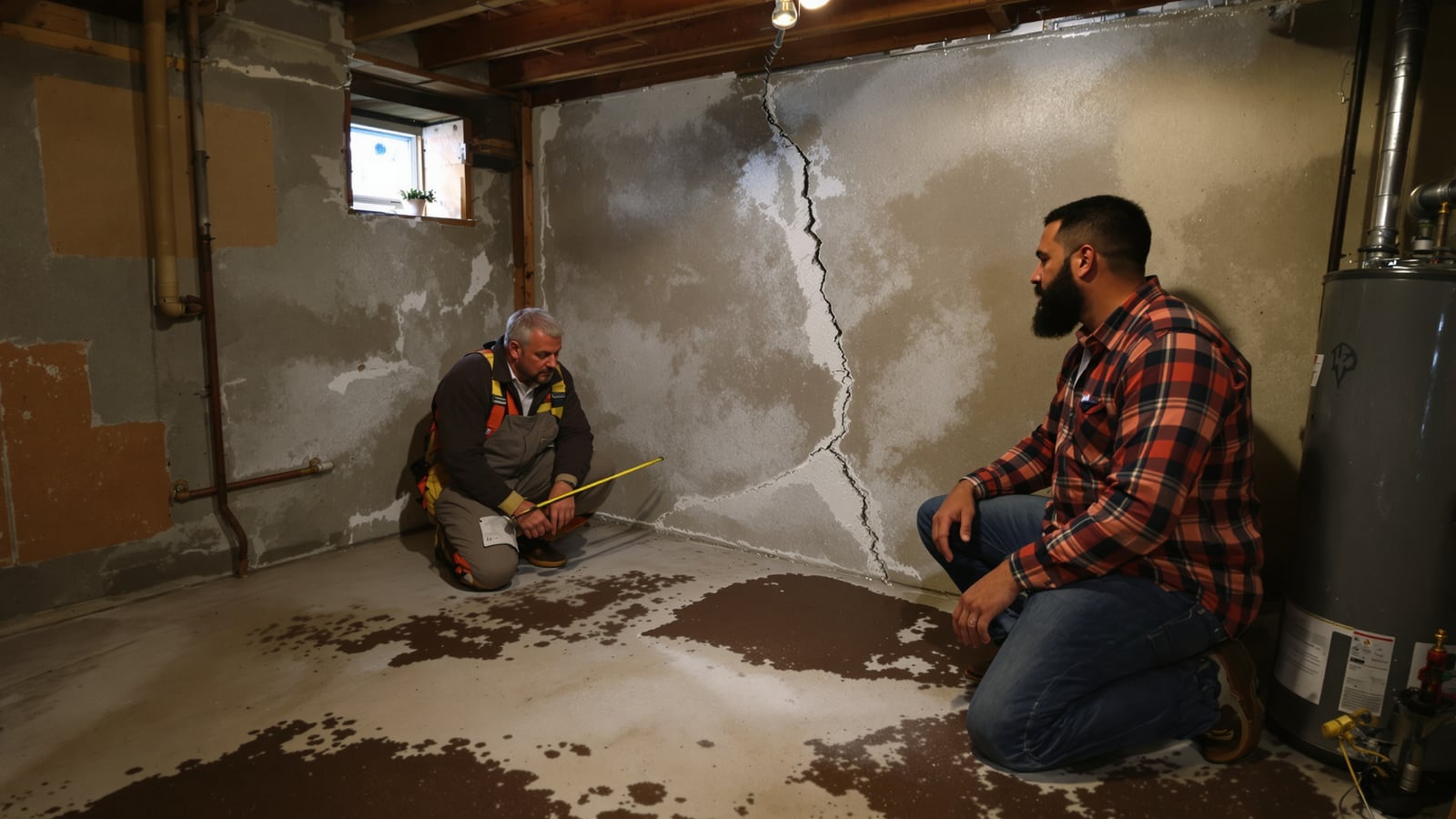
Quick answer: Walk away from, or demand a hard renegotiation over, anything involving structure, active water, or a safety system you can't price with a real quote. Negotiate the big-ticket items that are old but working. Fix the small stuff yourself and don't spend any goodwill on it.
The report lands in your inbox on day four. It's 38 pages, full of red circles and photos of things you can't identify. Your stomach drops. You start wondering whether to back out.
Slow down. Almost every house has a long report, because inspectors are paid to write down everything, including a loose towel bar. Length tells you nothing. What matters is which five or six lines on those pages carry real money and real risk.
This piece is general education, not advice for your situation. Contingency windows, disclosure rules and repair customs vary by state and county, so lean on a licensed real estate attorney or agent where you live.
The three buckets
Sort every finding into one of three piles.
- Deal-breakers. Problems that are expensive, open-ended, or threaten the house itself.
- Bargaining chips. Real costs with a known price and a known end date.
- Live-with items. Maintenance and wear that come with any house older than a toddler.
Most buyers sort by how frightening the inspector's language sounds. That's backwards. Sort by how well you can put a number on the fix. A cracked outlet cover sounds minor. A "slight" slope in the floor can be the most expensive line in the report.
Deal-breakers: water, structure, and the unknowns
Water is the through-line. It rots framing, feeds mold, and wrecks foundations. When you see it, ask where it's coming from and whether anyone can say it's stopped.
These are the findings that should make you stop and bring in a specialist:
- Foundation movement. Stair-step cracks in brick, doors that won't latch, floors that slope. A structural engineer, not a foundation repair salesman, should look at it. The engineer has no repair job to sell you.
- Active leaks or past leaks with no repair record. Stained ceilings, soft subfloor near a tub, a musty crawlspace with standing moisture.
- A failing sewer line. Ask for a sewer scope, a camera run through the line, which usually costs a couple hundred dollars. Roots, bellied pipe or collapse can mean a five-figure dig.
- Wiring or panels that can't be insured. Some homeowners insurers balk at knob-and-tube wiring and certain older panel brands. Call an insurance agent before your contingency expires, not after.
- Wood damage from termites or rot. Treatment is the cheap part. The framing replaced behind the drywall is the expensive part.
- Unpermitted work. A finished basement or addition with no permit on file can mean tearing it out or paying to legalize it. Ask the county.
The test is simple. If the repair requires opening walls to learn how bad it is, you're not buying a house, you're buying a mystery. Mysteries cost more than quotes.
Bargaining chips: old, working, and priced
These are the findings where you have leverage, because the cost is real but knowable:
- A roof with a few years left. Not leaking, just tired.
- An aging furnace or air conditioner. Still running, near the end of its expected life.
- A water heater from a decade ago.
- Radon above the recommended action level. Mitigation systems are a routine installation. Get a quote and negotiate from it.
- A deck with loose railings or poor flashing at the house. Railings are a safety issue, so fix them before anyone steps onto it.
- Poor grading or gutters that dump water at the foundation. Often cheap to fix, and worth fixing before it becomes a deal-breaker.
Here's a worked example, with made-up numbers for illustration only. Say you're buying a $350,000 house. The report flags a roof with three to five years left, an estimated $12,000 replacement. It also flags a 1990s panel an electrician says should be replaced, around $3,000, and radon at a level that calls for a $1,500 system.
That's $16,500 in known costs. You might ask for a price reduction, a closing credit, or repairs done by licensed contractors before closing. Quotes in your area will differ, so get written ones.
Live with it
The rest of the report is the tax on owning a house:
- Worn caulk, dripping faucets, sticky windows
- Hairline drywall cracks and settlement cracks that don't grow
- Old carpet, dated fixtures, scuffed floors
- A loose gutter, a missing downspout extension
- An old but functional dishwasher
Fix these yourself over the first year. Asking the seller to handle all of them reads as nitpicking and can sour a deal that was otherwise fine. If you submit 40 requests, expect a no on most. Submit six that matter and the seller may say yes to four.
One caution. Some cheap fixes sound minor but matter: missing smoke or carbon monoxide detectors, outlets near water without ground-fault protection, a dangling handrail on stairs. Don't skip these. They cost little and they protect your family. Just don't treat them as reasons to cancel.
The mechanics people miss
Your contract has an inspection window, often somewhere around a week to ten days, though yours may differ. The deadline is the point of the whole exercise. If it passes while you're still waiting on a specialist, you may lose your right to walk away or negotiate, depending on your state and contract.
Know the documents:
- The inspection report and any specialist reports (structural, sewer, radon, roof, HVAC)
- The seller's disclosure, which in many states the seller must provide
- The repair request or amendment, which your agent or attorney drafts
- Written contractor quotes, which are your evidence
Know the people. Your agent handles the negotiation. The home inspector isn't a contractor and shouldn't be selling repairs. Specialists give you numbers. In some states an attorney reviews the contract and contingencies, which is worth every dollar when the report is ugly.
For the broader path, see the twelve steps from preapproval to keys. And before you decide to skip any of this to win a bid, read how to win a bidding war without waiving your inspection.
What usually goes wrong
You wait too long to book the specialist. Good engineers and sewer scopers book up. Call them the day the inspector flags the issue.
You request repairs instead of credits. Seller-done repairs can be rushed and sloppy. A credit or price cut lets you hire someone yourself. Lenders limit how much a seller can contribute, and the limits vary by loan type, so ask your lender first.
You trust a repair seller to diagnose. A foundation company that wants the job will say you need the job.
You fall in love and wave it off. The house didn't change when the report arrived. The price you should pay did.
Your loan has its own rules. Some FHA and VA loans require certain safety and condition items to be fixed before closing, based on the appraisal. Your lender can tell you which.
For a deeper look at why this phase matters, read the home inspection is your last cheap exit. Before you act on any of it, check with a licensed real estate attorney, your lender and your agent. A CPA can tell you how repair costs and closing credits affect your tax picture.
A house with a long report can still be a good house. A house with a short report and a hidden leak can't. Learn the difference before the deadline, because after it, the repair bill is yours.
Ray Okonkwo
Money & Business
Former commercial banker turned small-business owner. Covers salary, credit, margins and the arithmetic nobody does before signing.

Watch
Worth an hour of your evening
More from Real Estate.
From channels we rate. Plays on YouTube.
Read next